

 English
 русский
 عربى
عربى

Industry News
How to Select the Right Wire Cut EDM for Your Factory?
2026-06-01
Selecting the right wire cut EDM machine directly impacts your factory's output quality, cycle time, and long-term operating costs. The short answer: if your factory handles medium-sized workpieces requiring linear accuracy at or better than 0.003 mm — with surface roughness down to Ra≤1.2µm — a precision CNC medium speed wire EDM such as the PS35C is likely the most practical fit. For heavier or larger workpieces, the PS45C or PS50C models in the same series scale upward. This guide walks through the decision framework, performance benchmarks, and application scenarios to help procurement engineers and production managers make an informed choice.
Wire EDM (Electrical Discharge Machining) remains the dominant precision cutting technology for conductive materials in mold making, tool and die, automotive, and aerospace manufacturing. Understanding how medium speed wire EDM differs from slow-speed and high-speed variants — and when each is appropriate — is the first step toward a sound capital equipment decision.
Content
- 1 Understanding Wire EDM Speed Classifications
- 2 PS35C Model Overview and Core Specifications
- 3 Key Technical Features That Define PS35C Performance
- 4 How to Match the Right Model to Your Workpiece Requirements
- 5 Application Scenarios by Industry
- 6 Machine Performance Characteristics Summary
- 7 Customization and Adaptability
- 8 Frequently Asked Questions
Understanding Wire EDM Speed Classifications
Wire cut EDM machines are commonly grouped by wire feed speed and reuse strategy. Each tier involves different trade-offs between surface quality, cost, and throughput:
- Slow-speed (single-pass) wire EDM: Uses fresh wire on every pass. Achieves the finest surface finishes (Ra <0.2µm) but carries very high wire consumption costs. Best for ultra-precision die work and medical components.
- Medium-speed wire EDM (reciprocating wire): Recycles wire at controlled speed with multiple cutting passes. Achieves Ra≤1.2µm (multi-cutting), balancing precision and cost — the core advantage of the PS35C category.
- Fast/high-speed wire EDM: High wire travel rate, lower precision, suitable for rough cutting and rapid prototyping where surface finish is not critical.
For most precision EDM machine applications in industrial mold production and automotive component manufacturing, medium speed wire EDM offers the most favorable balance: surface roughness fine enough for functional tooling, at a fraction of the wire cost incurred by slow-speed machines.
PS35C Model Overview and Core Specifications
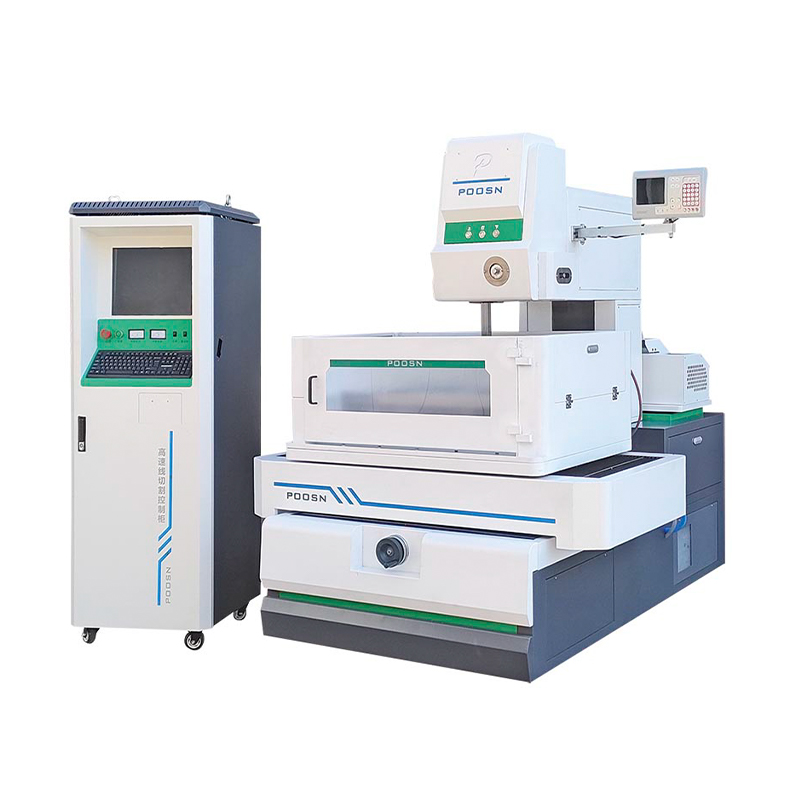
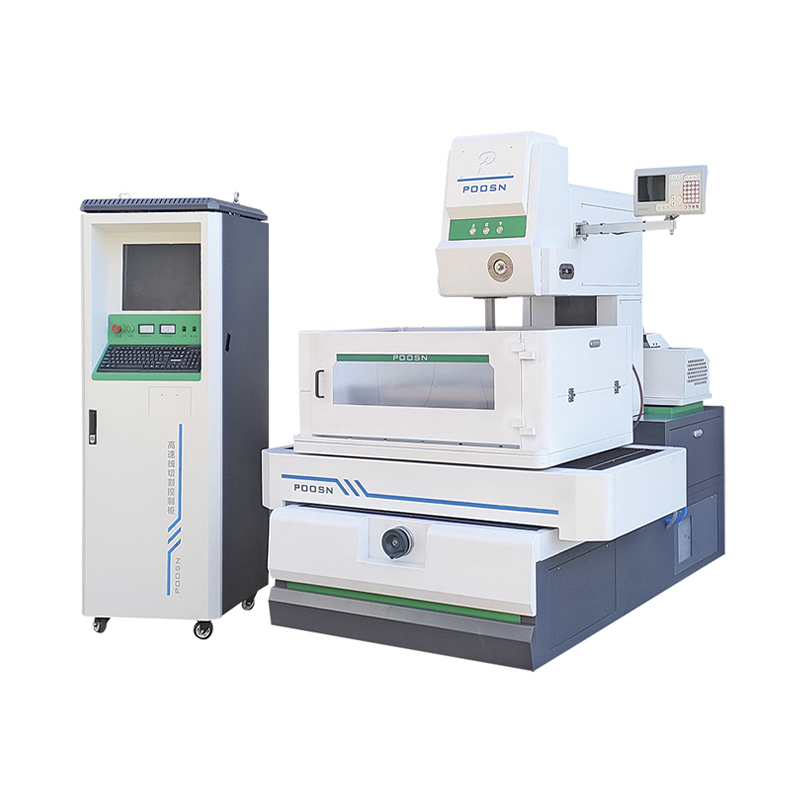
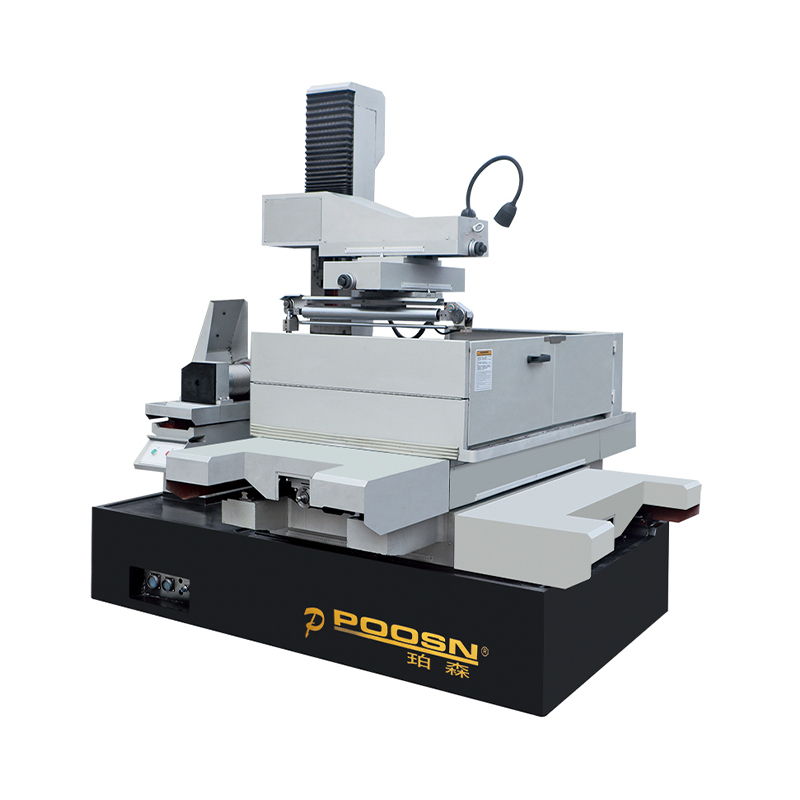
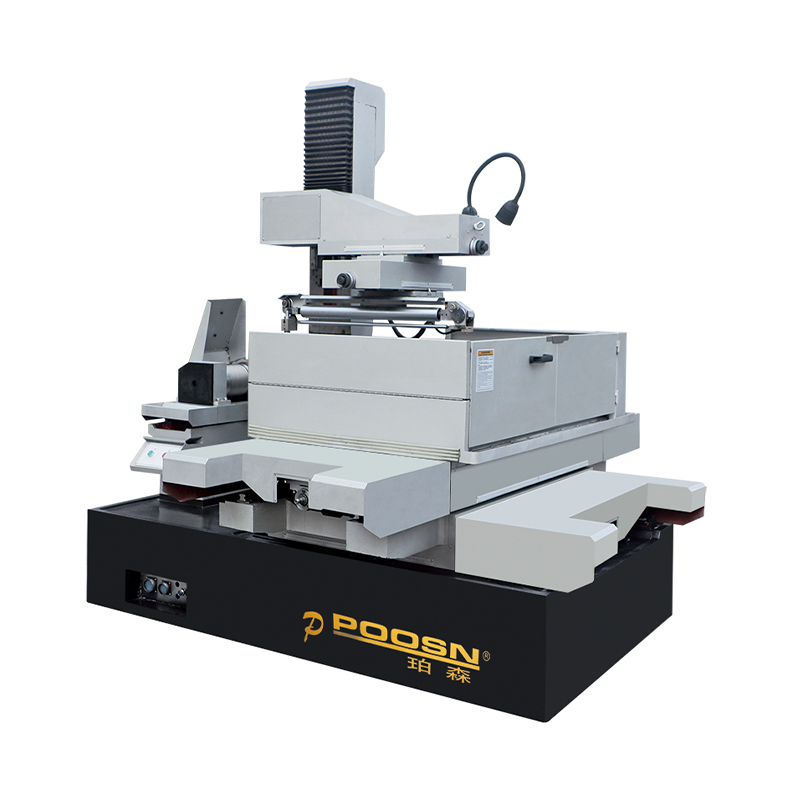
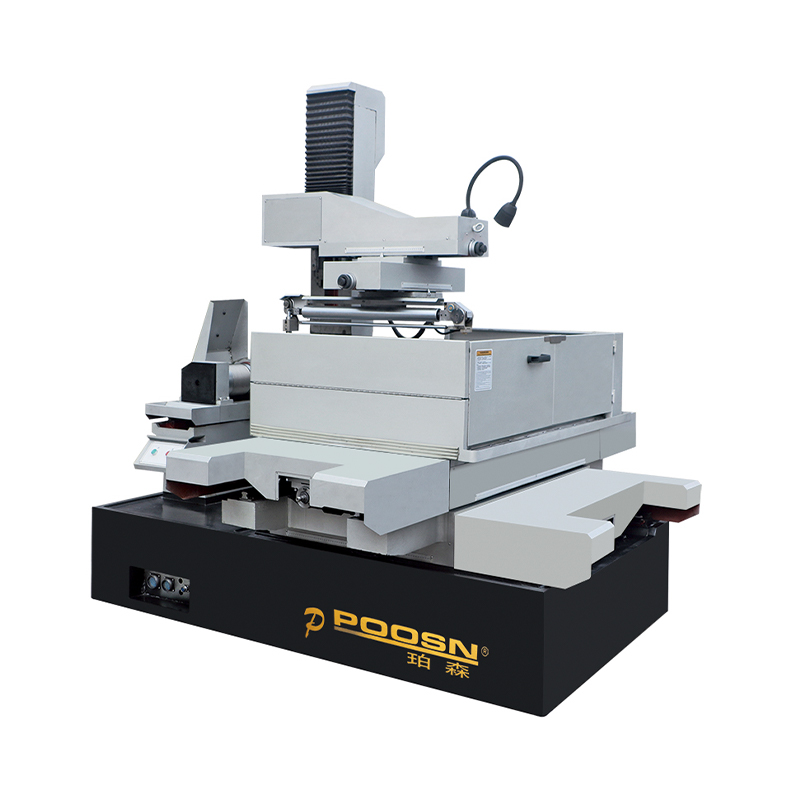
The PS35C wire cut EDM is engineered for medium-sized workpieces requiring consistent, repeatable precision. It sits as the entry point in the PS-series medium speed line, with workable size of 510–520 mm and X/Y travel of 320–500 mm. Key published specifications include:
| Parameter | PS35C | PS45C | PS50C | PS80C |
|---|---|---|---|---|
| Workable Size | 510–520 mm | 650–920 mm | 740–1360 mm | 940–1800 mm |
| Max. Cutting Thickness | 260 mm | 260 mm | 350 mm | 450 mm |
| Max. Workpiece Load | 150 kg | 430 kg | 500 kg | 900 kg |
| UV Taper Size | 60–80 mm | |||
| Max. Cutting Taper | ±5°/100 mm | |||
| Electrode Wire Diameter | Φ0.18 mm (with wire guide) | |||
| Processing Accuracy | 0.01 mm | |||
| Max. Cutting Efficiency | 100,000–150,000 mm²/h | |||
| Optimal Surface Roughness | Ra≤1.2µm (multi-cutting) | |||
| Programming System | XB/AM/TOCUT control system | |||
| Power Supply | 3N, 380V (±10%) | |||
| Machine Weight | 1600 kg | 2000 kg | 2200 kg | 2700 kg |
The PS35C's linear accuracy of 0.003 mm (as documented in feature specifications) and processing accuracy of 0.01 mm are well suited to precision mold components, automotive gears, and electronic connector dies where dimensional tolerance is critical.
Key Technical Features That Define PS35C Performance
Eco-Friendly Pulsed Power Supply
The PS35C is equipped with an advanced patented eco-friendly pulsepower supply. This design achieves low electrowear, high-speed processing, low surface roughness, and high energy efficiency with minimal environmental impact. Imported frequency converters enable smooth directional switching, extending the mechanical lifespan of the wire drive system. Unlike conventional weight-based tensioning systems, the novel constant-tension mechanism actively reduces wire tension fluctuations during taper cutting, maintaining dynamic consistent surface roughness — a notable advantage for high precision wire EDM work on thin or complex profiles.
Intelligent Control System (XB/AM/TOCUT)
The industrial-grade control computer on the PS35C — based on the XB/AM/TOCUT control architecture — ensures long-term stable and reliable performance. As one of the first platforms to adopt imported AC servo systems in this machine class, it achieves faster processing speeds and higher precision across multiple-pass operations. LAN and USB interfaces enable seamless data exchange, and the intelligent programming system simplifies G-code generation — reducing setup time for new operators.
Robust Skeletal Machine Structure
The machine body uses high-strength resin sand castings with a thoughtfully designed machine structure to ensure sufficient rigidity and stability. Advanced aging treatment technology extends mechanical precision consistency over time. The integration of AC servo systems with high-precision linear guides, ball screws, and pitch error compensation allows the PS35C to mirror the precision levels of slow-speed wire EDM equipment. The innovative anti-splash design minimizes working fluid splatter, maintaining a clean processing environment.
Liftable Gem Wire Guide and Drive System
The liftable gem wire guide enables maximum proximity to the workpiece surface, reducing wire vibration and improving machining accuracy and surface finish. The cutting height range can be adjusted without re-threading, facilitating manual operation and improving work efficiency. Drive components include Taiwan-brand high-precision linear guides, ball screws, and C-type wire frames — all motion axes utilizing Japanese EZO bearings for long-term dimensional stability.
How to Match the Right Model to Your Workpiece Requirements
Choosing between the PS35C, PS45C, PS50C, and PS80C comes down to three primary variables: workpiece physical size, maximum weight, and required cutting thickness. The following decision framework helps narrow down the appropriate model:
- Define your workpiece envelope. If your typical workpiece fits within 510–520 mm and weighs under 150 kg, the PS35C is sufficient and represents the most cost-effective entry point for precision EDM machine capability.
- Check cutting thickness requirements. Parts requiring cuts deeper than 260 mm require the PS50C (350 mm) or PS80C (450 mm). Automotive die blocks and thick aerospace bulkheads typically fall in this range.
- Assess taper cutting needs. All models in the series support ±5°/100 mm taper, making them suitable for punch-and-die sets and cam profiles. If greater taper angles are needed, confirm with the factory's customization program.
- Consider batch volume and throughput. Higher-model machines provide larger worktables that enable better fixturing efficiency during medium-batch and large-batch production. The PS35C's cutting efficiency of up to 150,000 mm²/h is well-matched to medium-batch mold making EDM work.
- Review floor space and infrastructure. The PS35C at 1600 kg and machine dimensions of 1635–1633–2010 mm is the most compact in the series — important for constrained factory floor layouts.
Application Scenarios by Industry
The CNC wire EDM machine PS35C is deployed across multiple high-precision manufacturing sectors. The following table maps typical industry applications to the relevant machine capabilities:
| Industry | Typical Components | Key Requirement | PS35C Capability Match |
|---|---|---|---|
| Automotive | Engine parts, gears, precision stamping dies | ±0.003 mm tolerance | High |
| Mold Manufacturing | Injection mold cavities, punch and die sets | Ra≤1.2µm finish | High |
| Aerospace | Turbine blade fixtures, structural brackets | Tight tolerances on hard alloys | Suitable (max 150 kg) |
| Electronics | Connector dies, lead frame tooling | Fine wire, micro-geometry | High |
| Tool & Die | Blanking dies, form tools, gauging fixtures | Repeatable batch accuracy | High |
Machine Performance Characteristics Summary
The PS35C includes the following machine tool performance characteristics as standard, ensuring consistent results across daily production shifts:
- Automatic tracking water spraying during the cutting process — prevents thermal deformation and improves surface consistency.
- Automatic spring wire tension — maintains stable electrode wire tension without operator adjustment during long runs.
- Convenient replacement of the main guide wheel — reduces downtime during maintenance.
- Taper device equipped with linear guides and ball screw pairs — ensures accurate angular cutting geometry.
- DNC stroke for U and V axes: 400×400 mm (±30°) and 580×580 mm (±45°) — provides generous taper cutting range for complex die profiles.
The standard workbench comes equipped with imported linear guides and a grading scale for real-time full-stroke position monitoring. Optional adaptive constant-tension wire tightening mechanisms and X8 system compatibility (Standard/CAXA CAM2019 or TCAM) are available depending on programming workflow requirements.
Customization and Adaptability
The PS35C series offers flexible customized service options to accommodate specific production requirements. Customers can specify different workbench sizes, cutting depths, or electrode wire types. For industries with specialized needs, personalized operating system settings and optimized cutting parameters for different materials are available — ensuring the machine performs effectively across varying production environments.
Optional features include: adaptive constant-tension wire tightening mechanism, X8 system (Standard), CAXA CAM2019 or TCAM integration, non-destructive high-precision center hole positioning, and nanosecond power supply options. Custom marking is available on request, and the PS50C and above models support additional customizable configurations per factory order.
Frequently Asked Questions
Q1: What is the best surface roughness the PS35C can achieve?
Under multi-cutting conditions, the PS35C achieves an optimal surface roughness of Ra≤1.2µm. This is suitable for functional mold surfaces, connector tooling, and precision die components where a fine but not mirror-grade finish is required.
Q2: How does medium speed wire EDM differ from slow-speed wire EDM?
Medium speed wire EDM recycles the electrode wire during processing, significantly reducing wire consumption costs. Slow-speed (single-pass) EDM uses fresh wire continuously, achieving finer surface finishes (Ra <0.4µm) but at considerably higher operating cost. Medium speed EDM is the preferred choice for high-volume production where Ra≤1.2µm is acceptable.
Q3: What workpiece weight and size limits apply to the PS35C?
The PS35C supports a maximum workpiece load of 150 kg, with a workable size of 510–520 mm and maximum cutting thickness of 260 mm. For heavier or larger workpieces, the PS45C (430 kg), PS50C (500 kg), or PS80C (900 kg) are available in the same series.
Q4: What programming systems are compatible with the PS35C?
The PS35C uses the XB/AM/TOCUT control system as standard. Optional compatibility with X8 System (Standard), CAXA CAM2019, and TCAM is available. LAN and USB interfaces are included for data transfer, and the built-in intelligent programming module simplifies G-code generation.
Q5: Is the PS35C suitable for taper cutting applications?
Yes. The PS35C supports taper cutting up to ±5°/100 mm using a UV taper device with linear guides and ball screw pairs. The DNC stroke for U/V axes covers 400×400 mm (±30°) and 580×580 mm (±45°), accommodating the majority of industrial taper cutting requirements in stamping die and mold production.
Q6: What maintenance features reduce downtime on the PS35C?
Key maintenance-reducing features include convenient guide wheel replacement, automatic spring wire tensioning, automatic water spraying during cutting, and the use of Japanese EZO bearings throughout all motion axes. The liftable gem wire guide eliminates the need to re-thread wire when adjusting cutting height, further reducing setup and maintenance time.
-
Phone
+86-0523-86268788 +86-13815960366 +86-13912191163Email
[email protected]Address
No. 366, Yusheng Road Jiulong Town, Hailing District Taizhou City, China
Copyright © Taizhou Xinchengyang Machinery Manufacturing Co., Ltd. All Rights Reserved.
Custom edm machine for sale
wholesale edm machine manufacturers
