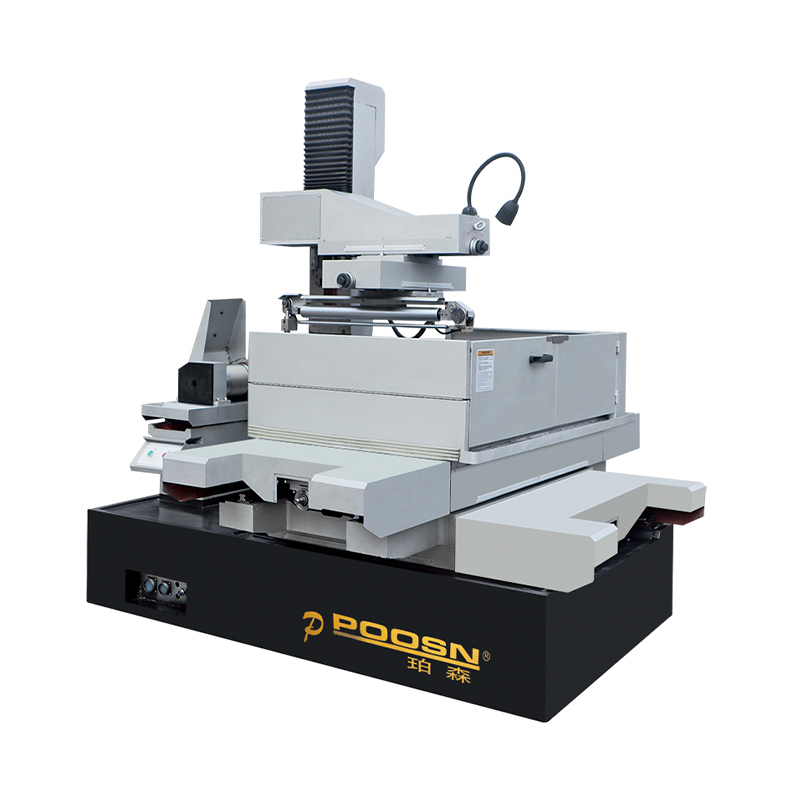
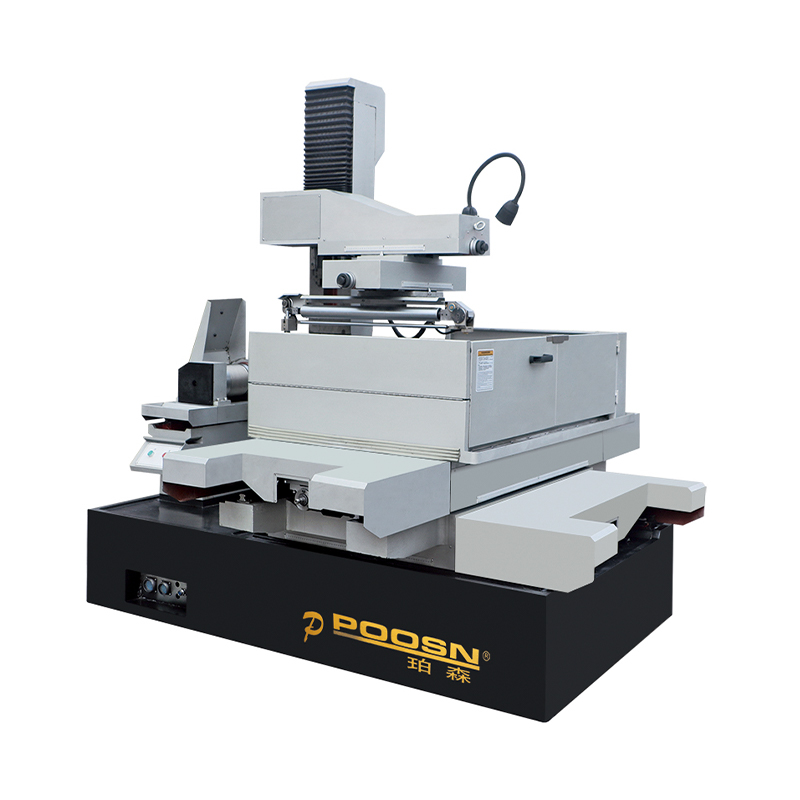
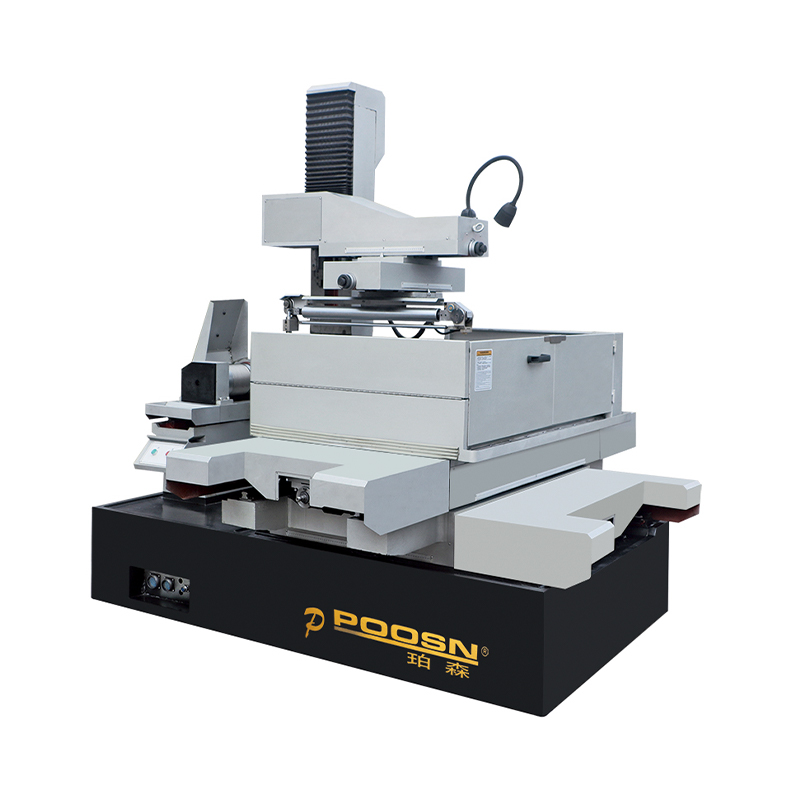
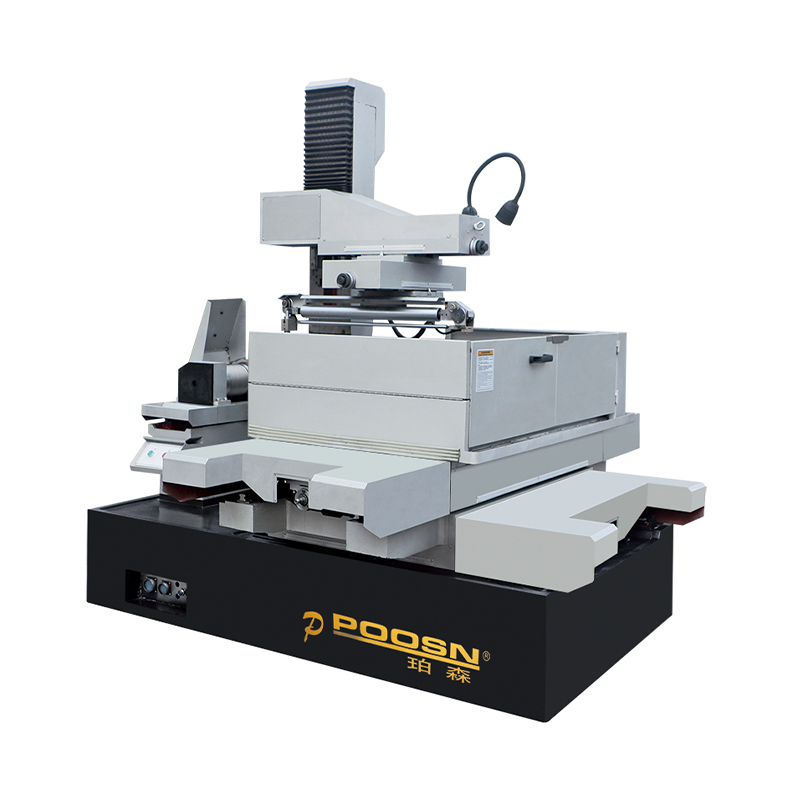
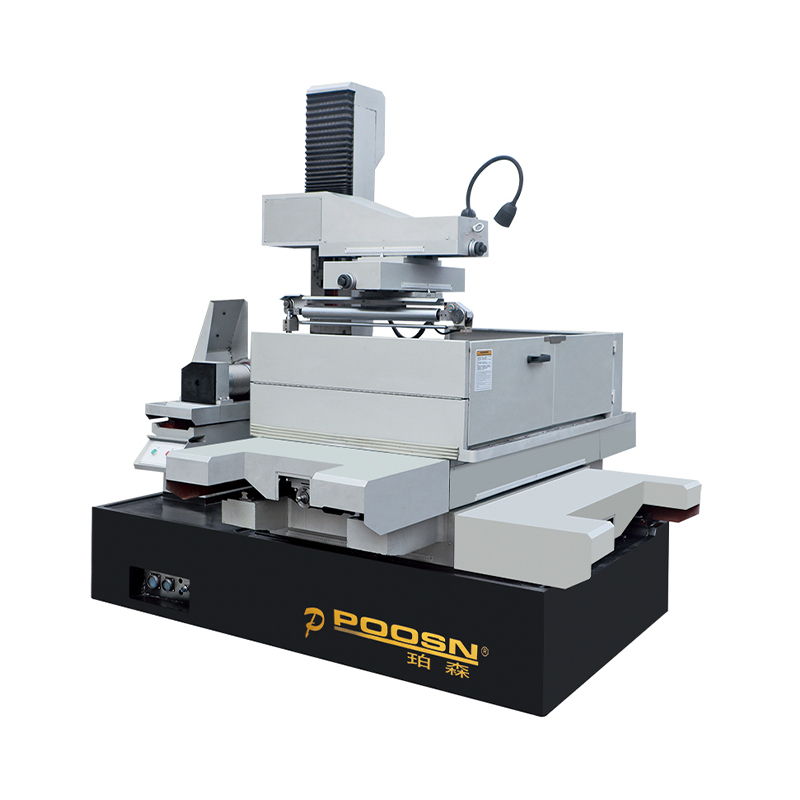
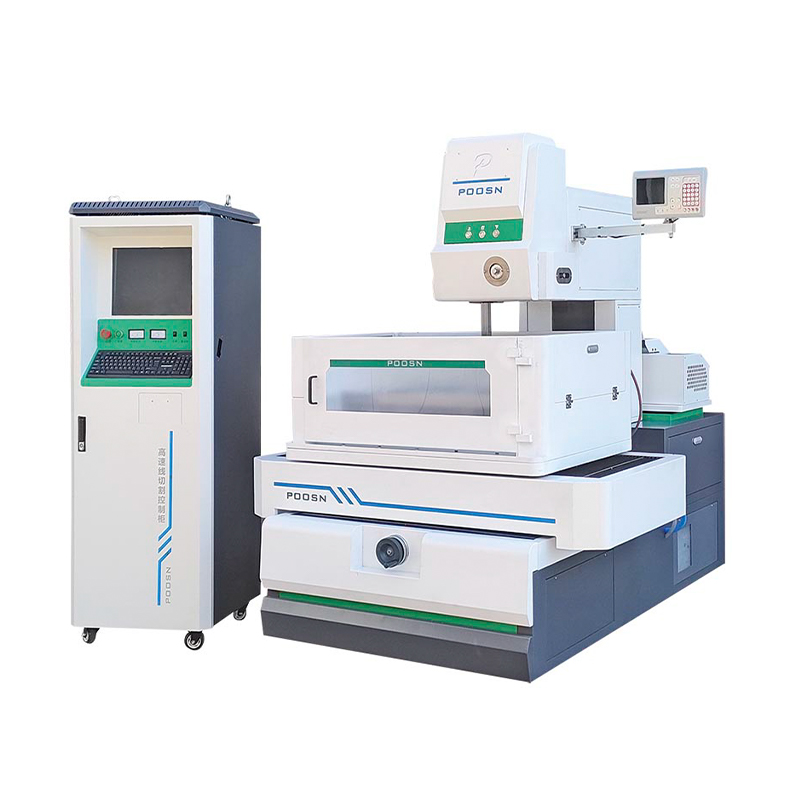
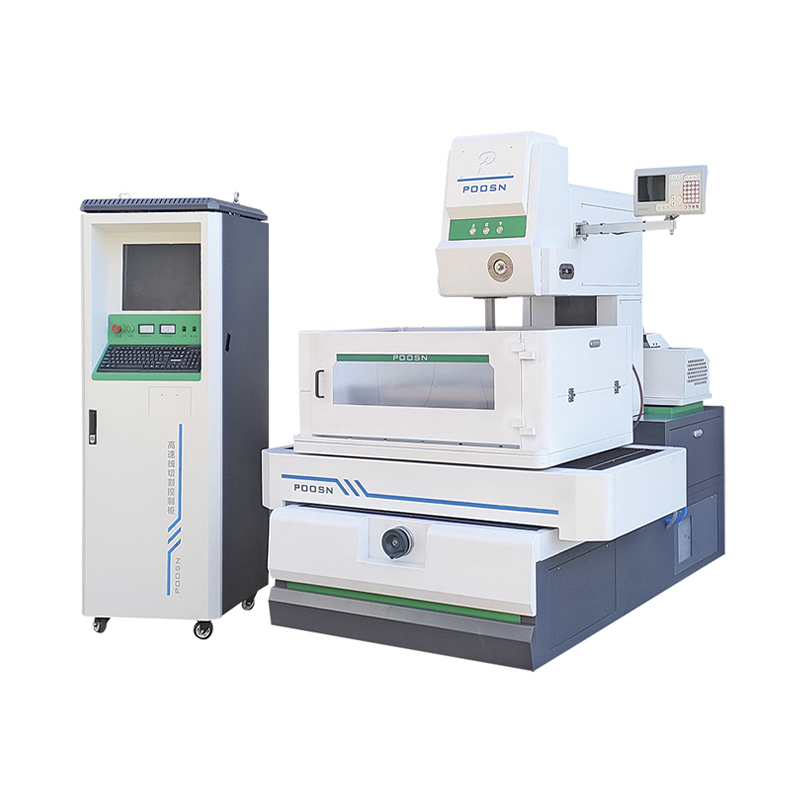
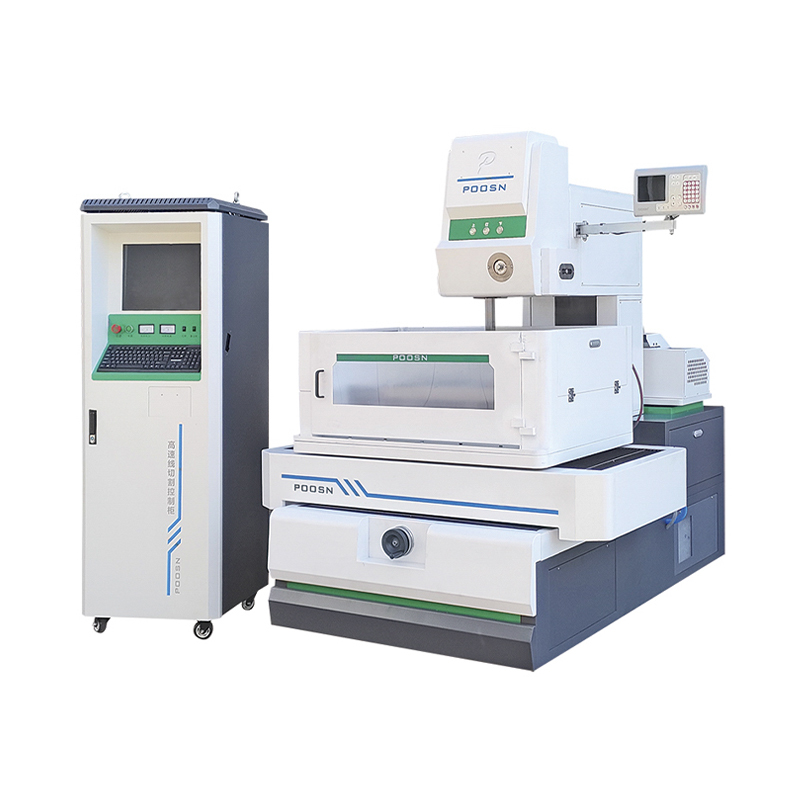
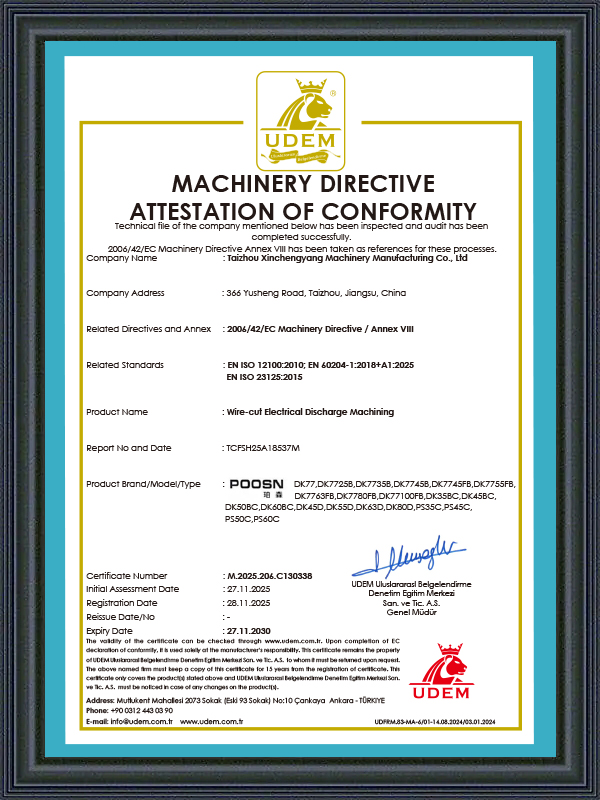
In the fields of precision mold manufacturing and complex part machining, large-taper wire-cut electrical discharge machining (WEDM) technology has consistently held a pivotal position. Leveraging its deep industrial heritage and an unceasing pursuit of machining limits, Taizhou Xinchengyang Machinery Manufacturing Co., Ltd. has developed the DK55D Large Cutting Taper WEDM. This machine is not merely a culmination of mechanical structure and electrical control expertise; it serves as a powerful tool for resolving the complex challenges associated with machining intricate spatial geometries.
I. Core Technical Architecture of the DK55D Large-Taper Machining System
The DK55D model was originally designed to overcome the limitations inherent in the cutting angles achievable by traditional wire-cut EDM machines. During the R&D process, Taizhou Xinchengyang focused specifically on optimizing the coordination and synergy of the machine's four-axis spatial linkage system.
Enhanced Four-Axis Linkage System: The DK55D achieves deep-level coupling across its four coordinate axes: X, Y, U, and V. Through the application of high-precision control algorithms, the system ensures that the spatial position compensation of the electrode wire achieves micron-level accuracy when cutting large-angle tapered parts.
Precision Oscillating Guide Mechanism: Unlike standard machine tools, large-taper machining demands that the wire guides (nozzles) possess exceptional flexibility and positional stability. The oscillating head structure designed by Xinchengyang maintains constant electrode wire tension even under extreme angular tilt conditions, effectively preventing issues such as wire breakage or surface striations often caused by excessive cutting angles.
High-Rigidity Machine Bed: To withstand the lateral forces generated during large-taper cutting operations, the machine bed is constructed from high-strength cast iron that has undergone multiple stages of aging treatment, thereby physically reinforcing the overall stability of the machining process.
II. Taizhou Xinchengyang: Process Advantages and Quality Control
In the production of the DK55D, Taizhou Xinchengyang Machinery Manufacturing Co., Ltd. instills a philosophy of "rigorousness" into every single stage of the manufacturing process.
Scientific Product Design: The machine's design strikes a careful balance between fluid dynamics and mechanical structure, ensuring that the dielectric fluid can more effectively flush away metal debris and eroded particles during tapered machining operations.
Advanced Machining and Inspection: Supported by a comprehensive array of advanced machining equipment, Xinchengyang subjects every component of the DK55D to precision grinding and finishing. The positional accuracy testing conducted prior to shipment is far from a mere formality; instead, it utilizes high-precision instruments—such as laser interferometers—to verify and guarantee the step accuracy of each individual axis. Integration of Technical Expertise: The company has translated years of practical machining experience into the control system's logic code, enabling the DK55D to handle the machining of irregularly shaped cavities and variable-taper geometries with exceptional ease and proficiency.
III. Comparison of DK55D Large-Taper Wire-Cut Machining Characteristics
To provide a more intuitive understanding of the DK55D's technological positioning, the following section presents a comparative analysis across various dimensions against standard machine models:
| Feature Dimension |
Standard WEDM Machine |
DK55D Large Taper WEDM (Xinchengyang) |
| Spatial Degrees of Freedom |
Primarily focused on planar 2D processing |
Optimized for 3D spatial contours and large taper angles |
| U/V Axis Travel |
Limited stroke, restricted to micro-compensation |
Independent long-stroke design, supporting high-angle tilting |
| Guide Head Mechanism |
Fixed assembly or small-range floating head |
Flexible high-precision tilting swiveling mechanism |
| Algorithm Complexity |
Basic linear and circular interpolation |
Advanced four-axis simultaneous linkage compensation |
| Industrial Application |
Conventional stamping dies and simple components |
Die-casting molds, variable-diameter pipes, aerospace parts |
IV. Breadth and Depth of Application Fields
The DK55D large-taper wire-cut EDM machine is capable of far more than just "inclined cutting"; its true value lies in its ability to resolve complex processing challenges that cannot be addressed through conventional milling or standard wire-cut EDM methods:
Large-scale Die-Casting Molds: For the intricate machining of draft angles, the DK55D can execute high-precision taper cuts in a single pass.
Aerospace and Defense Components: For structural parts featuring specialized airflow channels or variable cross-sections, the machine's 4-axis simultaneous control capability offers an ideal solution.
Precision Gears and Splines: Leveraging its high-precision positioning capabilities, the machine is adept at machining transmission components with specific taper requirements.
V. FAQ: Common Technical Questions Regarding Large-Taper Machining on the DK55D
Q1: How is surface finish quality ensured during large-taper cutting?
A: The key to achieving a superior surface finish lies in the precise control of the electrode wire tension and the stability of the pulse power supply. Taizhou Xinchengyang has optimized the wire guide structure to minimize vibration during large-angle cutting; this, combined with a high-frequency constant-current power supply, ensures a uniform discharge gap, thereby significantly enhancing surface quality.
Q2: What advantages does the DK55D offer when machining parts with variable tapers (e.g., parts with different upper and lower profiles)?
A: This capability depends on the computational power of the control system. The DK55D accepts complex geometric inputs and automatically calculates the specific cutting path for each cross-sectional layer, ensuring a smooth transition at the junction points between the upper and lower profiles without causing overcutting or undercutting.
Q3: How does the machine's mechanical rigidity impact large-angle machining?
A: During large-angle machining, the electrode wire exerts a lateral force component on the machine tool. If the machine bed lacks sufficient rigidity, this force can induce minute deformations, resulting in machining errors that fall outside the acceptable tolerance range. The DK55D, manufactured by Xinchengyang, employs a scientifically engineered machine body design to effectively counteract these stresses, thereby guaranteeing consistent machining accuracy over extended periods of operation.
Q4: What specific aspects are covered during the positioning accuracy testing conducted prior to factory shipment?
A: The testing regimen encompasses both static geometric accuracy (e.g., worktable flatness, perpendicularity of each axis) and dynamic positioning accuracy. By conducting full-stroke bidirectional tests, we ensure that every machine delivered to a customer meets the rigorous standards required for high-precision machining applications.
Taizhou Xinchengyang Machinery Manufacturing Co., Ltd. will continue to deepen its expertise in precision machining technologies; its large-taper machining solution—centered around the DK55D—is currently empowering an increasing number of manufacturing enterprises to overcome process bottlenecks and realize more challenging product designs.



 English
 русский
 عربى
عربى