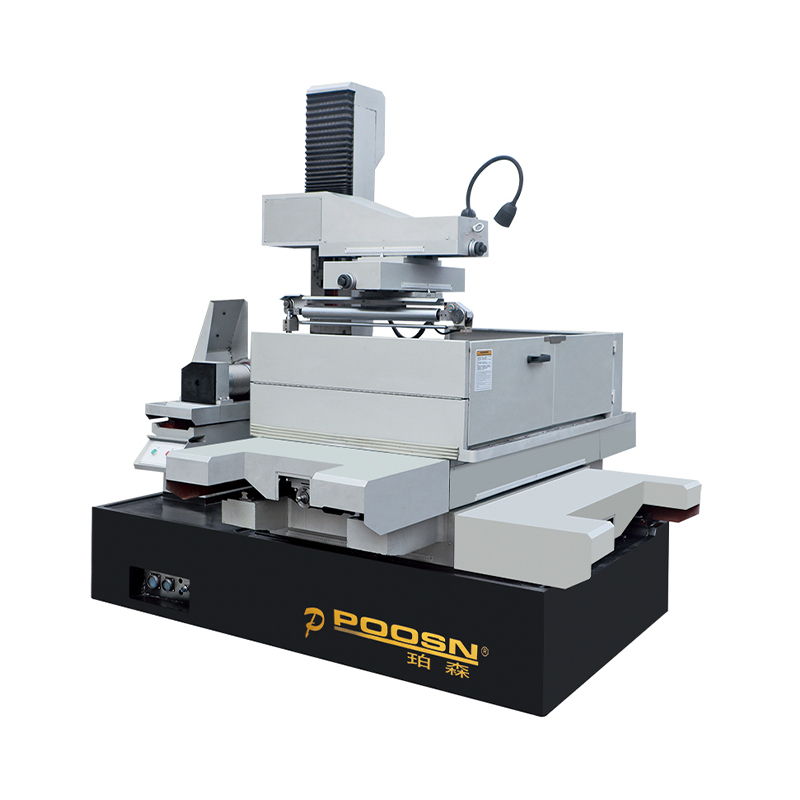
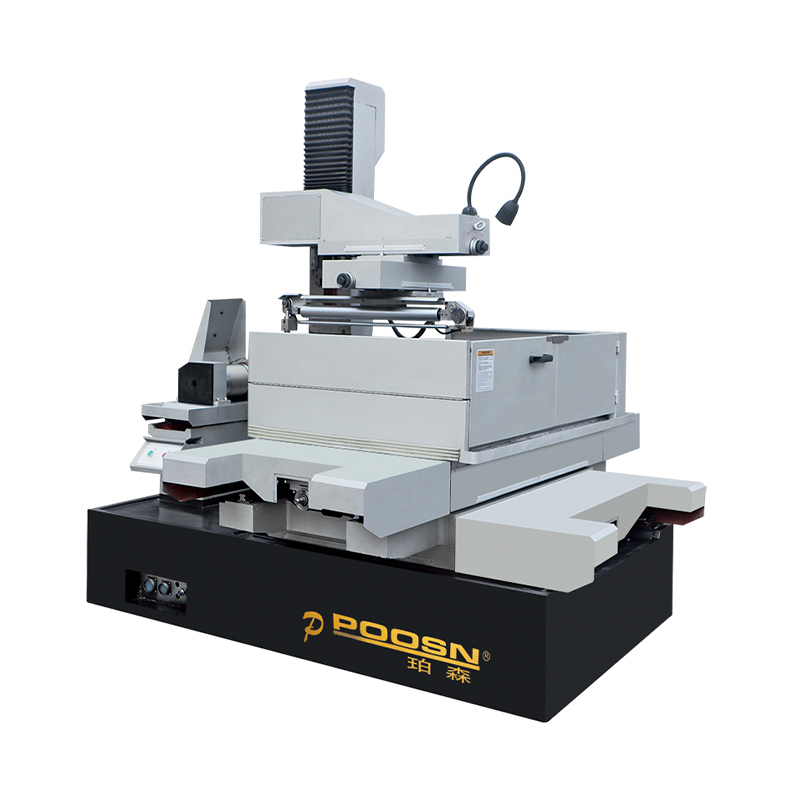
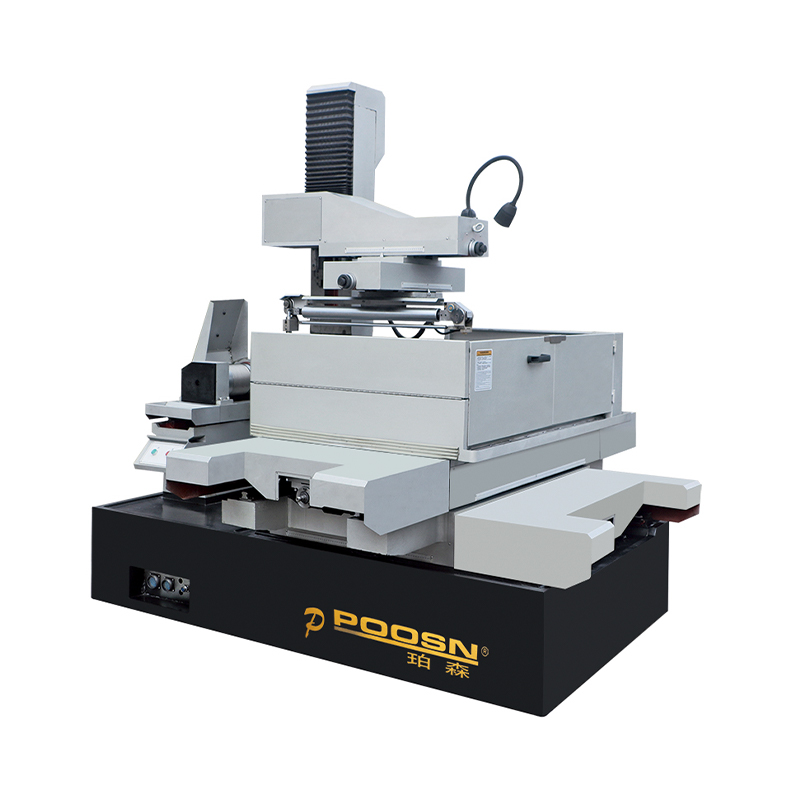
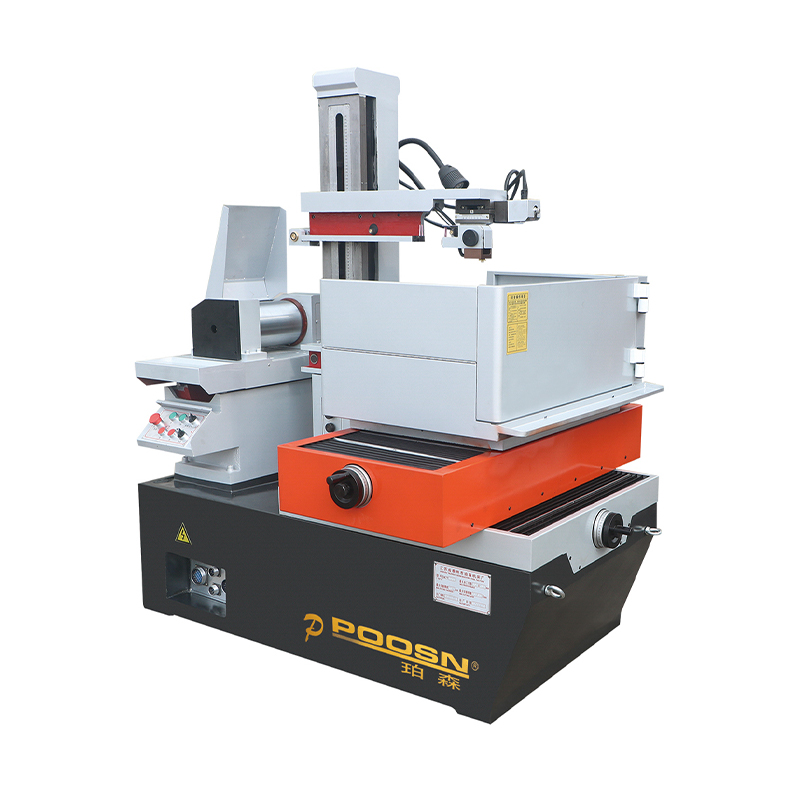
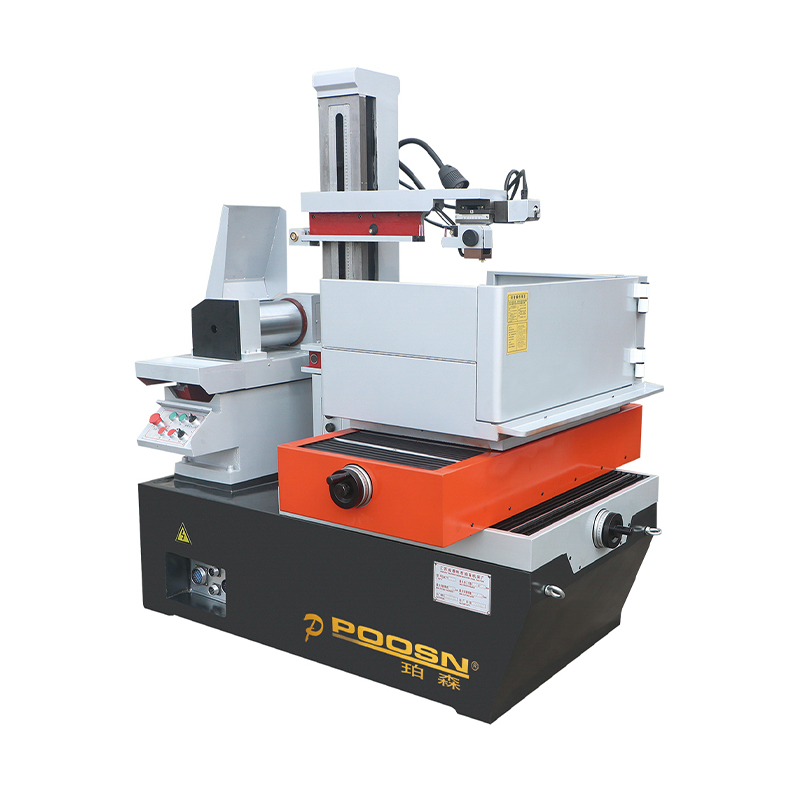
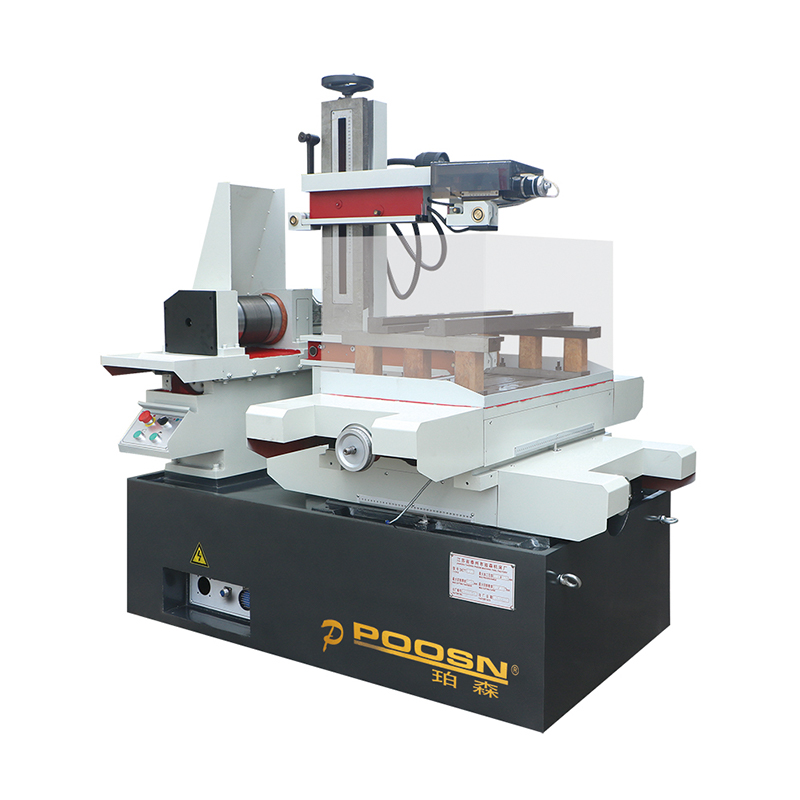
In the realm of precision mold processing and complex component manufacturing, Taizhou Xinchengyang Machinery Manufacturing Co., Ltd. (hereinafter referred to as "Xinchengyang Machinery") has leveraged its profound manufacturing heritage and extensive technical expertise to elevate the performance of its DK45D Large-Taper Wire-Cut Electrical Discharge Machine (WEDM) to an industry-leading standard.
As a machine tool specifically engineered for high-difficulty, large-angle machining tasks, the DK45D serves not only as a core pillar of Xinchengyang Machinery's product portfolio but also as a formidable tool for resolving the challenges associated with cutting complex spatial geometries. The following analysis will provide an in-depth examination of the technical core of this manufacturing powerhouse, exploring key dimensions such as its core architecture, large-taper machining logic, stability control mechanisms, and industry applications.
In-Depth Analysis of DK45D Large-Taper Wire-Cut EDM Technology
I. The Processing Logic of Spatial 4-Axis Linkage
The core advantage of the DK45D lies in its exceptional spatial performance capabilities. Unlike conventional 2D planar cutting, this model achieves flexible spatial tilting of the electrode wire through the highly precise, synchronized linkage of its U and V axes.
Variable Taper Cutting Capability: The machine tool is capable of adjusting the tilt angle of the electrode wire in real-time during the machining process, thereby enabling the production of complex workpieces with distinct upper and lower profiles.
Spatial Trajectory Compensation: To address wire-diameter compensation errors—which are prone to occur during large-taper cutting—Xinchengyang Machinery has optimized its control algorithms, ensuring that the cut surface maintains a high degree of geometric consistency, even at extreme angles.
II. Enhanced Mechanical Structural Stability
During large-taper machining operations, the lateral tension exerted on the electrode wire significantly exceeds that encountered in standard machining. Xinchengyang Machinery has implemented a series of reinforcement measures in the structural design of the DK45D:
High-Rigidity Bed Support: To counteract the center-of-gravity shifts resulting from large-span axis movements, the machine bed is constructed using high-grade castings. These castings undergo a natural aging process to minimize internal stresses to the greatest extent possible.
Precision Wire Guiding System: Specifically engineered for large-angle operations, the alignment between the wire guides and the flushing nozzles has been specially calibrated. This ensures that—even under extreme angles of inclination—the dielectric fluid precisely envelops the electrode wire, thereby maintaining a stable discharge environment.
III. EDM Discharge Control Strategy
Large-taper cutting implies that the effective thickness of the workpiece along the vertical axis of the cutting path is constantly changing. The discharge power supply system integrated into the DK45D features exceptional adaptability:
Pulse Energy Regulation: Based on real-time monitoring of the discharge gap status, the system automatically fine-tunes the energy output of individual pulses. This prevents issues such as corner collapse or thermal overburn (scorching)—problems frequently encountered at the sharp corners of large-taper cuts.
Debris Flushing Optimization: Through the optimization of the dielectric circulation system, the machine effectively resolves the common issue of electro-erosion debris accumulation during large-taper machining, thereby enhancing the surface integrity of the finished workpiece.
Xinchengyang Machinery: Quality Control System vs. Product Advantages
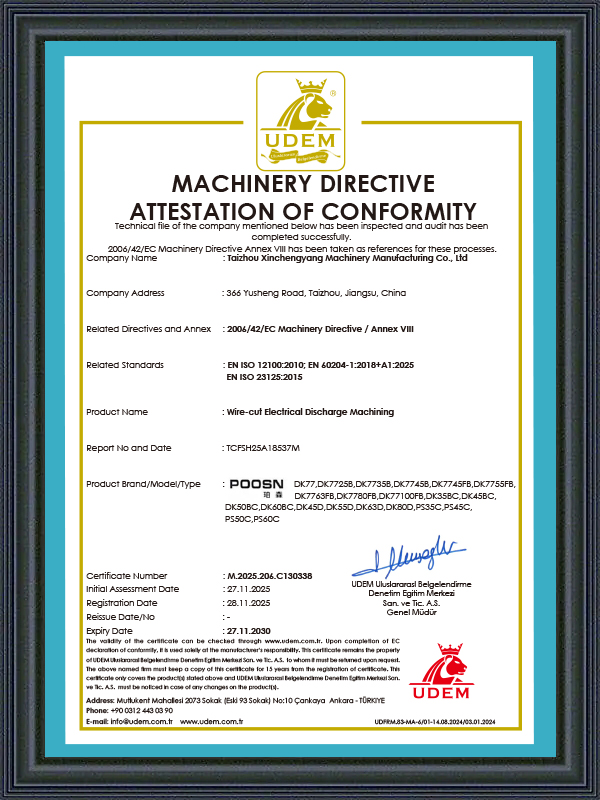
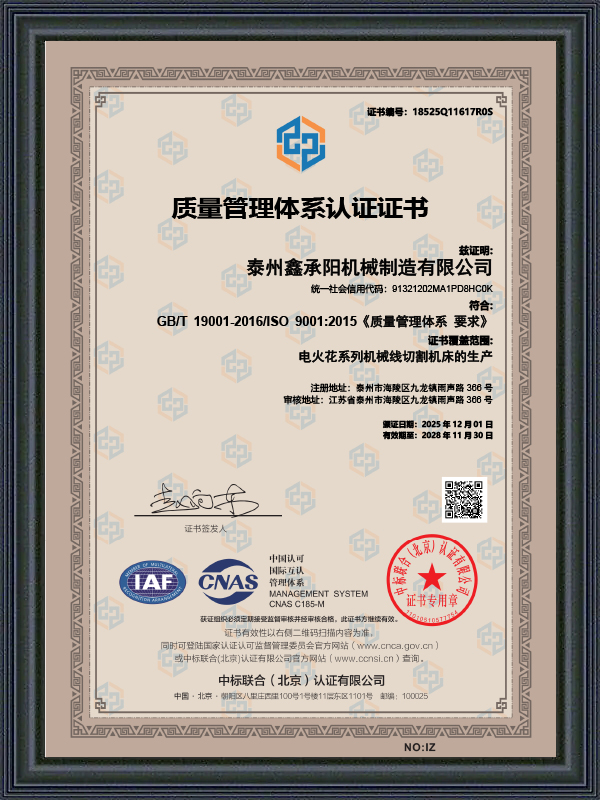
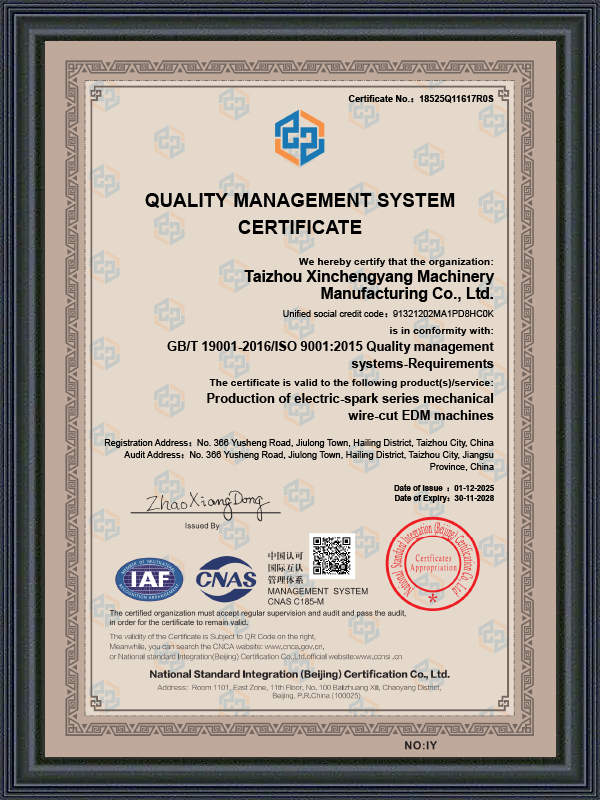
Xinchengyang Machinery fully embraces the principle that "a miss is as good as a mile"—that even a minute deviation can lead to a massive error. Throughout the manufacturing and delivery process of the DK45D, the company strictly enforces a comprehensive, full-sequence inspection protocol. For finished machine tools, Xinchengyang Machinery not only conducts metrological verification in accordance with globally recognized standards but also performs simulated machining trials tailored to the client's specific application scenarios. This rigorous process ensures that every single machine leaving our facility boasts a 100% quality pass rate.
Core Performance Parameter Mapping Table
| Technical Dimension |
Conventional WEDM Equipment |
Xinchengyang DK45D Model |
| Taper Processing Capability |
Limited to small angles or constant tapers. |
Supports large-span, variable taper, and complex contour cutting. |
| Axis Linkage Precision |
Basic 2-axis or simplified 4-axis systems. |
High-precision $X/Y/U/V$ 4-axis real-time synchronized linkage. |
| Structural Fatigue Resistance |
Conventional frames; susceptible to thermal deformation. |
Reinforced castings with high thermal stability design for heavy-duty use. |
| Machining Versatility |
Suitable for simple molds and basic mechanical parts. |
Ideal for aerospace impellers, complex stamping dies, and specialized gears. |
| Quality Control Standards |
Standardized sampling inspection. |
Xinchengyang 100% full-process inspection (compliant with international standards). |
Key Performance in Industrial Applications
Among Xinchengyang Machinery's clientele, the DK45D large-taper wire-cut EDM machine is primarily deployed in the following high-precision and advanced technology sectors:
Complex Stamping Dies: In the machining of large blanking dies, the DK45D is capable of completing the tapered cutting edge in a single pass, eliminating the need for secondary grinding.
Aerospace Components: Used for machining parts featuring specialized aerodynamic profiles; its large-taper linkage capability is an essential prerequisite for accomplishing such tasks.
Precision Automotive Components: Demonstrates exceptionally high repetitive positioning accuracy in the manufacturing of irregularly shaped parts for steering and transmission systems.
Frequently Asked Questions (FAQ)
Q1: Why is the DK45D suitable for machining steep slopes, whereas standard machine tools are not?
Standard machine tools have limited U/V-axis travel, and their mechanical structures lack sufficient rigidity when operating in a tilted position, which often leads to wire vibration marks. Xinchengyang's DK45D features specifically extended effective travel for the U/V axes—reinforced by robust guide rails—thereby ensuring high machining precision even at large angles.
Q2: How is machining precision maintained during steep-angle cutting?
This relies on the geometric deviation compensation technology developed by Xinchengyang Machinery. When the electrode wire is tilted, the actual cutting point undergoes a minute physical displacement; the machine tool's control system utilizes real-time algorithms to apply micro-adjustments to the X and Y axes, thereby offsetting mechanical errors.
Q3: How does Xinchengyang Machinery ensure the consistent quality of every DK45D unit?
As per our commitment, Xinchengyang implements rigorous in-process self-inspections and final product inspections. Upon the completion of final assembly, every machine tool undergoes a full-load operational test lasting several hours. Furthermore, a laser interferometer is utilized to calibrate all precision parameters, ensuring full compliance with international standards as well as our customers' specific requirements.
Q4: Does this equipment impose high technical demands on the operators?
Although the DK45D is a powerful machine, Xinchengyang Machinery has equipped it with an intuitive human-machine interface that handles complex 4-axis linkage calculations in the background. Technicians with basic wire-cutting experience can master the techniques for large-taper machining after undergoing just a short period of systematic training.



 English
 русский
 عربى
عربى