

 English
 русский
 عربى
عربى

Industry News
Wire EDM vs CNC Milling
2026-07-06
Content
- 1 Wire EDM vs CNC Milling: The Direct Answer
- 2 What Is a CNC Wire Cut Machine and How Does Wire EDM Work
- 3 CNC Milling Explained: Mechanical Material Removal
- 4 Precision and Surface Finish Comparison
- 5 Speed and Cycle Time Trends by Material Thickness
- 6 Achievable Tolerance Comparison
- 7 Materials for Wire EDM Machining vs CNC Milling
- 8 Process Capability Overview
- 9 Advantages of Wire EDM Over Conventional EDM and Milling
- 10 Limitations of EDM and When Milling Is the Better Choice
- 11 Choosing the Right Process for Your Project
- 12 About Taizhou Xinchengyang Machinery Manufacturing Co., Ltd
- 13 Frequently Asked Questions
Wire EDM vs CNC Milling: The Direct Answer
Wire EDM (wire electrical discharge machining) removes material through controlled electrical sparks, while CNC milling removes material through direct mechanical cutting with rotating tools. Wire EDM is generally the better choice when a job requires very tight tolerances, hardened or exotic materials, intricate internal shapes, or a burr-free edge straight off the machine. CNC milling is generally the better choice when a job requires fast bulk material removal, large 3D contoured surfaces, or lower per-part cycle time on softer metals. Many mold shops and precision part manufacturers use both processes together: milling to rough out the bulk shape and wire EDM to finish detail features, punches, dies, and hardened inserts. The right process depends on part geometry, material hardness, required tolerance, and surface finish expectations rather than one process being universally superior. The sections below walk through the technical reasoning, supporting data, and practical guidance behind this conclusion.
What Is a CNC Wire Cut Machine and How Does Wire EDM Work
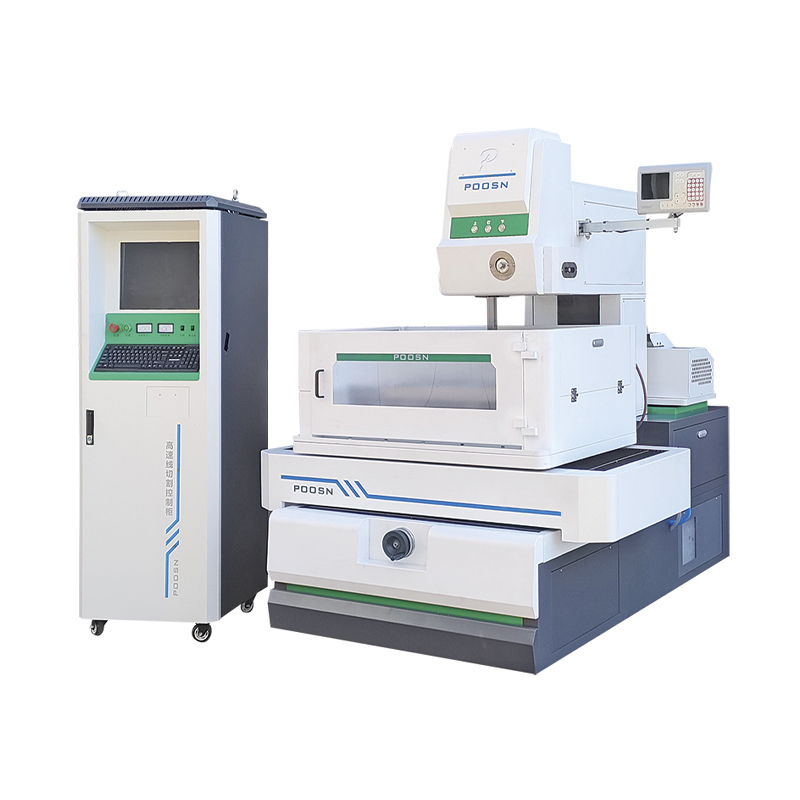
A cnc wire cut machine, also called a wire edm machine or wedm machine, uses a thin, continuously traveling wire (usually brass or molybdenum) as an electrode. The wire never physically touches the workpiece; instead, a series of rapid electrical discharges between the wire and the conductive workpiece erode material along a precise path submerged in or flushed with dielectric fluid. Because there is no mechanical cutting force, wire edm can machine hardened tool steel, carbide, and other difficult alloys without pre-softening them first. This is why wire edm for hardened steel and wire edm for carbide are common applications in mold and die shops. A cnc edm machine controls the wire path using programmed coordinates, allowing complex 2D profiles, tapered walls, and fine internal corners to be cut with high repeatability. Companies offering wire edm services rely on this non-contact principle to hold tolerances that would be difficult to achieve with conventional cutting tools.
Medium Speed and High Speed Wire EDM Machines
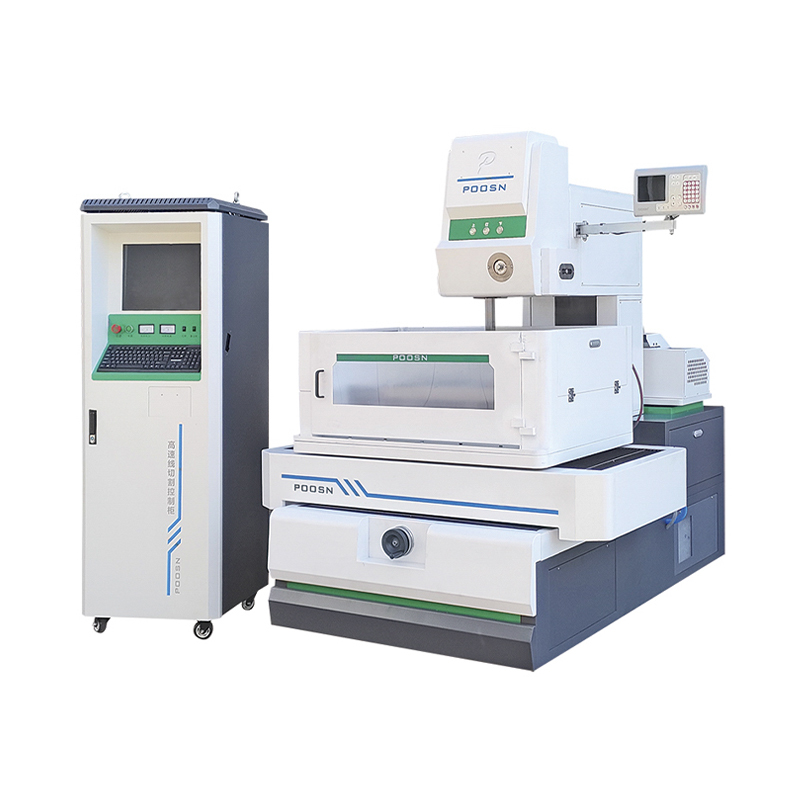
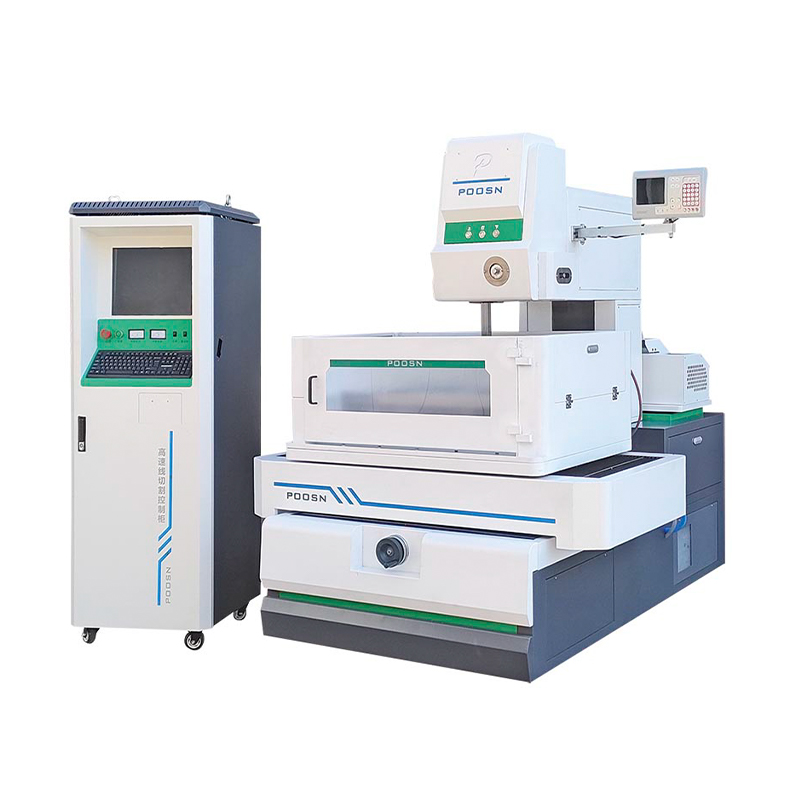
Wire edm machines are generally grouped by wire travel type. Medium speed wire edm machines, sometimes labeled as multi cut wire edm systems, reuse the molybdenum wire in a reciprocating motion and are well suited to precision medium speed edm work where cost efficiency and solid accuracy are both priorities. High speed wire edm machines also use a reciprocating molybdenum wire but are tuned for faster cutting rates on medium-precision jobs. Large taper wire edm machines add the ability to cut angled walls, which is useful for punch and die applications that need a 30 degree taper wire edm or even a 60 degree taper wire edm profile. Selecting between these configurations depends on the tolerance class, wall angle requirements, and expected production volume of the parts being cut.
CNC Milling Explained: Mechanical Material Removal
CNC milling uses a rotating cutting tool to physically shear away material from a workpiece that is held stationary or moved along programmed axes. Unlike edm milling processes, conventional CNC milling applies direct mechanical force, which means cutting speed, tool wear, and material hardness are closely linked. Softer metals like aluminum and mild steel can be milled quickly and economically, but hardened tool steels often need to be annealed first or machined with specialized tooling, which adds time and cost. CNC milling is highly effective for producing 3D contoured surfaces, pockets, and large stock removal operations where wire edm capabilities are not practical because wire edm generally follows a 2D or tapered profile rather than a full 3D sculpted surface. In many production workflows, milling handles the rough shape and larger cavities, while wire edm or other special processing steps are reserved for the tightest-tolerance detail features.
Precision and Surface Finish Comparison
One of the clearest differences between the two processes shows up in achievable surface finish. Because wire edm erodes material in extremely fine increments without mechanical force, it typically produces a smoother surface directly off the machine compared to standard milling. This matters for mold and die components where a smooth cavity surface reduces the need for secondary polishing. The chart below illustrates typical surface roughness ranges reported across general industrial machining references; actual results vary by machine setup, wire type, feed rate, and material. Wire edm surface finish quality is a major reason mold makers specify this process for cavity and core detail work. CNC milling can achieve a good finish with fine finishing passes, but it generally requires additional passes or a secondary grinding step to reach the same roughness level as a well-tuned wire edm cut.
Speed and Cycle Time Trends by Material Thickness
Cutting speed behaves differently between the two processes as material thickness increases. Wire edm cutting speed tends to decline more gradually with thickness because the process is not limited by tool deflection the way a milling cutter is. CNC milling can be very fast on thin sections but slows down considerably as depth of cut and material hardness increase, since deeper cuts require lighter passes to avoid tool breakage or chatter. This is one reason wire cutting edm is often preferred for thick, hardened plates such as punch and die stock, while milling remains the faster option for thinner, softer stock removal. The line chart below shows a general illustrative trend rather than fixed values, since actual cycle time depends on wire diameter, generator settings, tool selection, and part geometry. Shops offering wire edm services and cnc edm machines typically run trial cuts on a sample of the target material before quoting a production cycle time.
Achievable Tolerance Comparison
Tolerance capability is often the deciding factor when choosing between a cnc edm machine and a milling center. Wire edm machines, particularly precision medium speed edm and servo wire edm machine configurations, are commonly specified for tolerances tighter than what standard milling can hold without a secondary grinding operation. This is one reason wire edm for mold making and wire edm for precision parts remain common industry terms; the process directly supports tight-fit components like punches, dies, and gauge blocks. CNC milling still holds respectable tolerances for general mechanical parts, and modern high precision wire cut machine centers can narrow the gap, but for the tightest fits, hardened tool steel work, and complex internal corners, wire edm typically remains the preferred method. The bar chart below presents general illustrative tolerance bands rather than guaranteed figures, since real-world tolerance depends heavily on machine condition, calibration, and part rigidity.
Materials for Wire EDM Machining vs CNC Milling
Material compatibility is another practical dividing line between the two processes. Because wire edm relies on electrical conductivity rather than mechanical cutting force, it can machine hardened tool steel, carbide, titanium, and Inconel without needing the material to be soft. This makes wire edm for hardened steel, wire edm for titanium, and wire edm for Inconel realistic production options for aerospace and tooling applications. CNC milling, in contrast, works on both conductive and non-conductive materials, including plastics and composites, but performs best on materials within a moderate hardness range unless specialized tooling and slower feed rates are used. The table below summarizes general material suitability for each process as a practical planning reference.
| Material | Wire EDM Suitability | CNC Milling Suitability |
|---|---|---|
| Hardened Tool Steel | Excellent | Requires special tooling |
| Carbide | Excellent | Difficult |
| Titanium / Inconel | Good | Moderate, tool-wear intensive |
| Aluminum | Possible but less common | Excellent |
| Plastics / Composites | Not applicable (non-conductive) | Good |
Process Capability Overview
Choosing between wire edm and cnc milling often comes down to weighing several capabilities at once rather than picking a single winner. The radar comparison below scores each process on a simple 1-to-5 scale across five practical criteria: precision, surface finish, hardness handling, complex 2D geometry, and raw production speed. Wire edm scores strongly on precision, surface finish, and hardness handling, which explains its popularity for wire edm for mold making, wire edm for die manufacturing, and wire edm for medical components. CNC milling scores strongly on production speed and complex 3D geometry, since it can rough out large volumes of material quickly and sculpt contoured surfaces that a 2D wire path cannot follow. Reading both charts together, rather than in isolation, gives a clearer picture of which process fits a specific part.
Advantages of Wire EDM Over Conventional EDM and Milling
Wire edm offers several practical advantages that explain its continued demand across mold making, tooling, and precision parts manufacturing. It cuts hardened materials directly, avoiding the extra annealing and re-hardening steps that milling sometimes requires. It leaves a burr-free edge, reducing secondary deburring labor. It can hold tight tolerances on thin walls and delicate features without inducing mechanical stress into the part, since there is no physical cutting force involved. It also supports large taper wire edm angles for punch and die clearance work that would be very difficult to reproduce with a standard end mill. These combined advantages of wire edm over conventional edm and milling are why many shops treat wire cutting edm as a finishing step after rough milling rather than a replacement for it.
- Machines hardened tool steel, carbide, and exotic alloys without pre-softening
- Produces a smoother, more consistent surface finish directly off the machine
- Avoids mechanical stress and tool deflection on thin or delicate features
- Supports tapered wall cutting for punch and die clearance
- Repeats tight tolerances reliably across long production runs
Limitations of EDM and When Milling Is the Better Choice
Wire edm is not the right tool for every job, and understanding the limitations of edm is just as important as knowing its strengths. The workpiece must be electrically conductive, which rules out plastics, ceramics, and most composites. Wire edm generally follows a path through the material, so it is not well suited to producing large sculpted 3D surfaces the way milling can. Very large volumes of stock removal also tend to be slower with wire edm than with a milling cutter taking aggressive roughing passes. For these reasons, most production plans use CNC milling to shape the bulk part and rough cavities, then bring in wire edm for the hardened inserts, fine details, or tight-tolerance internal profiles that milling cannot reach as cleanly.
- Requires an electrically conductive workpiece material
- Not ideal for large-volume 3D sculpted surfaces
- Bulk stock removal is typically slower than aggressive milling passes
- Best used alongside milling rather than as a full replacement in most workflows
Choosing the Right Process for Your Project
When deciding between a cnc edm machine and a milling center, it helps to ask a few practical questions first. Does the part need a tight tolerance on a hardened material, such as a die insert or punch component? If so, wire edm services are typically the stronger fit. Does the part need a large, contoured 3D surface, such as a mold cavity base shape? If so, CNC milling is usually faster and more economical for that stage. Many mold and die projects use both: milling to establish the overall form, and wire edm to finish hardened inserts, sharp internal corners, and tapered clearance walls. Reviewing the part drawing with an experienced wire edm supplier or edm cnc machine operator before production begins helps confirm which combination of processes will meet the tolerance, finish, and timeline requirements.
About Taizhou Xinchengyang Machinery Manufacturing Co., Ltd
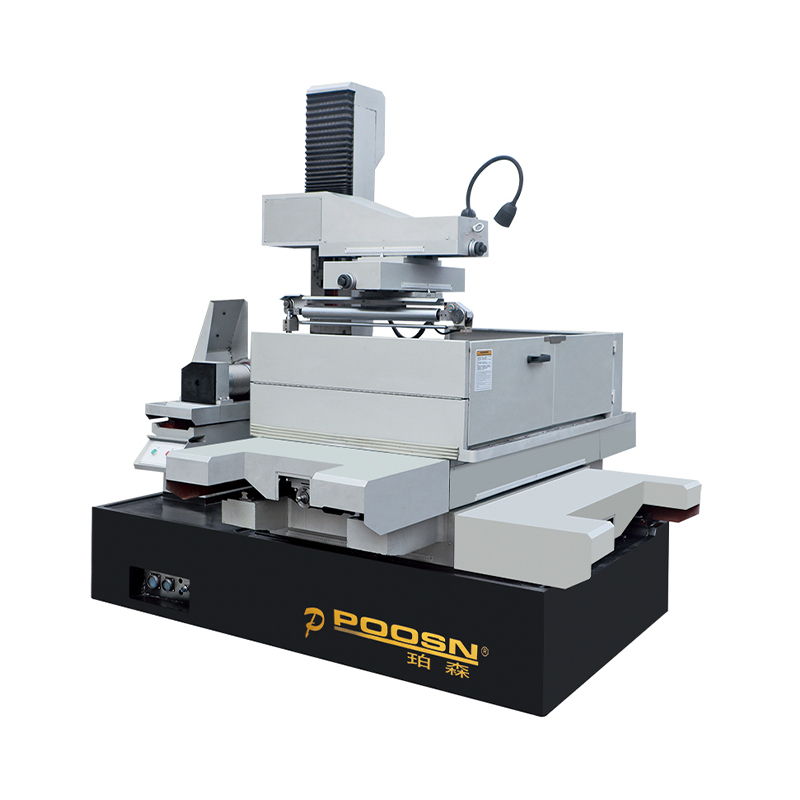
Taizhou Xinchengyang Machinery Manufacturing Co., Ltd is a specialized wire edm manufacturer with years of experience in the research, development, and production of electrical discharge machining and special processing equipment. The company maintains strong technical capability, advanced processing equipment, comprehensive testing methods, and rational product design. Every machine tool is manufactured according to national standards and undergoes positioning accuracy testing before leaving the factory, supporting consistent quality across the product line. Main product lines include the PS-C and DK77-BC series of medium speed wire-cutting edm machines, the DK77-A and DK77-B series of high speed wire-cutting edm machines, and the DK77-D series of large taper wire-cutting edm machines. Products are sold nationwide, with select models exported to Southeast Asia, West Asia, Europe, and the Americas, guided by a market-oriented approach centered on quality and attentive customer service.
Frequently Asked Questions
Q1: What is the main difference between wire edm and cnc milling?
Wire edm removes material through electrical discharge with a traveling wire, while cnc milling removes material through direct mechanical cutting with a rotating tool.
Q2: Can wire edm cut hardened steel?
Yes, wire edm is commonly used for hardened tool steel, carbide, and other hard alloys since it does not rely on mechanical cutting force.
Q3: Is cnc milling faster than wire edm?
For bulk 3D shaping and softer materials, milling is generally faster; for tight-tolerance detail work on hard materials, wire edm is usually more efficient overall.
Q4: Do mold shops use both processes together?
Yes, it is common practice to mill the bulk mold shape first and use wire edm for hardened inserts, tight corners, and tapered clearance features.
Q5: What materials cannot be cut with wire edm?
Wire edm requires an electrically conductive material, so plastics, ceramics, and most composites are not suitable for this process.
-
Phone
+86-0523-86268788 +86-13815960366 +86-13912191163Email
[email protected]Address
No. 366, Yusheng Road Jiulong Town, Hailing District Taizhou City, China
Copyright © Taizhou Xinchengyang Machinery Manufacturing Co., Ltd. All Rights Reserved.
Custom edm machine for sale
wholesale edm machine manufacturers
