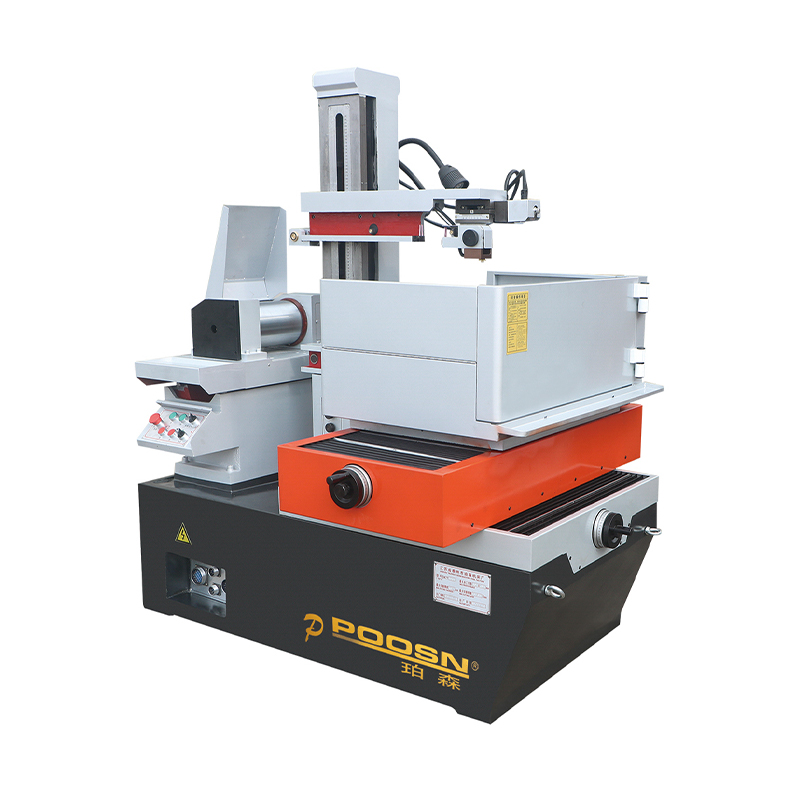
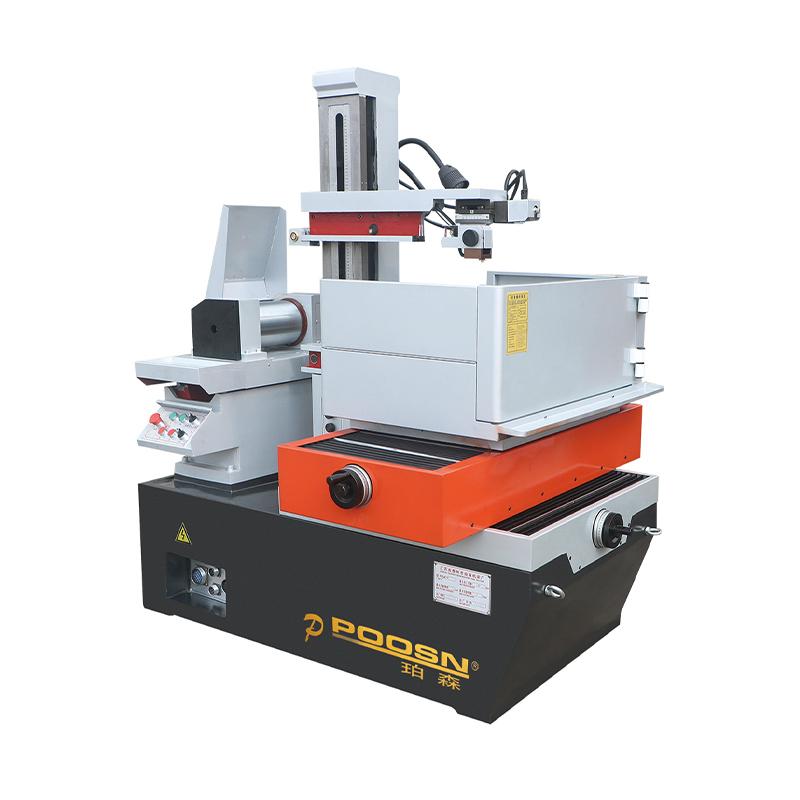
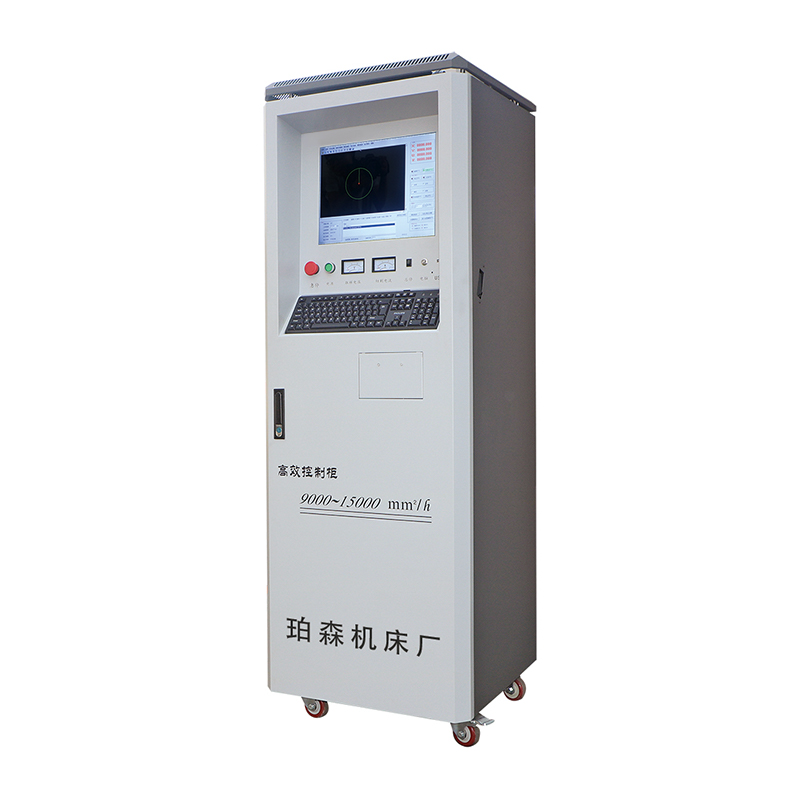
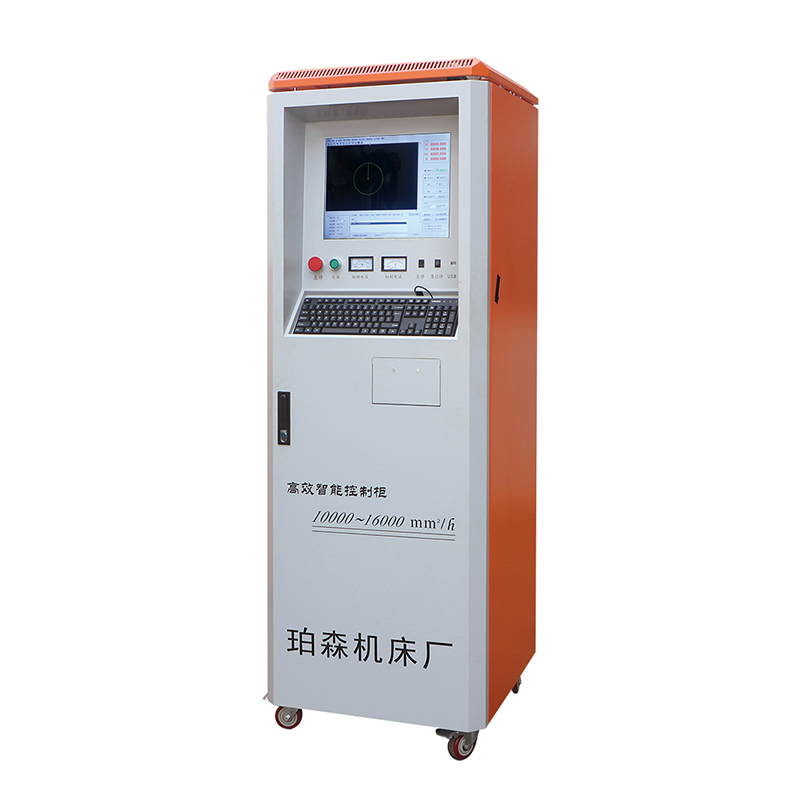
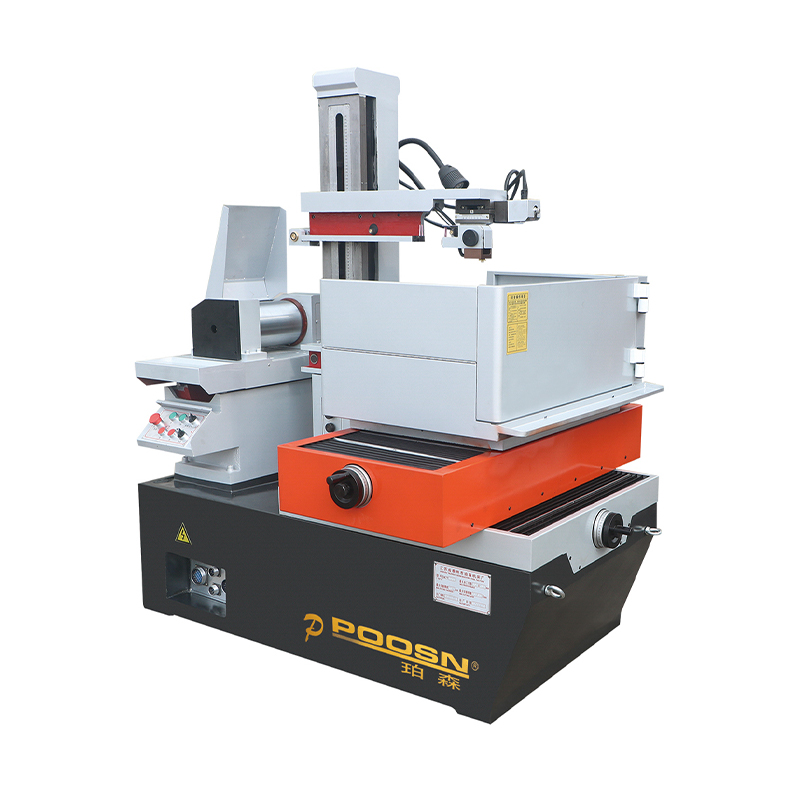
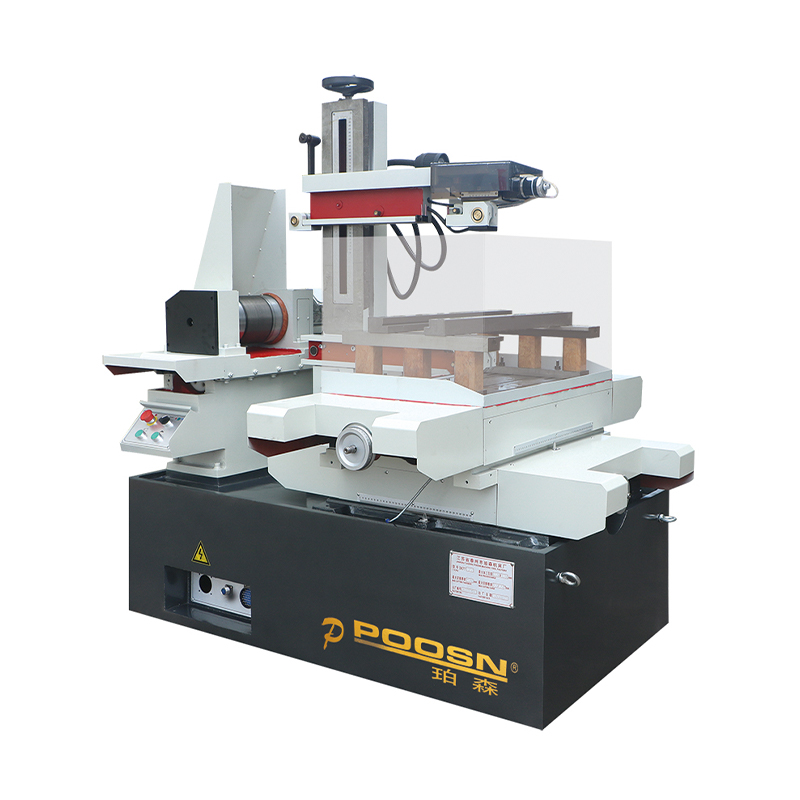
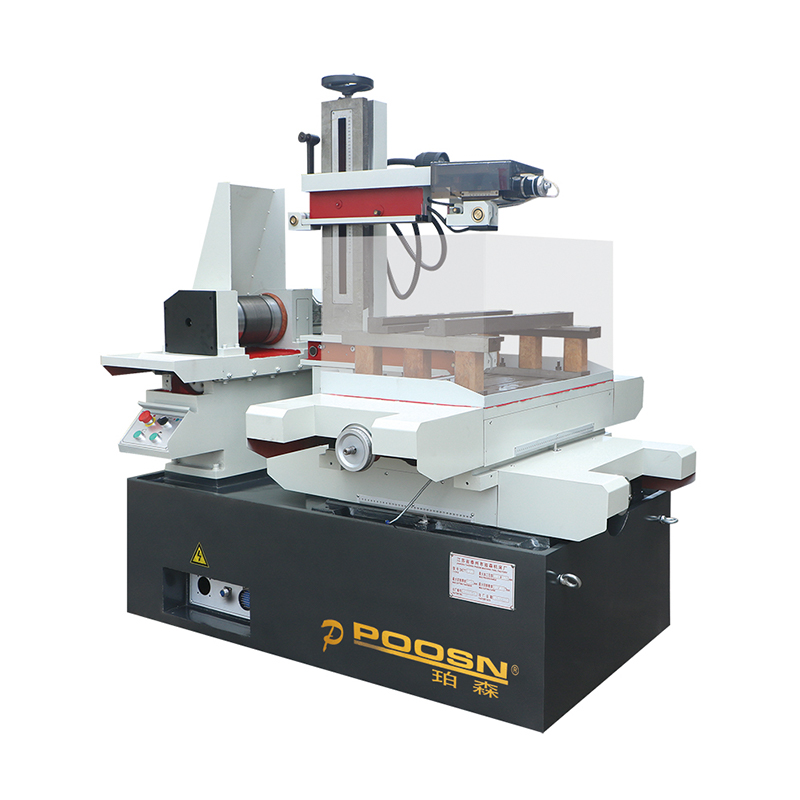
In the contemporary landscape of mold manufacturing and parts machining, the pursuit of a balance between efficiency and precision remains a central objective. As a specialized force deeply rooted in the field of electrical discharge machining (EDM), Taizhou Xinchengyang Machinery Manufacturing Co., Ltd. offers the industry a mature and flexible machining solution through its flagship product: the DK50BC High-Medium-speed WEDM.
The DK50BC serves not only as a testament to Taizhou Xinchengyang's technical prowess but also as an extension of its core manufacturing philosophy: "Precision, Stability, and Efficiency."
I. Core Technical Architecture and Design Philosophy
The DK50BC was originally conceived to bridge the market gap between traditional "fast-wire" WEDMs and their high-cost "slow-wire" counterparts. During the development of this model, Taizhou Xinchengyang placed a primary focus on optimizing the machine tool's dynamic characteristics.
High-Rigidity Mechanical Base
The machine bed is constructed from high-quality cast iron that has undergone rigorous aging treatment designed to eliminate internal stresses. This structural design ensures that the machine maintains stable geometric precision—even during prolonged, high-speed reciprocating motion—thereby preventing minute deformations caused by the machine's own weight or cutting forces.
Closed-Loop Wire Feeding System
Unlike traditional equipment, the DK50BC's wire feeding system places a strong emphasis on maintaining constant wire tension. Through a multi-stage tensioning mechanism, the system effectively suppresses the vibration of the molybdenum wire during high-speed operation—a critical factor that directly determines the flatness and perpendicularity of the machined surface.
Intelligent Pulse Power Supply Technology
Serving as the "heart" of the machine tool, Taizhou Xinchengyang has equipped the DK50BC with a high-performance pulse power supply. This system is capable of adjusting discharge frequency and pulse width in real-time based on the material's thickness and composition; this capability not only guarantees machining efficiency but also significantly reduces the wear and tear on the electrode wire.
II. Core Advantages of the DK50BC Machining Process
Through extensive optimization of the DK50BC, Taizhou Xinchengyang has enabled the machine to deliver exceptional performance across a wide range of complex operating conditions:
Multiple Cutting Strategies
The equipment supports the typical "medium-wire" machining process, which follows a sequence of "one rough cut, two fine cuts, and three trim cuts." By executing multiple trimming passes, the machine effectively removes the surface-altered layer (recast layer), thereby bringing the surface finish—or roughness—of the workpiece close to the quality standards typically achieved by "slow-wire" WEDMs.
Broad Material Compatibility
Whether working with cemented carbide, hardened steel, or conductive ceramic materials, the DK50BC achieves stable cutting performance through the precise matching of specific electrical parameters. It is particularly well-suited for machining the cavities and complex contours of precision molds.
Cooling and Chip Evacuation System
An optimized fluid channel design ensures that the dielectric fluid precisely covers the cutting zone, effectively and promptly flushing away the microscopic particles generated by electrical discharge. This prevents "burns"—surface damage caused by secondary discharges—from occurring on the machined surface.
III. Taizhou Xinchengyang's Quality Control System
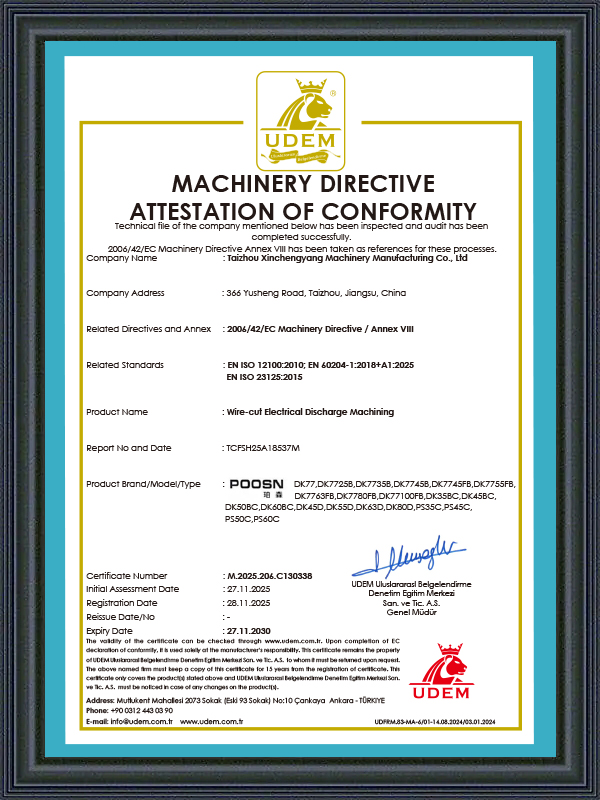
Taizhou Xinchengyang Machinery Manufacturing Co., Ltd. has embedded a rigorous quality ethos into the production line of the DK50BC. Before delivery, every single machine tool must undergo the following procedures:
Dynamic Positioning Accuracy Testing: Utilizing a laser interferometer to perform multi-point compensation, thereby ensuring the accuracy of spatial motion trajectories.
Environmental Simulation Testing: Simulating continuous, high-load operating conditions to verify the heat dissipation stability and overall reliability of the electrical components.
Scientific Product Design: Incorporating ergonomic principles to optimize the layout of the control panel, enabling technicians to monitor machining status more intuitively.
IV. Reference: Comparison of Key Technical Features
To provide a more intuitive understanding of the DK50BC's positioning within our product lineup, the table below outlines the specific application scenarios for its core technical features:
| Technical Dimension |
Performance Manifestation |
Industrial Application Value |
| Wire Transport Control |
Constant tension with bidirectional automatic compensation |
Enhances workpiece verticality and minimizes wire vibration marks. |
| Control System |
Embedded industrial-grade control motherboard |
Strengthens anti-interference capabilities and ensures lossless data transmission. |
| Transmission Structure |
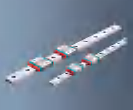
High-precision ball screws and linear rolling guides |
Achieves micron-level feed precision and geometric accuracy. |
| Lubrication System |
Automated centralized oil supply design |
Extends the service life of mechanical transmission components and reduces friction. |
| Environmental Design |
Fully enclosed waterproof shield (Optional) |
Improves the workshop environment by preventing dielectric fluid splashing. |
V. FAQ: In-Depth Q&A Regarding the DK50BC
Q1: How does the DK50BC ensure perpendicularity when machining ultra-thick workpieces?
A: Taizhou Xinchengyang addresses this by reinforcing the rigid support of the UV axes and integrating a real-time wire tension compensation function, which effectively counteracts the lag effect experienced by the molybdenum wire during ultra-thick cutting operations. Additionally, we recommend that users employ a multi-cut machining strategy—utilizing finishing passes—to correct the issue of central concavity often encountered when cutting materials of significant thickness.
Q2: How is the electrode wire wear evaluated on this machine model?
A: Wire wear is primarily determined by the energy distribution of the pulse power supply. The DK50BC employs energy-balancing technology to automatically reduce the current during non-machining intervals, thereby minimizing the wasteful consumption of the molybdenum wire. When combined with high-quality working fluid, this approach can significantly extend the service life of a single wire.
Q3: How does Taizhou Xinchengyang handle compatibility issues regarding complex geometric shapes?
A: On the software side, this equipment supports the geometric codes generated by all mainstream CAD/CAM software packages. Through built-in path optimization algorithms, the system automatically handles sharp-corner compensation and complex curve smoothing, thereby reducing machining anomalies that might otherwise arise from code conversion processes.
Q4: What is the fundamental difference between "medium-speed wire-cut" and "high-speed wire-cut" technologies as implemented on the DK50BC?
A: The fundamental difference lies in "controllability." The DK50BC not only delivers the machining speed characteristic of high-speed wire-cut machines but—through the application of multi-cut technology and more precise stepper/servo control systems—also achieves a profound level of control over surface finish and dimensional tolerances; a level of precision that is difficult to attain with traditional high-speed wire-cut machines.
Through continuous technological iteration, Taizhou Xinchengyang Machinery Manufacturing Co., Ltd. offers the market not merely a machine tool—the DK50BC—but a comprehensive system for ensuring precision machining excellence. For manufacturing enterprises seeking to upgrade their production capacity, this undoubtedly serves as a vital cornerstone for optimizing manufacturing processes and enhancing product competitiveness.



 English
 русский
 عربى
عربى