

 English
 русский
 عربى
عربى

Industry News
Home / News / Industry News / High-speed Wire EDM vs Medium-speed Wire EDM: Which One Is Better for Precision Parts?
High-speed Wire EDM vs Medium-speed Wire EDM: Which One Is Better for Precision Parts?
2026-04-28
Content
1. Direct Verdict: High-Speed Wire EDM vs Medium-Speed Wire EDM for Precision Parts
For precision parts manufacturing, Medium-speed Wire EDM is generally the preferred solution when balancing accuracy, surface quality, and dimensional stability. Compared with HS-WEDM, medium-speed systems achieve significantly better surface integrity and tighter tolerances, making them suitable for molds, aerospace parts, and medical components.
In typical industrial conditions, medium-speed Wire EDM can reach ±0.003–0.005 mm accuracy with surface roughness as low as Ra 0.8–1.2 µm, while high-speed systems usually remain at lower precision levels. This makes medium-speed technology more suitable for final-stage machining of high-value components.
2. Core Differences in Structure and Working Principle
The performance gap between HS-WEDM and medium-speed Wire EDM mainly comes from wire type, discharge stability, and cutting strategy. These differences directly affect precision, surface quality, and repeatability in production environments.
High-Speed Wire EDM (HS-WEDM)
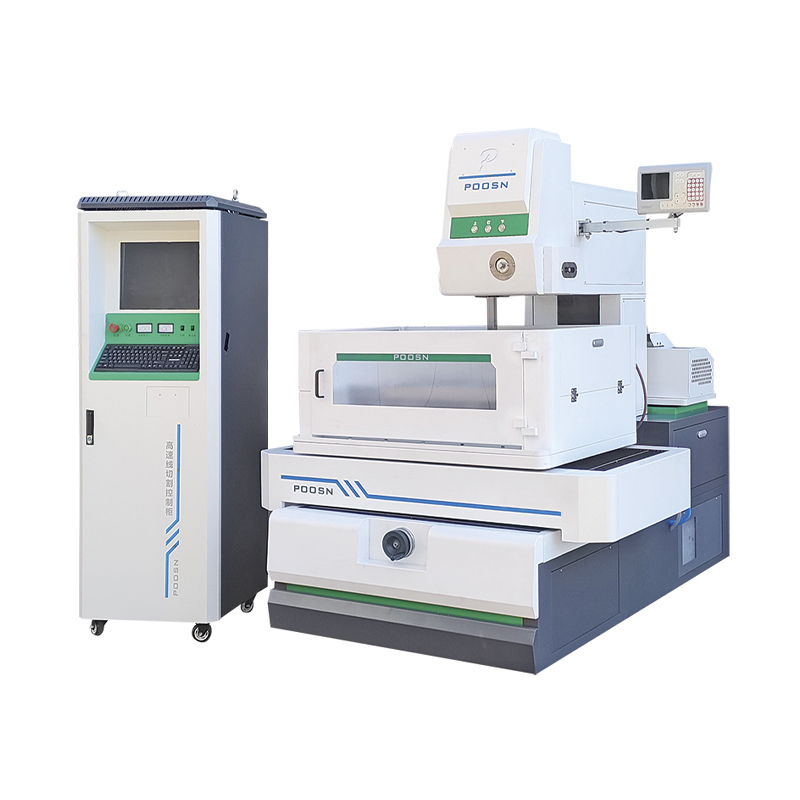
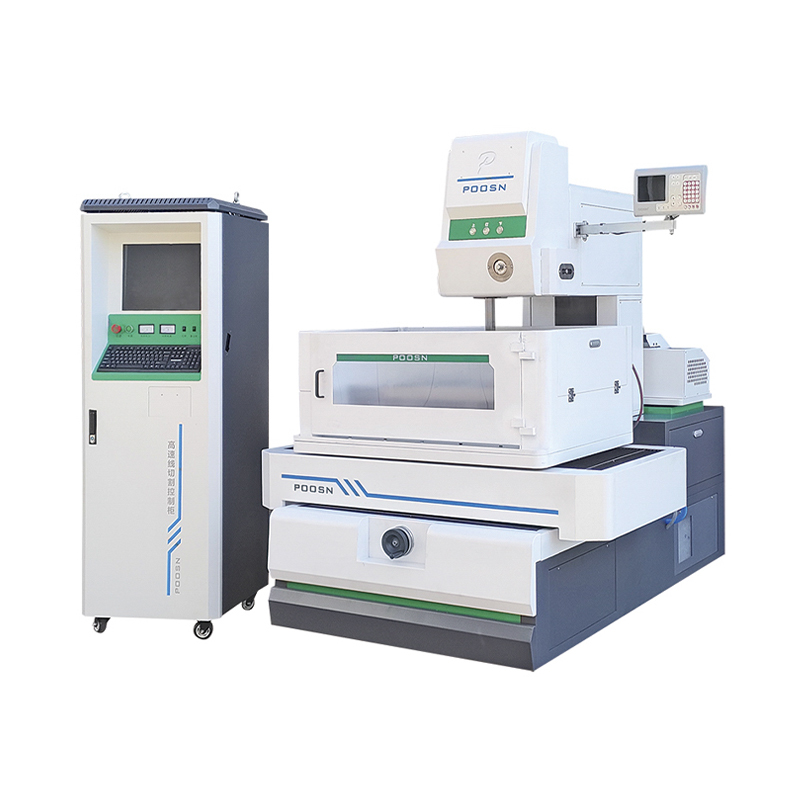
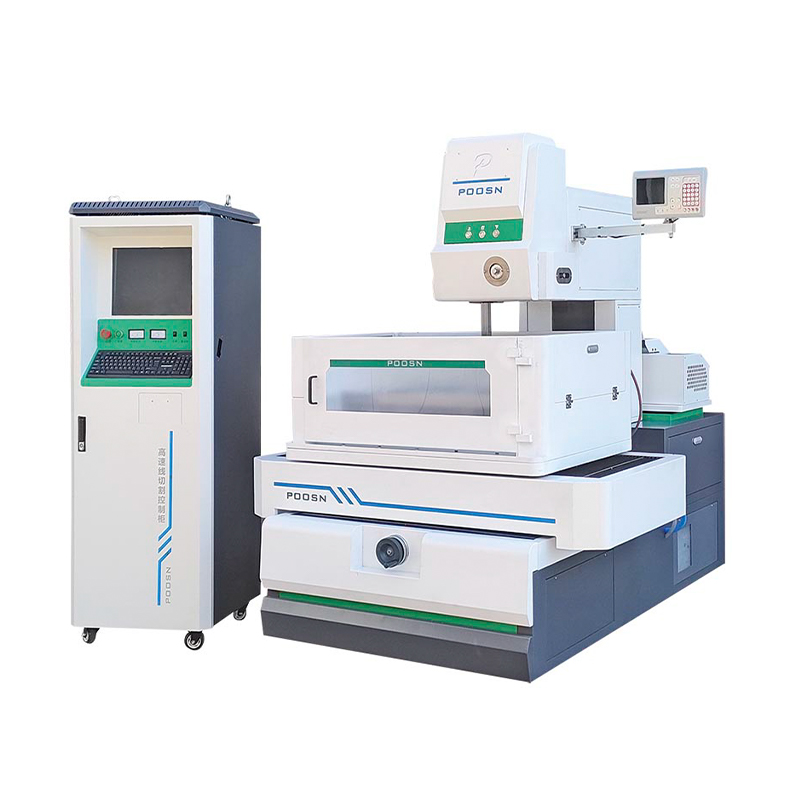
HS-WEDM uses molybdenum wire in a continuous or reciprocating motion. While it provides high cutting speed, wire wear and discharge instability often result in lower geometric accuracy and rougher surfaces. It is typically used for rough machining or less critical parts.
Medium-Speed Wire EDM
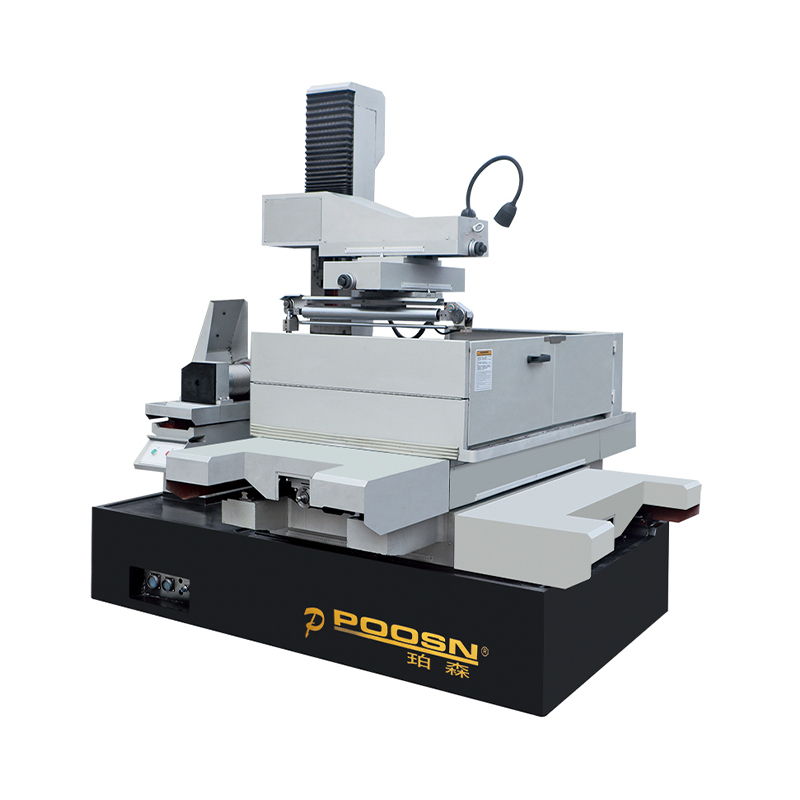
Medium-speed systems use brass or coated wire combined with multi-pass cutting (rough + trim cuts). This approach improves discharge consistency and significantly reduces taper errors, making it ideal for high-precision finishing applications.
| Parameter | High-Speed WEDM | Medium-Speed WEDM |
|---|---|---|
| Cutting Stability | Moderate | High |
| Surface Finish | Rougher | Fine / Mirror-like |
| Dimensional Accuracy | ±0.010–0.020 mm | ±0.003–0.005 mm |
| Recast Layer | Thicker | Thinner & more uniform |
3. Precision Performance and Industrial Applications
Medium-speed Wire EDM demonstrates superior performance in high-precision tooling and mold manufacturing. Its multi-pass cutting strategy significantly reduces taper deviation and improves edge sharpness, especially in hardened steels.
In comparison, HS-WEDM is better suited for preliminary cutting and non-critical components where speed is prioritized over surface quality.
- Injection mold inserts requiring tight dimensional control
- Aerospace precision structural parts
- Medical device micro-components
- High-end stamping die systems
4. Decision Guide: Selecting the Right EDM Process
Choosing between HS-WEDM and medium-speed Wire EDM depends on part tolerance, surface finish requirements, and production goals. The following simplified guide summarizes key decision factors.
| Requirement | HS-WEDM | Medium-Speed WEDM |
|---|---|---|
| High-speed roughing | Excellent | Moderate |
| Precision finishing | Limited | Excellent |
| Complex geometry parts | Moderate | High suitability |
| Surface integrity demand | Low | High |
Overall, medium-speed Wire EDM provides a more balanced solution for modern precision parts manufacturing, especially where stability and consistency are critical.
5. Frequently Asked Questions
Q1: Which EDM is better for high precision molds?
Medium-speed Wire EDM is generally preferred due to its superior accuracy and surface finish.
Q2: Can HS-WEDM replace medium-speed EDM?
Only for rough machining or low-precision components; it cannot fully replace medium-speed systems in precision manufacturing.
Q3: What is the main limitation of HS-WEDM?
Wire wear and unstable discharge lead to reduced accuracy and surface quality.
Q4: Is medium-speed EDM suitable for mass production?
Yes, especially for high-precision batch parts requiring consistent quality.
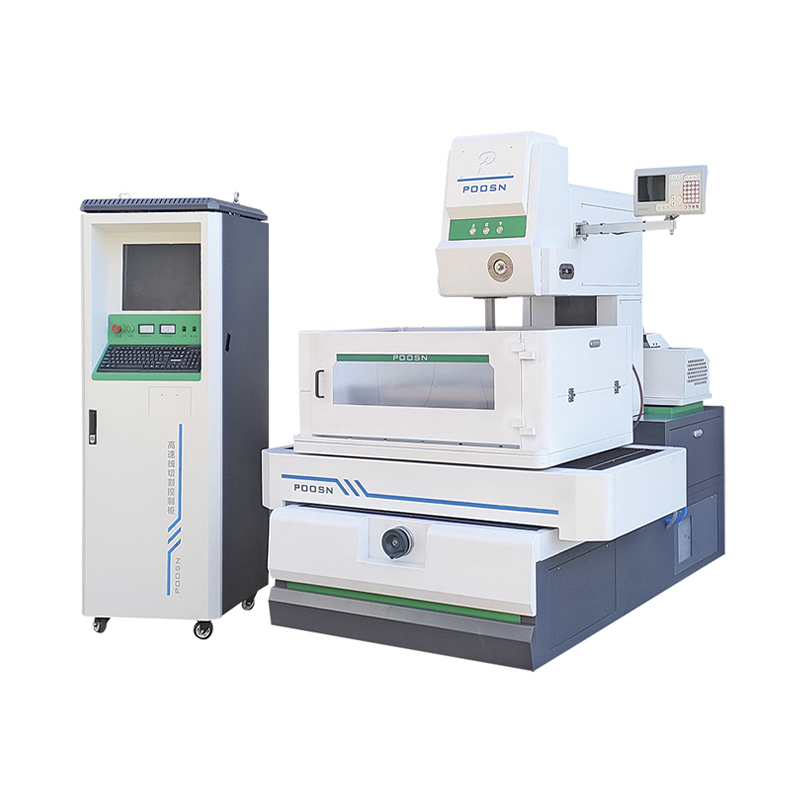
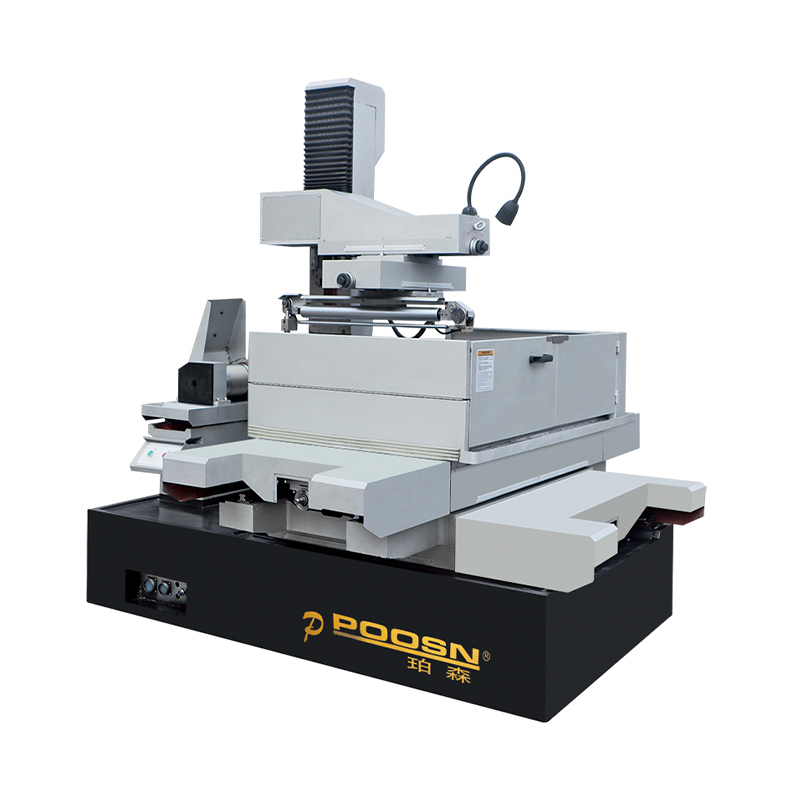
-
Phone
+86-0523-86268788 +86-13815960366 +86-13912191163Email
[email protected]Address
No. 366, Yusheng Road Jiulong Town, Hailing District Taizhou City, China
Copyright © Taizhou Xinchengyang Machinery Manufacturing Co., Ltd. All Rights Reserved.
Custom edm machine for sale
wholesale edm machine manufacturers
