

 English
 русский
 عربى
عربى

Industry News
Home / News / Industry News / Wire EDM for Aerospace: Precision Cutting Guide for Critical Components
Wire EDM for Aerospace: Precision Cutting Guide for Critical Components
2026-09-15
Your shop just received a batch of turbine blade lock plates made from Inconel 718, a stack of titanium fire seals, and a set of hardened D2 die inserts for a landing gear forging die. The drawing calls for profile tolerances of ±0.005 mm, a surface finish better than Ra 0.8 micron, and no cracks in the recast layer. The production schedule gives you seven days.
In that situation, Wire EDM for aerospace is not a second choice; it is the only practical cutting process that meets all three requirements at the same time. Electrical discharge wire cutting removes material with precisely controlled sparks in a dielectric fluid, so the hardness and toughness of the workpiece do not restrict the feed rate the way they do in milling or grinding. Aerospace manufacturing has relied on this process for decades to produce fir tree slots in turbine disks, cooling holes, precision brackets, seal rings, and thin-walled housings where burrs, tool deflection, and grinding burn are not acceptable.
The conclusion up front: if you machine high-value aerospace alloys and need repeatable batch accuracy, a wire cut EDM machine configured for aerospace work will deliver better quality and lower total cost than conventional machining alone. The rest of this article explains the technical reasons, shows how different aerospace alloys behave in the cut, lists the machine specifications that matter, and outlines what to check when you work with a wire EDM supplier or an EDM machine manufacturer.
Key conclusion: The first step in evaluating wire EDM for aerospace is defining your part family: material, size, taper angle, surface finish, and monthly production volume. Use those definitions as the basis for machine selection and process planning.
Content
- 1 Why Wire EDM Is Indispensable for Aerospace Components
- 2 Aerospace Materials and How Wire EDM Handles Them
- 3 Machining Quality: Tolerances, Surface Finish, and Surface Integrity
- 4 Selecting the Right Wire EDM Machine for Aerospace Work
- 5 Working with a Wire EDM Manufacturer: What Aerospace Buyers Should Check
- 6 Frequently Asked Questions about Wire EDM for Aerospace
- 6.1 Can wire EDM cut titanium for aerospace parts without cracking?
- 6.2 What surface finish can aerospace wire EDM achieve?
- 6.3 What is the difference between high-speed and medium-speed WEDM for aerospace use?
- 6.4 How does the factory guarantee the quality of a wire EDM machine?
- 6.5 Can the machines handle large taper angles required by some aerospace designs?
Why Wire EDM Is Indispensable for Aerospace Components
Wire EDM, also called wire-cut electrical discharge machining or WEDM, generates each spark between a thin energized wire electrode and the workpiece. The wire never touches the part, the dielectric fluid flushes away molten particles, and the spark gap remains controlled within a few microns. Because cutting force is essentially zero, thin walls do not bend, delicate features do not tear, and tools never chip or break. This makes a CNC wire EDM machine a natural fit for parts that would otherwise distort under mechanical load.
For aerospace, four characteristics matter most. First, the process is independent of material hardness. A fully hardened tool steel insert, a cast Inconel housing, and a sintered carbide wear pad cut with nearly the same ease as soft alloys, although the speed varies. Second, the heat-affected zone is very thin compared with laser or plasma cutting because each spark lasts only microseconds and the dielectric quenches the surface immediately. Third, there is no mechanical burr; the recast layer is uniform and easy to control with a light skim pass. Fourth, the process is ideal for stacked cutting: several thin titanium sheets can be clamped together and cut as one stack, which raises productivity for seal plates and shims.
In aerospace production planning, every new part must go through a make-or-buy analysis. The comparison that most engineers run is wire EDM versus CNC milling, laser cutting, and abrasive waterjet for the same geometry. The table below summarizes a practical shop-floor comparison based on experience with typical aerospace components.
| Criterion | Wire EDM | CNC Milling | Laser Cutting | Abrasive Waterjet |
|---|---|---|---|---|
| Burr formation | None | Common on edges | Minor dross | None |
| Tool wear | Wire consumed; no fixed tool wear | Significant in hard alloys | Optics degrade | Nozzle wear |
| Heat-affected zone | Very thin recast layer | Minimal | Large HAZ | None |
| Hardened material cutting | Excellent | Poor to fair | Good | Good |
| Thin wall integrity | Excellent | Risk of deflection | Heat distortion | Water pressure risk |
| Profile tolerance | ±0.005-0.010 mm typical | ±0.010-0.020 mm | ±0.050 mm or more | ±0.050-0.100 mm |
| Stack cutting | Yes | Rarely | Yes, but HAZ between layers | Yes, but edges flare |
| Tooling cost | Low | High for hard materials | Moderate | Moderate |
The most important takeaway from the table is not that wire EDM wins every line. Milling is often faster for large soft-material pockets, and waterjet is preferred for very thick plates where surface finish is not critical. Wire EDM wins when the part is thin, intricate, made from hardened material, or cut in a stack where edge quality must be identical across many layers. The strength of a precision wire EDM machine in aerospace production is its ability to hold a tight profile tolerance on every contour, internal corner, and slot without creating secondary finishing work.
It is also worth noting that Wire EDM for aerospace is frequently combined with other processes. A component may be milled to remove bulk material, heat treated, and then wire cut to final shape. This hybrid approach shortens cycle time, preserves the precision of the hardness-dependent features, and keeps the total cost lower than cutting everything with one process. Because the process runs unattended after the first setup, one operator can supervise several machines during off-peak hours, which improves the utilization rate of a wire EDM factory significantly.
Key conclusion: Wire EDM is chosen for aerospace when the priority is reliable micron-level profile accuracy, burr-free edges, and the ability to cut hardened or difficult alloys in one setup.
Aerospace Materials and How Wire EDM Handles Them
The aerospace industry uses a narrow family of high-performance alloys, and most of them are difficult to machine by conventional means. The most common groups are titanium alloys, nickel-based superalloys, high-strength steels, carbide tooling materials, and aluminum alloys used in airframes. Each group behaves differently in the EDM gap, and knowing these differences is essential for selecting feed rates, wire tension, and flushing settings. A metal cutting EDM machine does not rely on a cutting edge, so it is not blocked by hardness, but it is still affected by thermal conductivity, melting point, and the way the material re-solidifies during the spark.
The table below gives a practical overview of how these materials respond in a wire cut EDM machine. The values reflect typical observations on medium-speed and high-speed WEDM equipment used for aerospace components, with a molybdenum wire electrode and standard cutting parameters.
| Material | Aerospace Use | Typical Condition | EDM Behavior |
|---|---|---|---|
| Ti-6Al-4V titanium alloy | Airframe brackets, fire seals, fasteners | Annealed or heat treated, HRC 30-36 | Cuts cleanly with moderate speed; good finish with multi-cut; flushing is important to wash away titanium particles. |
| Inconel 718 nickel-based superalloy | Turbine disks, casings, seals | Solution treated and aged, HRC 36-44 | Slower than steel; low current density helps avoid micro-cracks; use separate skim passes for recast control. |
| Hardened tool steel (D2, H13) | Forging dies, trim tools, mold inserts | Hardened to HRC 52-62 | Rapid cutting; excellent finish; material hardness does not reduce feed rate. |
| Tungsten carbide | Cutting tools, wear pads, gauges | Sintered, very hard | Very slow; requires low energy to avoid cracking; fine wire and low power produce the best edge. |
| Aluminum 7075-T6 | Airframe spars, brackets, prototypes | HRC 20-24 | Fastest cutting; low recast; high feed possible; excellent for stacked parts. |
| Low-alloy steel 4340 | Landing gear components | Hardened, HRC 40-50 | Good cutting speed; consistent finish; standard flushing works well. |
Before selecting parameters, consider the following. The chart below compares the relative rough-cutting feed rate of these materials on a CNC medium-speed wire EDM machine. The index uses a value of 100 for the fastest material in the group, so every other material is expressed as a percentage of that reference. The numbers come from controlled cutting trials and field feedback from aerospace parts manufacturers, not from theoretical calculations. Keep in mind that actual results change with workpiece height, wire diameter, and flushing conditions.
Aluminum 7075-T6 sits at the top of the chart with the fastest rough cut, which is why wire EDM is often used for thin aluminum webs and prototype brackets where fragility matters more than speed. Titanium alloys occupy the middle range: their low thermal conductivity concentrates heat at the cutting zone, so advancement must stay moderate to avoid wire rupture. Hardened steel cuts noticeably faster than titanium even though it is much harder, because steel conducts heat and flushes cleanly. Inconel 718 is among the slowest aerospace alloys in wire EDM because nickel-based superalloys combine high melting temperature with low thermal conductivity. Tungsten carbide is the slowest; every extra volt of energy risks micro-cracks in the carbide edge. For production planning, these ratios mean that a job in aluminum may run four times faster than an equivalent carbide job. The same differences influence machine selection: a shop cutting mostly superalloys will want a generator with fine pulse control and a robust wire drive. A shop cutting aluminum and steel can run simpler machines at higher throughput. The chart also explains why multi-cut strategies are popular in aerospace: the first cut establishes shape, then one or two trim cuts improve finish and remove most of the recast layer. Each trim pass runs at lower energy, so cutting speed decreases, but the improvement in surface integrity justifies the added time. For titanium and Inconel parts, the trim passes are often the difference between a reject and an approved part. When you discuss requirements with a wire EDM machine provider, bring your actual material mix; the parameter table they recommend should follow the same logic as this chart. In practice, most aerospace shops keep separate parameter files for each alloy instead of relying on a single generic recipe.
- Titanium powder from the cut is abrasive; filter the dielectric carefully and change the filter media on schedule.
- Nickel-based superalloys can work-harden if the cut stalls; keep flushing pressure stable and watch the gap voltage.
- Carbide should always be cut with a new or nearly new wire to avoid taper from wire wear.
- For stacked aluminum parts, add a sacrificial top sheet to protect the first layer from wire entry damage.
Key conclusion: Match your wire EDM parameters to the alloy family, not to a single generic setting; titanium and nickel superalloys require controlled energy and disciplined trim passes, while steel and aluminum reward higher feed rates.
Machining Quality: Tolerances, Surface Finish, and Surface Integrity
Aerospace prints are demanding on three surface-related features: dimensional accuracy, surface roughness, and metallurgical integrity. Wire EDM for aerospace addresses all three through the number of passes. On a standard CNC wire EDM machine, the first pass is the rough cut, the second pass is a semi-finish skim, and the third pass produces the final dimensional and finish result. Some parts need a fourth pass for a mirror-like finish or to minimize recast thickness. The machine control system maintains the same wire path for each pass, so the difference between passes is mainly in pulse energy, offset, and feed rate.
The table below shows typical results from a medium-speed CNC WEDM machine with a 0.18 mm wire and optimized aerospace parameters. These values are indicative; the exact results depend on material, machine condition, and workpiece rigidity.
| Pass | Purpose | Typical Roughness | Typical Accuracy | Notes |
|---|---|---|---|---|
| 1st pass | Rapid stock removal | Ra 2.5-3.5 micron | ±0.015 mm | Establishes shape; recast layer present. |
| 2nd pass | Semi-finish | Ra 1.2-1.8 micron | ±0.010 mm | Removes most recast and reduces waviness. |
| 3rd pass | Finish | Ra 0.6-0.9 micron | ±0.005 mm | Standard for aerospace flight parts. |
| 4th pass | Ultra-finish optional | Ra 0.3-0.5 micron | ±0.003 mm | Used for sealing faces and fatigue-critical edges. |
Surface integrity is the hidden factor that separates aerospace wire EDM from generic wire cutting. The recast layer, also called the white layer, is a thin resolidified film that remains on the cut edge after a single rough pass. If this layer contains micro-cracks, it can initiate fatigue failure in a turbine disk or a structural bracket. The estimated depth of the white layer depends on pulse energy: a rough cut may leave 15 to 30 microns, a trim cut reduces it to below 5 microns, and a fine finish pass can leave less than 2 microns. Therefore, the process plan for a certified aerospace part must always include at least one trim pass after the rough cut.
Aerospace buyers should always ask for a metallurgical evaluation when qualifying a new process. The standard practice is to section the part, polish the cross-section, etch it, and examine the edge under a microscope. The acceptable white layer thickness is usually defined in the purchase order or the engineering drawing. Most aerospace wire EDM suppliers accept a limit of 5 microns on structural parts and less than 2 microns on fatigue-critical surfaces. Documenting this evaluation becomes part of the first article inspection report and should be retained for the life of the program.
There is also a practical connection between taper cutting and surface integrity. When a part requires a large taper angle, the wire must travel at an angle, and the discharge path becomes longer on one side. This changes the local surface finish and can leave a duller edge on the inner radius. A large taper wire EDM machine with a specialized upper head design, like the DKD series, controls this effect by keeping wire guides close to the workpiece and maintaining consistent flushing on both sides. For an aerospace seal ring with a 30-degree angled land, this capability is directly related to the final leak-test performance.
Key conclusion: Plan every aerospace wire EDM job with a minimum of three passes; verify the white layer thickness on your first article, and document the surface roughness values for the same certificate that goes with the part.
Selecting the Right Wire EDM Machine for Aerospace Work
The machine type determines what an aerospace shop can promise to its customers. There are three classes of wire EDM machines commonly used in aerospace work: high-speed wire EDM, medium-speed wire EDM, and large-taper wire EDM. A precision wire EDM machine in the medium-speed category is the most common choice for flight hardware because it delivers the best balance of accuracy, surface finish, and operating cost. High-speed machines remain important for rough cutting, tooling preparation, and lower-cost prototyping. A reliable EDM machine supplier will ask about your part mix before recommending a series, because selecting on stroke alone is not enough.
When evaluating machine capacity, start with the work envelope. Aerospace parts can be surprisingly large, such as a titanium frame member that measures more than one meter across. The table below gives a simple guideline for matching machine series to typical aerospace part families and expected quality levels.
| Series | Best For | Typical Accuracy | Finish Range | Taper Capability |
|---|---|---|---|---|
| PS-C series medium-speed | Aerospace production parts, precision dies | ±0.005-0.010 mm | Ra 0.6-0.9 micron | Standard ±3 degrees |
| DK-BC series high-medium speed | General precision tooling, production support | ±0.008-0.015 mm | Ra 0.8-1.6 micron | Standard |
| DKD series large taper | Parts with angled contours, mold ejection, deep taper | ±0.010-0.020 mm | Ra 0.8-1.2 micron | Up to 30 degrees; optional 60 degrees |
| DK77 series high speed | Rough cutting, pre-machining, low-cost parts | ±0.015-0.025 mm | Ra 1.6-3.2 micron | Standard |
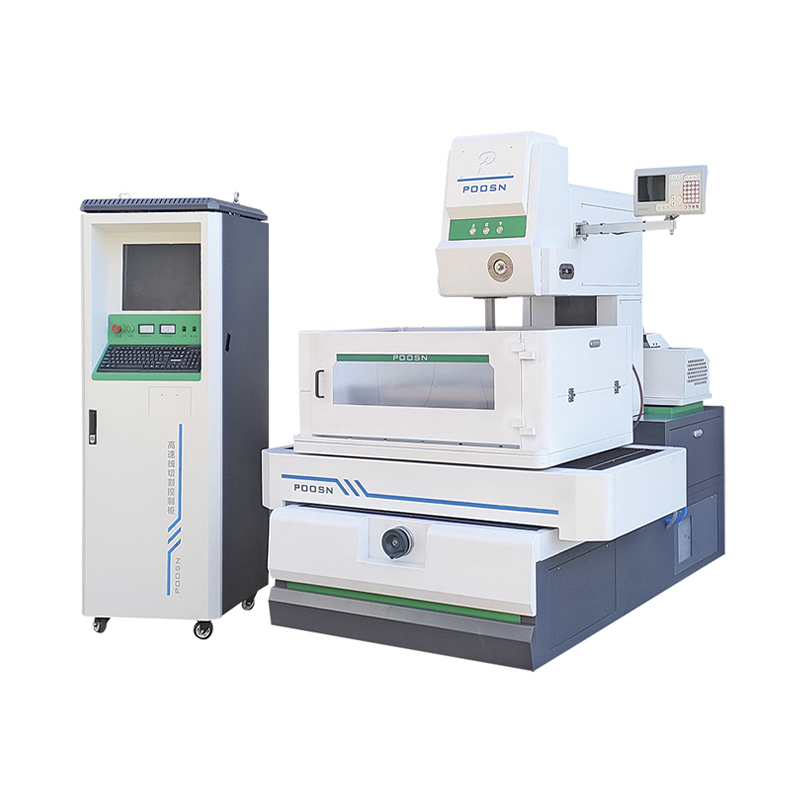
For a shop that is starting aerospace work, a medium-speed wire cut EDM machine in the PS-C series is the most direct path. The PS35C, PS45C, PS50C, and PS60C cover increasing worktable sizes, and the servo control system maintains stable cutting in corners and along long contours. The PS45C is a common choice for mid-size aerospace components because its stroke handles engine brackets, seal rings, and die inserts while still giving fine finishing capability. The machine also supports the multi-cut strategy described earlier, so the first article can go directly from rough cut to final finish without being moved to another machine.
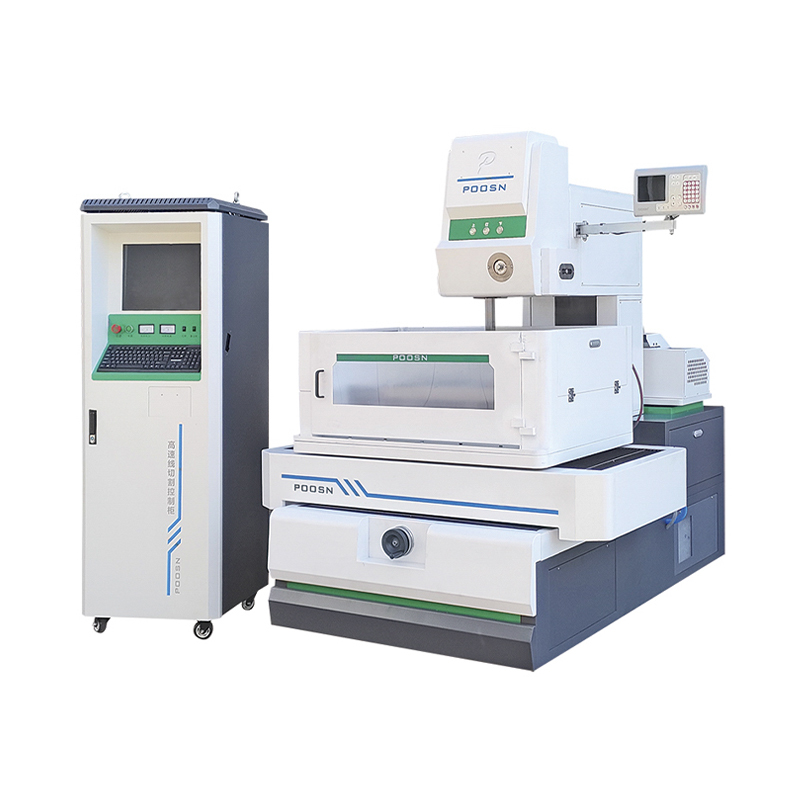 PS45C Medium-Speed Wire Cut EDM for Aerospace ComponentsThis PS45C medium-speed wire EDM suits mid-size aerospace parts like engine brackets and seal rings. Its larger worktable and 400 kg load capacity support heavy-duty cutting while maintaining stable precision, making it a practical first step into aerospace machining.View Product →
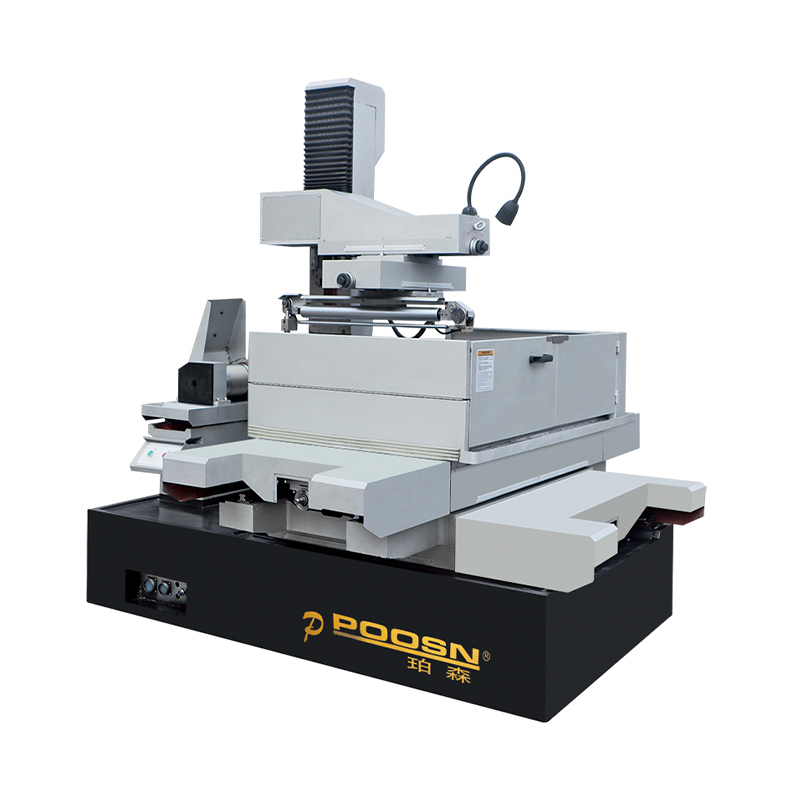
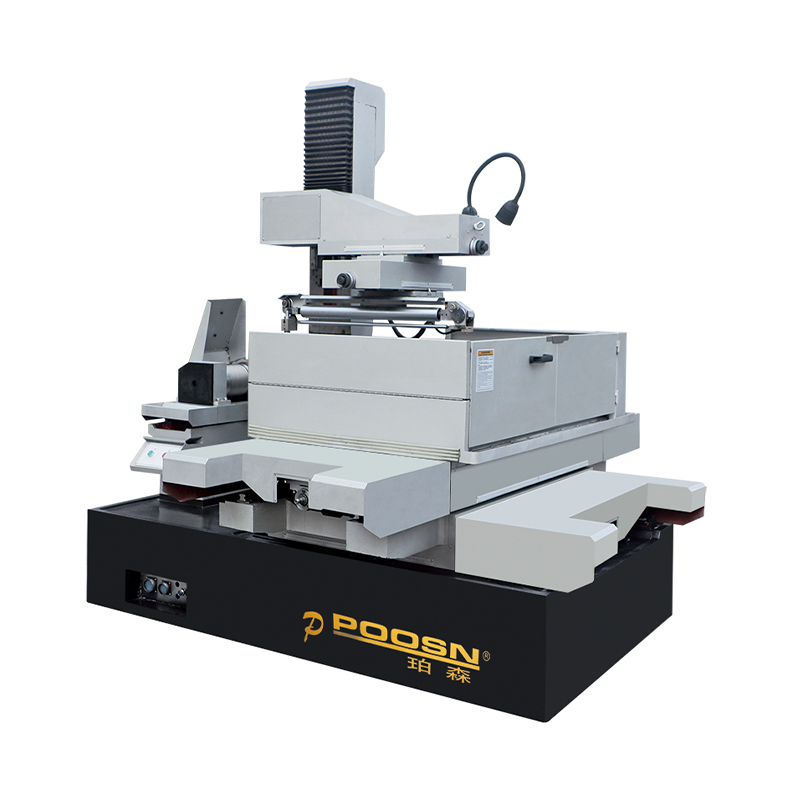
If a part has a large taper angle, such as the angled land on a turbine blade lock plate or the flow channel in a nozzle segment, a large-taper machine is necessary. The DKD series, including DK45D, DK55D, DK63D, and DK80D, is designed with a large-angle wire guide mechanism that keeps the wire path straight even at steep angles. For a specific case, a 30-degree taper wire EDM machine can produce a properly skewed slot in one pass; without the large taper head, the same geometry would require five-axis milling or a complicated fixture. The DK45D and DK55D are the most frequently selected models for aerospace angle cutting work because their sizes align well with bracket and seal geometries.
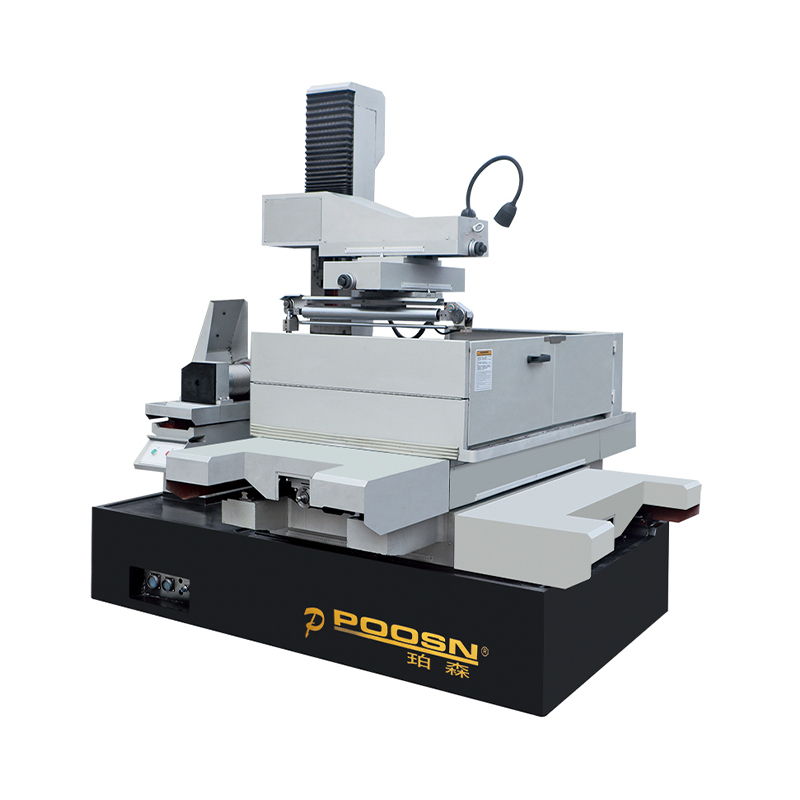 DK45D Large-Taper Wire EDM for Angle CuttingThe DK45D handles up to ±30° taper in 40 mm thickness, making it ideal for turbine blade lock plates and nozzle flow channels. Its large-angle wire guide keeps the path straight, so steep skewed slots can be cut in one pass without five-axis milling.View Product →
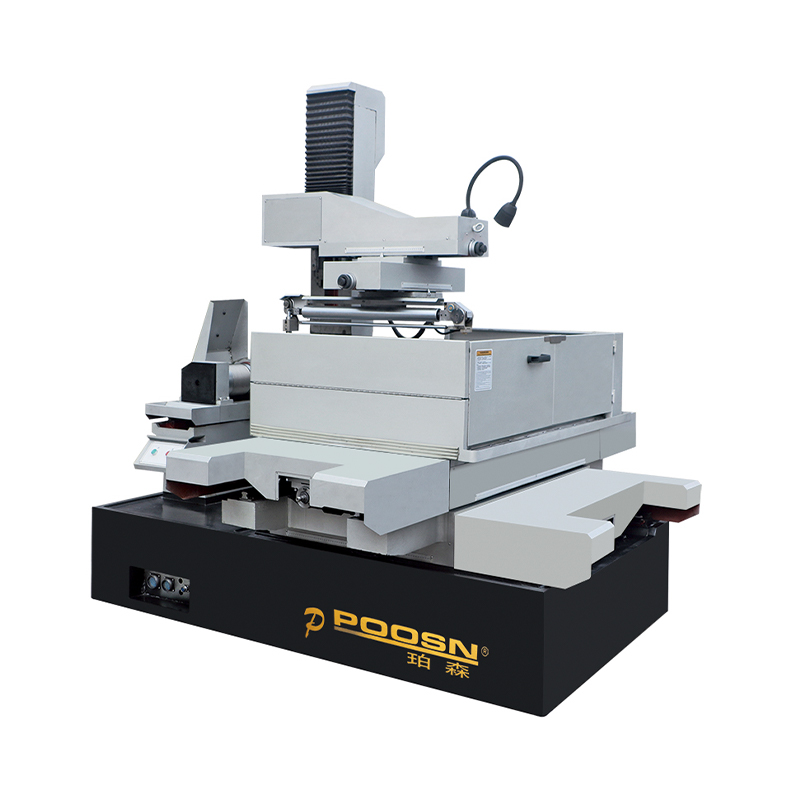
High-speed wire EDM is sometimes seen as unsuitable for aerospace because of its surface finish. That is not entirely correct. The DK77 series, with models such as DK7725, DK7735, DK7745, and DK7745F, is widely used for pre-cutting hardened material before finish machining, for producing electrode blanks, and for cutting sacrificial fixtures and nesting plates. In aerospace toolrooms, high-speed WEDM reduces the cost of support tooling and shortens the lead time for prototype trials. Because the wire is inexpensive and the machine is simple to operate, it is also a practical choice for cutting lower-value aluminum or steel parts where a fine finish is not required.
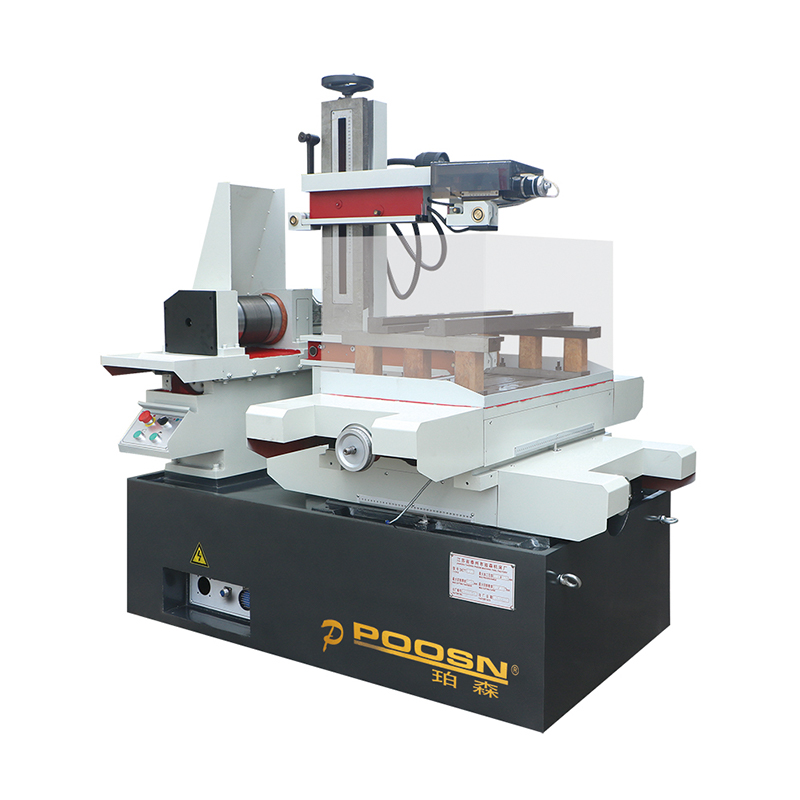 DK-7745F High-Speed Wire EDM for Large WorkpiecesWith 500×700 mm travel and four-axis linkage, the DK-7745F is built for large, complex workpieces. It offers high-speed cutting up to 16,000 mm²/h, reducing cost per part in aerospace toolrooms for pre-cutting hardened materials, electrodes, and fixtures.View Product →
Beyond the machine model, the configuration matters. The most important options for aerospace are a high-precision servo axis with glass scale feedback, automatic wire tension control, a dielectric cooling unit for stable temperature, and a filter system that is easy to service. Many aerospace suppliers also request an integrated database of material-specific cutting parameters, so operators do not need to redesign parameters for every new alloy. A high accuracy wire EDM is not a single part number; it is a combination of mechanical alignment, control quality, and the operator's ability to read the gap conditions.
The following selection checklist is useful when you compare quotes from a wire EDM manufacturer or an EDM machine supplier:
- List every part family with its envelope size, material, taper angle, and required finish.
- Calculate the number of cut meters per month to decide between one machine and two.
- Confirm the machine can run an unattended or overnight mode with reliable wire threading.
- Ask for a cutting test on your actual material and geometry before issuing the order.
- Compare the training program and spare parts response time from the manufacturer.
Key conclusion: Match the machine class to the aerospace part family: medium-speed PS-C for precision production, DKD for large taper geometries, and DK77 for high-speed tooling support; always run a cutting test before you commit.
Working with a Wire EDM Manufacturer: What Aerospace Buyers Should Check
Aerospace procurement has a strict requirement: the supplier must be an original manufacturer, not just a trading company that resells equipment. When you buy directly from a wire EDM factory, you get faster technical support, access to original spare parts, the ability to customize the machine, and consistent documentation for your internal quality system. The machine building history also matters. A company that has produced wire EDM machines since the early 2000s has gone through multiple iterations of design improvements that are not visible in a brochure. This design maturity reduces the risk of early-life failures in a production environment.
There are three practical steps for verifying a supplier. First, ask whether they are a direct manufacturer and ask to see the factory floor, either in person or by video call. A real manufacturer should be able to show you the assembly area, the alignment process, and the quality control instruments. Second, check quality certificates, such as quality management system certificates, and ask how a machine is tested before shipping. Every machine should pass a positioning accuracy check, and the customer should receive the test report. Third, ask about customization. A custom wire EDM machine may include a different worktable height, a special clamping system, or a software package for a particular application. If the supplier answers these questions with clear technical details, they are likely a real factory.
For aerospace applications, the manufacturer should also be familiar with the solutions and applications in your field. The company provides a dedicated aerospace sector solution overview that outlines how its machines are used for precision aerospace components. This kind of vertical knowledge is valuable because it shortens the commissioning period and helps you avoid typical mistakes in parameter setting. A supplier who can talk about fir tree slots, sealing edges, and white layer control is much more useful than one who only quotes travel distances and motor power.
Quality assurance in an aerospace shop starts before the machine is installed. The supplier should provide a machine acceptance test using a test piece that represents your geometry requirements. During the test, measure edge finish, corner radius, and taper angle. Keep the test report as part of your own supplier qualification file. International buyers should also clarify the export package, including the machine enclosure, voltage compatibility, and documentation in English. A Chinese wire EDM manufacturer with export experience to Southeast Asia, West Asia, Europe, and the Americas will already have a standard export procedure that covers these points.
Buyers who are exploring several suppliers often ask about the difference between a regular sale and a wholesale arrangement. For one machine, you work directly with sales engineers. For a larger quantity, or for a partner who wants to distribute the machines in another country, a wholesale or OEM arrangement is possible. The manufacturer can supply machines with your brand marking, customized paint, or modified control panels. Since the company is both a wire EDM factory and an exporter, the logistics and customs experience is already established, which reduces the paperwork burden for the buyer.
Key conclusion: Buy directly from a wire EDM manufacturer that can show you the factory, explain its testing process, and demonstrate aerospace application knowledge; avoid anonymous trading companies when the machine will run flight hardware.
Frequently Asked Questions about Wire EDM for Aerospace
Can wire EDM cut titanium for aerospace parts without cracking?
Yes. Titanium cuts well in wire EDM, but it requires controlled pulse energy and steady flushing. Because titanium has low thermal conductivity, a rough cut with excessive energy can create a thicker recast layer with micro-cracks. The standard method is to use a moderate rough cut followed by two trim passes. A CNC wire EDM machine with adjustable pulse width and gap voltage, such as the PS-C series, can maintain a white layer below 5 micron on Ti-6Al-4V parts.
What surface finish can aerospace wire EDM achieve?
On a well-maintained medium-speed wire EDM machine with three or four passes, surface roughness can reach Ra 0.4-0.8 micron on steel, titanium, and nickel-based superalloys. A typical aerospace production standard is Ra 0.8 micron or better after the finish pass. If the machine has generator options for fine finishing, Ra 0.3 micron is achievable on hardened steel inserts. For a high precision wire EDM machine, the final pass is what makes the difference between a ground-like finish and a matte finish.
What is the difference between high-speed and medium-speed WEDM for aerospace use?
High-speed wire EDM uses a reciprocating wire that moves back and forth, which is fast and economical but leaves a coarser finish. Medium-speed WEDM uses a controlled wire feed system that combines reasonable speed with better accuracy and finish. For aerospace flight parts with tolerances under ±0.01 mm, a medium-speed CNC WEDM machine is the preferred choice. High-speed machines are still valuable for roughing and tooling support in an aerospace toolroom.
How does the factory guarantee the quality of a wire EDM machine?
The quality guarantee starts with the build: each machine is assembled on a rigid cast iron base, the guide rails are aligned to a mechanical or laser reference, and the positioning accuracy is tested before packing. The factory also issues a test report for every machine. As a customer, you can request a cutting test with your own material and part drawing before the machine is shipped. This test is a normal part of procurement for aerospace suppliers and is encouraged by the factory.
Can the machines handle large taper angles required by some aerospace designs?
Yes. The DKD series is designed for large taper cutting. The DK45D, DK55D, DK63D, and DK80D can cut taper angles up to 30 degrees, and optional versions support 60 degrees. Large taper cutting requires good wire guide geometry and flushing control; the DKD series uses a special upper guide mechanism for exactly that purpose. This capability converts a potential five-axis milling job into a simpler two-axis wire EDM job with tighter repeatability.
Key conclusion: Wire EDM for aerospace is a proven, controllable process that meets tight tolerance and surface integrity requirements when the machine is selected and operated correctly.
Wire EDM for aerospace is not a generic cutting method. It is a precision manufacturing discipline that combines machine stiffness, controlled pulse energy, disciplined multi-pass strategy, and operator knowledge. Titanium, Inconel, hardened steel, and carbide all behave differently in the cut, and the machine choice must reflect those differences. The process is also a strong ally for reducing secondary operations, because a finished wire-cut edge rarely needs deburring or hand polishing.
The practical recommendation is simple. Start with your part family: work envelope, material, taper requirement, and finish specification. Then select a machine series that matches the majority of the work. For most aerospace precision components, the medium-speed PS-C series provides the best balance of accuracy and operating cost. For large taper geometries, the DKD series is the correct answer. For high-speed tooling support, the DK77 series keeps costs low while still cutting hardened material reliably.
When you are ready to move forward, talk to the manufacturer directly. Ask for a cutting test on your material, review the quality certificates, and inspect the factory. If you are located outside China, confirm the export configuration and after-sales support. The team can be reached through the contact page for a technical conversation. The aerospace industry rewards suppliers that verify, document, and control every step; a wire EDM partner that works the same way is worth the effort.
Key conclusion: The right aerospace wire cut parts come from a combination of the correct machine class, verified parameters, and a direct, quality-focused wire EDM manufacturer relationship.

-
Phone
+86-0523-86268788 +86-13815960366 +86-13912191163Email
[email protected]Address
No. 366, Yusheng Road Jiulong Town, Hailing District Taizhou City, China
Copyright © Taizhou Xinchengyang Machinery Manufacturing Co., Ltd. All Rights Reserved.
Custom edm machine for sale
wholesale edm machine manufacturers
