

 English
 русский
 عربى
عربى

Industry News
Home / News / Industry News / EDM Wire Material Guide: How to Choose the Right Wire Type for Your WEDM Mac
EDM Wire Material Guide: How to Choose the Right Wire Type for Your WEDM Mac
2026-09-09
A mold workshop in Huangyan once called us with a performance complaint. A brand-new medium-speed wire-cut EDM machine was cutting at about 60% of its rated speed, and the wire snapped every ninety minutes during the night shift. The power supply, guides and dielectric were all checked and found normal. When our engineer visited the shop, the answer was on the spool: the operator was using a cheap imported brass wire with a nominal diameter of 0.25 mm, but the measured diameter varied between 0.246 mm and 0.258 mm along a 50 m sample. The uneven wire caused fluctuating discharge gaps, unstable cutting current and eventually breakage. The material of the EDM wire was the real problem.
This is not an unusual story. In wire EDM, the wire is the electrode that transfers every spark to the workpiece, so its material decides how fast sparks can be generated, how stably they can be maintained, and how long the wire will survive before its diameter drops below an acceptable level. The conclusion comes first: for any WEDM machine, the choice of EDM wire material is a process parameter, not merely a consumable purchase. Changing wire material can improve cutting speed by 30-50%, improve surface finish by a full grade, and reduce the cost per square millimetre cut.
This article explains what EDM wire material actually does, compares the common types - brass, zinc-coated brass, diffusion-annealed wire, molybdenum, tungsten and steel-core wire - and provides a practical selection route based on machine type, workpiece material, accuracy requirement and purchasing budget. It is written from the perspective of a WEDM machine manufacturer that has tested these wire materials on our own production floor for over two decades.
Content
- 1 Why EDM Wire Material Determines Your Cutting Performance
- 2 The Main EDM Wire Material Types Compared
- 3 EDM Wire Material Comparison at a Glance
- 4 Choosing EDM Wire Material for Your WEDM Machine Type
- 5 Wire Diameter and Its Relationship with Wire Material
- 6 Matching EDM Wire Material to Your Workpiece and Industry
- 7 Procurement Considerations: Cost, Quality and Supplier Reliability
- 8 FAQ: EDM Wire Material Questions from Real Workshops
- 8.1 What is the most common EDM wire material?
- 8.2 Why is molybdenum wire still used in EDM?
- 8.3 Does coated wire really improve surface finish?
- 8.4 Can I use brass wire on a machine that was designed for molybdenum wire?
- 8.5 How much does wire material affect the cost per part?
- 8.6 Does wire material affect taper cutting accuracy?
- 9 Final Recommendation
Why EDM Wire Material Determines Your Cutting Performance
In wire EDM, a thin metal wire sits between two guide nozzles, while the workpiece moves under CNC control. The wire and the workpiece never touch; instead, thousands of electrical discharges per second erode the material through melting and vaporisation. The wire must therefore do four jobs at the same time: conduct the discharge current, withstand the heat of the spark, carry the tension that keeps the cutting path straight, and feed smoothly through guides and an automatic threading mechanism. The material of the wire determines how well it performs all four jobs.
The practical result is that the same machine, the same CNC program and the same workpiece can produce very different outcomes with different wire materials. A brass wire with high conductivity allows a larger discharge current and faster cutting, but if its melting point is low, the wire wears quickly and the kerf narrows. A molybdenum wire resists wear for a long time, but its lower conductivity limits the spark frequency. A zinc-coated wire gives a stable discharge because zinc vaporises at a lower temperature, which is why coated wire is preferred for finish cutting.
Five Properties That Define a Good EDM Wire Material
When evaluating an EDM wire material, process engineers should compare five properties. These properties come from the physical requirements of the spark erosion process, and they also appear on the technical sheets of every serious wire manufacturer or supplier.
- Tensile strength. The wire must withstand high tension without necking or breaking. Tension controls the straightness of the cutting line, especially on tall workpieces and taper cuts. High-tensile wires are made from stronger alloys or composites such as steel-core and diffusion-annealed wire.
- Fracture resistance. A wire can break not only from overload but also from micro-cracks caused by repeated heating and cooling at the spark point. Fracture resistance is critical when the wire is reused, as in molybdenum wire applications.
- Electrical conductivity. Higher conductivity allows a larger current flow and therefore a higher cutting rate. Copper has excellent conductivity, but its low strength forces manufacturers to compromise with brass or to add a strong core.
- Vaporisation temperature. The wire surface vaporises during each discharge, so a lower vaporisation point means the spark ignites faster and the wire core remains cooler. This is why the zinc-rich gamma phase improves performance: the zinc coating burns off while the brass core stays intact.
- Hardness and surface consistency. A uniform, debris-free surface gives consistent sparks and reduces the risk of localised heating. Hardness also affects how the wire behaves in the guides and how much it resists abrasion from the workpiece edges.
In addition, the wire diameter and the roundness of its cross-section determine the kerf width and the minimum internal corner radius. A supplier that cannot hold diameter tolerance to within about 0.003-0.005 mm will create problems that no material choice can solve.
Key takeaway: The material of the EDM wire is a process parameter: it changes speed, finish, wire life and cost, so it should be selected with the same discipline as the pulse settings of the machine.
The Main EDM Wire Material Types Compared
The market offers a wide range of EDM wire materials, but most production falls into a few families. The table below lists the main types, their composition, relative conductivity, tensile strength and typical applications. Detailed notes follow the table.
| Material | Composition | Conductivity vs copper | Tensile strength | Typical applications |
|---|---|---|---|---|
| Copper | Cu 99.9% | 100% | Low | Laboratory work, very light cuts, research |
| Brass | Cu 65% / Zn 35% (Asian), 63/37 (US/EU) | About 28-30% | Medium | General cutting, cost-sensitive production |
| Zinc-coated brass (gamma phase) | Brass core with zinc-rich coating | About 28-30% with surface effect | Medium-high | Precision molds, stamping dies, finish cuts |
| Diffusion-annealed | Brass core with diffused zinc layer | Improved surface stability | High | Automatic threading, aerospace, carbide work |
| Molybdenum | Mo 99.9% | About 30% | Very high | High-speed WEDM, reused wire, low-cost cutting |
| Tungsten | W 99.9% | About 31% | Very high | Small-hole EDM, fine details, high-temperature parts |
| Steel-core | Steel core with brass or copper outer layer | Medium | Very high | Thin workpieces, taper cuts, tall cuts |
Brass Wire
Brass wire is an alloy of copper and zinc, with the most common ratios being 65/35 in Asia and 63/37 in the United States and Europe. Brass is the industry standard because it balances cost, conductivity, strength and cutting performance for the majority of WEDM jobs. Its main limitation is wear: the relatively low melting point means the wire loses diameter more quickly than coated or diffusion-annealed types, so it is best for roughing passes and general-purpose cutting where surface finish is not critical. For a medium-speed machine, brass wire still represents a solid entry-level choice for shops that want low consumable cost.
Zinc-Coated Brass Wire (Gamma Phase)
Zinc-coated brass wire, also called gamma-phase wire, has a zinc-rich outer layer that vaporises at a lower temperature than the brass core. When the coating vaporises, it cools the spark zone and improves the ignition of the next discharge, which makes the cutting current more stable. The result is fewer wire breaks, a slightly higher cutting speed and a better surface finish compared with plain brass. Many precision mold makers use zinc-coated wire for the finish passes and reserve plain brass for roughing.
Diffusion-Annealed Wire
Diffusion-annealed wire is produced by heating zinc-coated wire so that the zinc diffuses into the brass core, creating a uniform alloy layer with high tensile strength and excellent surface integrity. It is the preferred material for machines with automatic wire threading, because the high strength and clean surface reduce threading failures. Diffusion-annealed wire also performs well on tall workpieces, on hardened tool steel and in aerospace alloys, where wire breakage in a deep cut is expensive.
Molybdenum Wire
Molybdenum wire is a pure metal wire with very high tensile strength and outstanding wear resistance. It is the standard material for high-speed wire-cut EDM machines, especially the DK77 series, because it can be reused: the wire travels back and forth through the cutting zone under low tension, and the wear is spread over a long length. The trade-off is lower conductivity, which limits the cutting current; as a result, high-speed WEDM machines cut more slowly than medium-speed machines running brass or coated wire, but the consumable cost per part is very low. Shops that repair old molds or cut simple hardware parts often choose molybdenum wire for this reason.
Copper Wire, Tungsten Wire and Steel-Core Wire
Copper wire has the highest conductivity but is mechanically weak, so it is rarely used in modern WEDM machines except for special laboratory tests or very light cuts. Tungsten wire has an extremely high melting point and high strength, but the price is high and the cutting speed is low; it is mainly used for small-hole EDM and fine wires below 0.10 mm where strength is essential. Steel-core wire consists of a high-strength steel center covered by a brass or copper layer; it offers very high tensile strength at a small diameter, which makes it useful for taper cutting and for very thin workpieces where a large kerf would destroy the part.
Key takeaway: Brass remains the default, zinc-coated brass is the upgrade, diffusion-annealed wire is the precision choice, and molybdenum wire is the economic option for high-speed WEDM machines.
EDM Wire Material Comparison at a Glance
Looking at a table of properties still leaves a buyer uncertain, because each material wins on a different criterion. Tensile strength tells you how much tension the wire can hold before it necks and breaks. Conductivity puts an upper bound on the cutting current and therefore on speed. Wear resistance tells you how long the wire keeps its nominal diameter before the kerf starts to shrink. The radar chart below compares brass, zinc-coated brass, molybdenum and diffusion-annealed wire across six criteria on a 0-to-100 index, which makes the trade-offs visible in one picture.
Brass Zinc-coated brass Molybdenum Diffusion-annealed
The most obvious pattern is that brass wire has the most rounded polygon, with no outstanding peak. Its cost-effectiveness score of 80 is the highest in the field, but wear resistance at 50 and cutting speed at 55 hold the overall performance down. In practice, this means plain brass remains a reliable baseline for general machining, not the fastest and not the longest-lasting wire.
Zinc-coated brass pushes the polygon outward on wear resistance and cutting speed, which is exactly why coated wire became the standard in stamping die and precision mold work. The zinc layer vaporises at a lower temperature than the brass core, so the spark ignites faster and the discharge stays more stable at high pulse frequencies. A stable discharge also means fewer re-cast layers on the surface, which reduces the work left for finish passes.
Molybdenum wire shows the opposite strategy: very high tensile strength at 85 and excellent wear resistance at 90, but noticeably lower conductivity at 40. That combination suits high-speed wire-cut machines that reuse the same spool over several passes, because the main cost driver is wire consumption, not cutting speed. The conductivity limit also explains why molybdenum machines cannot reach the same maximum cutting speed as coated-wire machines on thick steel blocks.
Diffusion-annealed wire offers the largest enclosed area, which indicates the most balanced set of properties. Its cutting speed of 85 and surface finish of 85 are the highest among the four materials, making it a first choice for finish cutting of hardened tool steel and for machines with automatic wire threading. The trade-off is price: diffusion-annealed wire costs clearly more than standard brass, so the final decision is economic rather than technical. For a shop running a medium-speed machine, moving from brass to zinc-coated or diffusion-annealed wire usually pays back within a few workpieces. For a DK77 high-speed machine that already runs molybdenum, changing to brass or coated wire would require a different power setting and tension set-up, so it is rarely justified. The radar chart therefore confirms the opening conclusion: choose the polygon that matches your priorities, not the wire that arrived with the machine by default.
Key takeaway: No EDM wire material wins on every axis; the best choice is the one whose polygon matches your priority, be it speed, finish, wire life or cost.
Choosing EDM Wire Material for Your WEDM Machine Type
The machine is the first boundary condition for wire selection, because the power supply, guide system and wire feed path are designed around a wire family. At Taizhou Xinchengyang, we produce four main series: DK77 high-speed, DK-BC high-medium-speed, PS-C medium-speed and DKD large-taper machines. The wire material recommendations below reflect the electrical parameters of each series and the habits of our customers in tool rooms and production workshops.
High-Speed WEDM (DK77 Series): Molybdenum Wire
DK77 machines are the classic high-speed wire-cut machines used across China and many export markets. They typically run molybdenum wire with a diameter of 0.12-0.20 mm, and the wire is reused by reversing the spool direction. Because the wire passes through the cutting zone repeatedly, wear resistance is more important than electrical conductivity; that is why pure molybdenum wire remains the dominant choice. For buyers who run a DK7725 machine for standard mold steel, a good-quality molybdenum wire with consistent roundness and a clean surface will give stable cutting and long spool life.
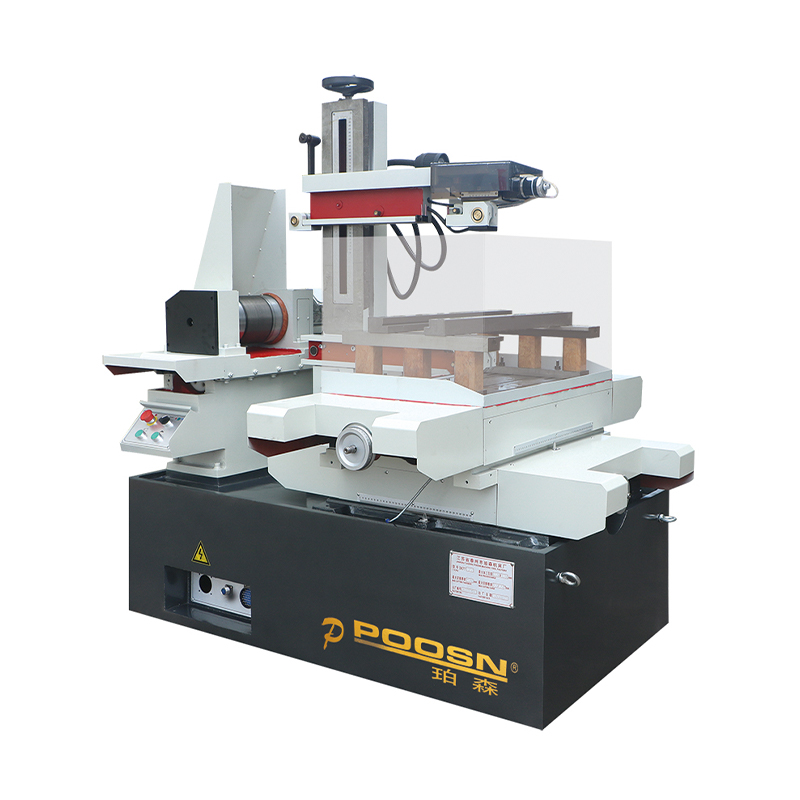 DK-7725 CNC High-Speed Wire EDM with 4-Axis ControlDesigned as a classic high-speed wire-cut machine for mold steel, this model offers up to 250kg load capacity and four-axis linkage, pairing well with consistent molybdenum wire for stable, efficient cutting.View Product →
Medium-Speed WEDM (PS-C and DK-BC Series): Brass or Zinc-Coated Wire
Medium-speed wire-cut machines are designed to offer a better surface finish and higher cutting efficiency than high-speed machines. The power supply produces higher-frequency pulses that work best with brass or zinc-coated brass wire. Plain brass is acceptable for general work and for the first cutting pass. For the finish passes, zinc-coated wire noticeably improves the surface roughness and reduces the risk of striations. Customers running a PS35C medium-speed machine for stamping die inserts usually switch from brass to zinc-coated wire after the first spool, and the improvement in the finish pass is visible in the polishing time after cutting.
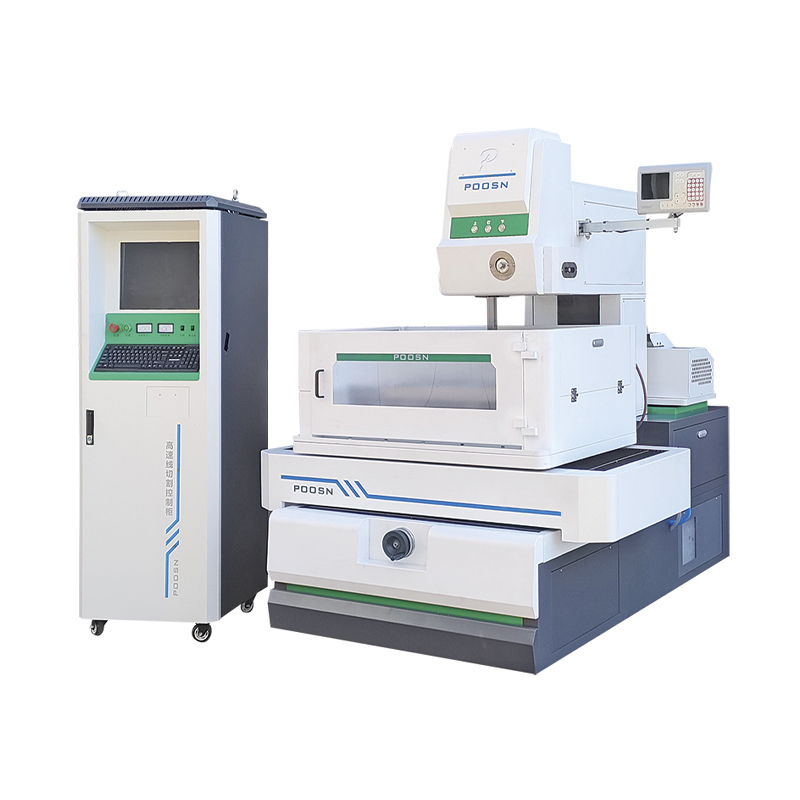 PS35C Precision Medium-Speed Wire EDM for Sturdy PartsA medium-speed machine suited for stamping die inserts and other precision work, its high-frequency power supply pairs with zinc-coated brass wire to improve surface finish and reduce striations on finish passes.View Product →
Large-Taper WEDM (DKD Series): Uniform High-Tensile Wire
Large-taper cutting requires the wire to tilt through the upper and lower guides while maintaining a straight cutting edge. Any variation in wire diameter or tensile strength changes the actual taper angle and creates dimensional deviation over the height of the workpiece. For the DKD large-taper machines, we recommend zinc-coated or diffusion-annealed wire with excellent diameter consistency, typically 0.20-0.25 mm. The coating keeps the discharge stable when the wire is inclined, and the higher tensile strength reduces the wire deflection that would otherwise round off the top and bottom edges of the taper.
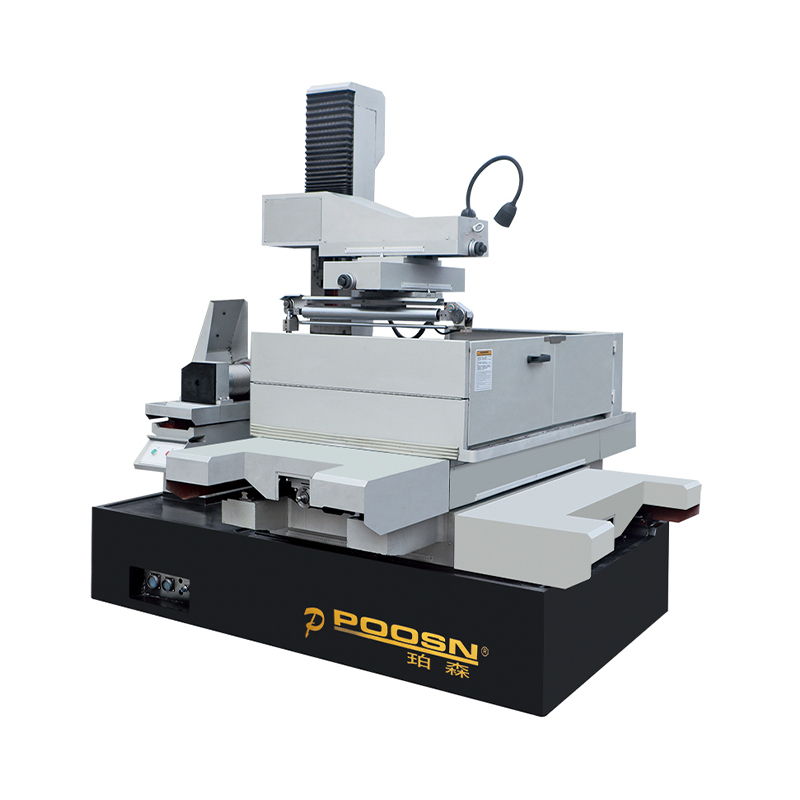 DK45D Large-Taper Wire EDM for Precision MoldsFeaturing a maximum taper angle of ±30°/40mm and 450mm cutting thickness, this machine handles high-accuracy taper cutting; use high-tensile coated wire to maintain dimensional consistency and avoid edge rounding.View Product →
Related resources: If you are still deciding whether a high-speed machine or a medium-speed machine fits your production, read our comparison of high-speed vs medium-speed wire EDM machines. And before you order wire in large quantity, check how to identify a direct manufacturer versus a trading company, because wire quality and technical support are very different in the two cases.
Key takeaway: Match the wire family to the machine series: molybdenum for high-speed DK77, brass or zinc-coated wire for medium-speed PS-C and DK-BC, and high-tensile coated wire for large-taper DKD.
Wire Diameter and Its Relationship with Wire Material
Wire diameter is the second decision after material, and the two are linked. A material with high tensile strength can be drawn to a thinner diameter without breaking, which is why steel-core and molybdenum wires are available down to 0.10 mm, while plain brass is normally used at 0.20-0.30 mm. The diameter determines the kerf width, the minimum internal radius, and the amount of material that must be removed; it also interacts with the electrical parameters of the machine.
| Diameter (mm) | Typical kerf width (mm) | Minimum corner radius (mm) | Typical use |
|---|---|---|---|
| 0.10 | 0.14-0.16 | 0.08 | Fine details, watch parts, narrow slots |
| 0.15 | 0.19-0.22 | 0.10 | Precision electronics, thin sheets |
| 0.20 | 0.24-0.28 | 0.14 | Precision mold inserts, small dies |
| 0.25 | 0.30-0.35 | 0.18 | Standard mold steel, stamping dies |
| 0.30 | 0.36-0.42 | 0.22 | Thick workpieces, rough cutting |
| 0.33 | 0.40-0.46 | 0.25 | Maximum speed roughing, high stock removal |
The minimum corner radius is roughly half the diameter plus the discharge gap, so a 0.25 mm wire with a 0.03 mm gap leaves a radius close to 0.18 mm. If the design requires a sharp corner, the program can add a small loop or the operator must switch to a thinner wire. Thinner wire cuts slower because the cross-section carries less current; the practical trade-off is time versus accuracy.
The material and the diameter should be considered together. The following cards summarise the typical diameter ranges for each material family.
Molybdenum
0.12-0.20 mm typical for high-speed DK77 machines; reused wire; wear-resistant, low conductivity. Plain brass
0.20-0.30 mm common for general cutting; lower cost; wider tolerance on diameter. Zinc-coated brass
0.20-0.25 mm recommended for finish cuts; stable discharge; finer surface. Steel-core
0.10-0.20 mm for taper cuts and thin parts; very high tensile strength.
0.12-0.20 mm typical for high-speed DK77 machines; reused wire; wear-resistant, low conductivity. Plain brass
0.20-0.30 mm common for general cutting; lower cost; wider tolerance on diameter. Zinc-coated brass
0.20-0.25 mm recommended for finish cuts; stable discharge; finer surface. Steel-core
0.10-0.20 mm for taper cuts and thin parts; very high tensile strength.
When a drawing specifies a narrow slot width of 0.15 mm, the only practical options are a 0.10 mm molybdenum or steel-core wire, because a 0.20 mm wire would leave a kerf of about 0.25 mm. This type of constraint is common in the repair of worn precision components and in the production of small mold parts. In those cases, the wire material must offer high tensile strength so that the thin wire does not break during the cut.
Key takeaway: Select the diameter first from the required corner radius and slot width, then choose a material that can hold that diameter with sufficient tensile strength.
Matching EDM Wire Material to Your Workpiece and Industry
The workpiece material and the industry it belongs to are the second boundary condition. Our solution pages cover mold manufacturing, aerospace, metallurgy, maintenance and special materials, and each area has a different preference for wire material.
Mold Manufacturing
Mold steel is usually hardened before EDM, and the finish passes decide the polishing time. Zinc-coated or diffusion-annealed wire is recommended for the final passes because the stable discharge leaves a thinner white layer and a smaller surface roughness. For the roughing pass, plain brass keeps the cost down.
Aerospace Sector
Nickel-based alloys and titanium are difficult to EDM because they generate high discharge temperature and tend to weld debris back onto the surface. A coated wire with high tensile strength and stable discharge reduces the risk of wire breakage in deep cuts and gives a more consistent surface. Diffusion-annealed wire is often used in this sector because of its threading reliability on tall components.
Metallurgical Industry
In metallurgical laboratories and production plants, wire EDM is used to cut test pieces and samples from bars, plates and forgings. Cutting speed is the priority, so a thicker brass or zinc-coated wire is suitable. The surface finish is usually not critical because the sample is ground afterwards.
Maintenance and Repair Industry
Repair shops cut broken bolts, worn gears, damaged keyways and salvaged dies. The workpieces are often dirty or magnetic, and the cutting conditions are far from ideal. A low-cost molybdenum or brass wire is acceptable because the goal is to remove material reliably, not to achieve a premium finish. For maintenance shops that own a DK77 high-speed machine, molybdenum wire is the economical standard.
Special Material Processing
Carbide, PCD and other conductive special materials erode differently from steel because the binder phase conducts the current. A fine coated wire in the range of 0.15-0.20 mm, with low discharge energy, produces the least surface damage on carbide. Diffusion-annealed wire is also a good choice for special materials because its uniform surface avoids localised current concentration.
Key takeaway: Choose wire material according to what you are cutting, not only according to what the machine can run: precision parts deserve coated wire, while rough maintenance work can run molybdenum or plain brass.
Procurement Considerations: Cost, Quality and Supplier Reliability
EDM wire is sold per kilogram, but the cost that matters is the cost per square millimetre of cut area. A cheap wire that breaks every hour or produces a poor finish will cost more than a premium wire, because the interrupted cut wastes setup time, skips the wire and sometimes ruins the workpiece. When you buy wire, compare the actual price per part, not the price per spool.
Wire quality varies significantly between suppliers, even for the same nominal material. The following checks are simple to perform when a new batch of wire arrives.
| Check item | Acceptable result |
|---|---|
| Diameter consistency | Deviation below 0.005 mm over a 10 m sample; no section thinner than the nominal minus 0.003 mm |
| Surface condition | Uniform colour, no rust spots, no scratches on the coating, no oxide powder on the spool |
| Spooling quality | Even layers, no crossed turns, tight outer layer that does not loosen during transport |
| Mechanical strength | Tensile test certificate, or a quick break test at normal tension, no elongation marks |
| Packaging | Sealed plastic or vacuum bag with desiccant; wire should not be exposed to humidity before use |
The buying channel also changes the level of support you can expect. The comparison below shows what a production shop should consider when choosing between a direct manufacturer and a trading company or wholesaler.
Buying from a direct manufacturer
|
Buying from a trading company or wholesaler
|
For a production shop, the safest solution is to buy wire from the machine manufacturer or from a supplier who specialises in WEDM consumables and can provide a certificate of analysis. As a direct manufacturer of wire-cut EDM machines, we test the wire materials that we recommend on our own machines and under our own quality management system, so the wire is guaranteed to match the power supply and the guide system. This reduces the trial-and-error period that every new plant faces.
Key takeaway: Evaluate wire on cost per good part; measure diameter, surface, spooling and tensile strength on every new batch, and prefer a manufacturer or specialist supplier who can give technical support.
FAQ: EDM Wire Material Questions from Real Workshops
These are the questions we hear most often from machine buyers and operators about EDM wire material.
What is the most common EDM wire material?Brass wire, typically a copper-zinc alloy with a ratio of 65/35 in Asia and 63/37 in North America and Europe. It accounts for the largest share of WEDM wire consumption because it offers a good balance of cost and cutting performance for general work. |
Why is molybdenum wire still used in EDM?Molybdenum wire is used in high-speed wire-cut machines because it can be reused. The wire runs back and forth under low tension, so wear is spread over a long length, and the consumable cost per part is very low. Its wear resistance is high, but its electrical conductivity is lower than brass or coated wire, which limits maximum cutting speed. |
Does coated wire really improve surface finish?Yes. The zinc-rich coating vaporises at a lower temperature, which makes the discharge more stable and reduces the size of the craters left on the workpiece. As a result, the surface roughness after the finish pass is lower, and polishing time can be reduced by a noticeable margin. |
Can I use brass wire on a machine that was designed for molybdenum wire?It is not a simple swap. High-speed machines set their pulse parameters, tension and guide alignment for the properties of molybdenum wire. Running brass wire without changing these settings can cause frequent breaks and poor cutting. If you want to change the wire family, consult the machine manufacturer first; on the DK77 series we generally recommend staying with molybdenum wire. |
How much does wire material affect the cost per part?Wire consumption is only a small part of the total cost of a part; the larger cost is machine time and operator time. A cheap wire that cuts slower and breaks more often can increase the cost per part by 20-30% even if the wire price per kilogram is low. A reliable coated wire usually pays back through higher cutting speed and fewer interruptions. |
Does wire material affect taper cutting accuracy?Yes. In taper cutting, the wire is inclined, and any variation in diameter or tensile strength causes the actual cut angle to deviate from the programmed angle. For large-taper machines like the DKD series, use high-tensile wire with very consistent diameter, for example zinc-coated or diffusion-annealed wire, and avoid reusing wire that has already worn in the cutting zone. |
Key takeaway: The right EDM wire material depends on machine type, workpiece material and the balance between speed, finish and cost; these six answers cover the most frequent scenarios.
Final Recommendation
If you take only one idea from this article, let it be this: choose the EDM wire material as carefully as you choose the machine. The wire is not a low-value consumable that can be bought by price alone; it is an active process variable that works together with the power supply, the dielectric and the CNC program.
- For DK77 high-speed machines, stay with good-quality molybdenum wire of 0.12-0.20 mm.
- For PS-C and DK-BC medium-speed machines, use plain brass for roughing and zinc-coated brass for finish passes.
- For DKD large-taper machines, choose zinc-coated or diffusion-annealed wire with verified diameter consistency.
- Select the wire diameter from the corner radius and slot width of the drawing, not from what is in stock.
- Test one spool before committing to a wholesale order, and measure cutting speed, surface finish and wire consumption.
- Buy from a manufacturer or technical supplier who can support the wire with real machine data and a quality certificate.
When the machine, the wire material and the process parameters are matched, wire EDM becomes one of the most repeatable and cheapest precision processes available. Our own workshop has cut tens of thousands of workpieces over the past two decades, and every improvement in wire selection has produced a measurable gain in speed and quality.
Key takeaway: A deliberate wire material choice, driven by machine series, workpiece requirements and verified supplier quality, is the fastest and lowest-cost upgrade a WEDM workshop can make.

-
Phone
+86-0523-86268788 +86-13815960366 +86-13912191163Email
[email protected]Address
No. 366, Yusheng Road Jiulong Town, Hailing District Taizhou City, China
Copyright © Taizhou Xinchengyang Machinery Manufacturing Co., Ltd. All Rights Reserved.
Custom edm machine for sale
wholesale edm machine manufacturers
