

 English
 русский
 عربى
عربى

Industry News
Home / News / Industry News / Advantages of Wire EDM Over Conventional EDM: Precision, Setup and Cost
Advantages of Wire EDM Over Conventional EDM: Precision, Setup and Cost
2026-09-01
When a toolroom has to cut a hardened D2 punch, a carbide die insert, or a stack of thin stainless shims, the equipment decision usually comes down to one question: pay for electrodes, or pay for wire. The advantages of wire EDM over conventional EDM concentrate exactly at that question. A wire cut EDM machine needs no shaped electrode, holds tighter and more repeatable tolerances on through-features, programs taper angles instead of fixturing them, and runs unattended on a continuously renewed wire electrode. Conventional EDM, known as sinker or die-sinking EDM, copies a pre-machined graphite or copper electrode into the workpiece, which is precisely why it still owns the blind cavity market.
This guide compares the two processes the way a purchasing or process engineering team would evaluate them: working principle and structure first, then tolerance, surface finish, taper capability, setup cost, operating behavior, and maintenance. It ends with machine types, application guidance, supplier selection criteria, and the questions buyers ask us most often before ordering a CNC wire EDM machine.
The short conclusion comes first. If your parts are dominated by through-profiles such as punches, die inserts, stripper plates, extrusion dies, gears, and narrow slots, a wire EDM machine will usually deliver more accurate work per hour of preparation than a sinker. If your parts are dominated by blind, three-dimensional cavities, keep both processes in the shop, because that is the one family of geometry wire EDM cannot reach.
Wire EDM converts electrode cost into program cost, while conventional EDM remains the only answer for blind cavities.
Content
- 1 How Wire EDM and Conventional EDM Work
- 2 The Core Advantages of Wire EDM Over Conventional EDM
- 2.1 No custom electrodes means faster setup and lower fixed cost
- 2.2 Tighter tolerances and more repeatable results
- 2.3 Finer surface finishes with less bench work
- 2.4 Tapers and complex contours are programmed, not refixtured
- 2.5 Non-contact cutting protects thin walls and fragile features
- 2.6 Long unattended runs and predictable consumable cost
- 3 Capability Scores: Wire EDM Compared with Conventional EDM
- 4 Where Conventional EDM Still Holds the Edge
- 5 Wire EDM Machine Types in the POOSN Line
- 6 Applications and Selection Points for Wire EDM
- 7 Maintenance and Operating Guidance for Wire EDM
- 8 Choosing a Wire EDM Manufacturer and Supplier
- 9 Frequently Asked Questions
- 9.1 What are the main advantages of wire EDM over conventional EDM?
- 9.2 What tolerance and surface finish can a wire EDM machine hold?
- 9.3 Can wire EDM completely replace conventional EDM?
- 9.4 Which materials can a wire cut EDM machine process?
- 9.5 How high is the running cost, and how does wire choice affect it?
- 9.6 Is POOSN a direct manufacturer, and can machines be customized?
- 10 Related Resources and Final Recommendation
How Wire EDM and Conventional EDM Work
Both processes belong to electrical discharge machining, a non-contact method that removes electrically conductive material with controlled sparks. A pulsed power supply charges the gap between the electrode and the workpiece; each discharge melts and vaporizes a microscopic crater of metal; the dielectric fluid quenches the spark, flushes away debris, and controls where the arc can strike. Because there is no physical contact, material hardness has almost no influence on the process, which is why both wire EDM and sinker EDM cut hardened tool steel and carbide as freely as annealed steel.
In conventional EDM, the electrode is a shaped block of graphite or copper that is plunged into the workpiece while both sit submerged in dielectric oil. A servo system maintains a precise sparking gap, and the finished cavity is the negative copy of the electrode. Every new shape therefore begins with electrode design and fabrication, and every electrode wears as it cuts, so roughing, semi-finishing, and finishing typically require a set of electrodes rather than one.
In wire EDM, the electrode is a continuously traveling wire, typically 0.18 mm molybdenum wire on high-speed reciprocating machines, or 0.20 to 0.30 mm brass and coated wire on precision servo machines. CNC axes drive the wire guide along the programmed path while deionized water or a water-based emulsion flushes the cut. Because the wire is renewed constantly, wear never accumulates in the geometry, and because auxiliary UV axes can tilt the wire, tapers are programmed rather than machined into an electrode.
| Wire EDM (wire cut EDM) | Conventional EDM (sinker, die-sinking, ram EDM) |
|---|---|
| Electrode system: a continuous brass or molybdenum wire travels along a programmed path and is constantly renewed, so wear never changes the profile. | Electrode system: a pre-machined graphite or copper electrode forms the negative of the cavity and wears as it cuts, so redressing and duplicate electrodes are part of the process. |
| Dielectric medium: deionized water on precision machines, water-based emulsion on high-speed reciprocating machines. | Dielectric medium: hydrocarbon dielectric oil in a submerged working tank. |
| Geometry: any profile the wire can pass through, including through-holes, punch shapes, tapers, narrow slots, and gear profiles. | Geometry: blind cavities, pockets, ribs, text, and sculptured three-dimensional shapes that have no exit point for a wire. |
| Start condition: a start hole or an edge entry is required, and closed internal profiles need wire threading. | Start condition: no start hole is needed, because the electrode plunges directly where the cavity belongs. |
| Typical accuracy: commonly around plus or minus 0.003 to 0.005 mm on medium-speed multi-cut machines, with stable repeatability across a batch. | Typical accuracy: good accuracy, but strongly dependent on electrode condition, the number of finishing electrodes, and orbit cycles. |
| Normal role: cutting punches, die inserts, tapers, and precision through-features after heat treatment. | Normal role: forming blind mold cavities, deep recesses, and large three-dimensional pockets. |
The single structural difference, a renewed wire versus a wearing shaped electrode, drives nearly every advantage discussed below.
The Core Advantages of Wire EDM Over Conventional EDM
Buyers rarely ask whether wire EDM cuts well; they ask where the advantages are large enough to change a purchasing decision. In more than two decades of building wire EDM machines at POOSN, we see the same six advantages decide most comparisons.
- No electrode design or fabrication before the first cut
- Tighter and more repeatable tolerances on through-features
- Finer surface finishes with less bench polishing
- Programmed taper cutting and complex two-dimensional contours
- Non-contact cutting that protects thin walls and fragile shapes
- Long unattended runs with predictable consumable costs
No custom electrodes means faster setup and lower fixed cost
A sinker EDM job begins before the machine is switched on. The electrode must be designed, milled or turned from graphite or copper, inspected, and paired with roughing and finishing companions, because a single electrode cannot both remove cavity volume and hold a fine finish. For a shop cutting dozens of different part numbers, electrode fabrication becomes a permanent department of its own, with its own machines, materials inventory, and lead time.
A wire EDM machine uses the same commodity wire for every job. The changeover consists of loading a program, threading the wire, and setting the offset, so the cost of a new profile is measured in programming hours rather than electrode manufacturing days. Setup errors are also cheaper to catch: a simulation or a test pass on scrap costs wire and minutes, while an electrode error discovered on a finished die block can cost both the electrode and the workpiece.
Tighter tolerances and more repeatable results
Because fresh wire arrives at every point of the profile, wear cannot accumulate and drift the geometry the way it does on a plunging electrode. Closed-loop CNC positioning then holds the path, and on a medium-speed wire EDM machine, multi-cut skimming passes retrace the profile two or three times to remove the distortion left by the first discharge pass and stabilize the dimension. In daily production this is the difference between a punch that measures the same at the start and the end of a batch, and one that needs compensation after every electrode change.
Machine accuracy itself matters as much as process physics. Every POOSN wire EDM machine is tested for positioning accuracy against national standards before delivery, so the tolerance figures quoted for a given model translate into workpiece tolerances rather than remaining brochure numbers.
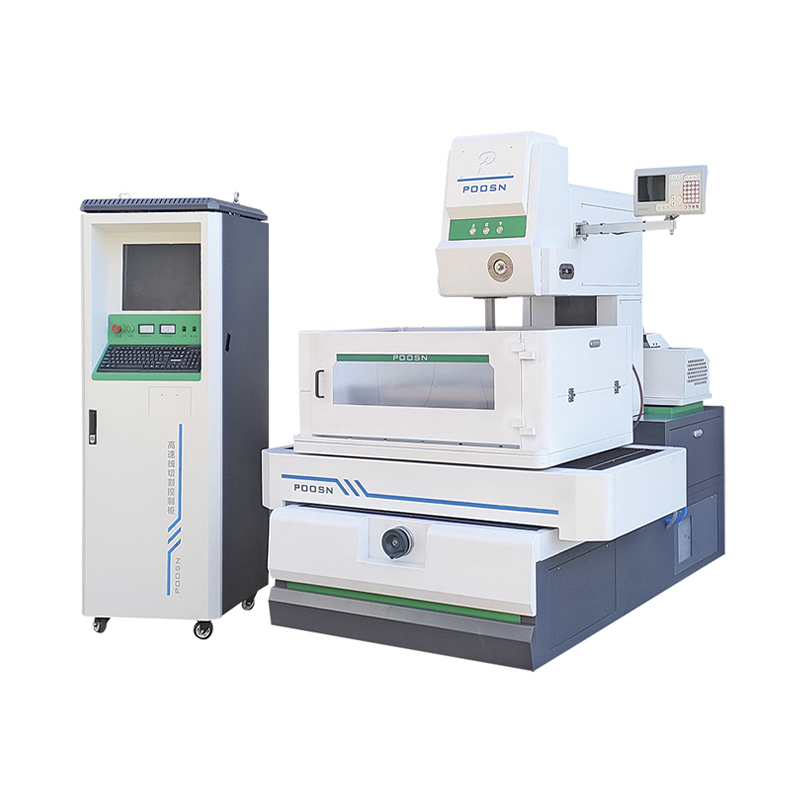
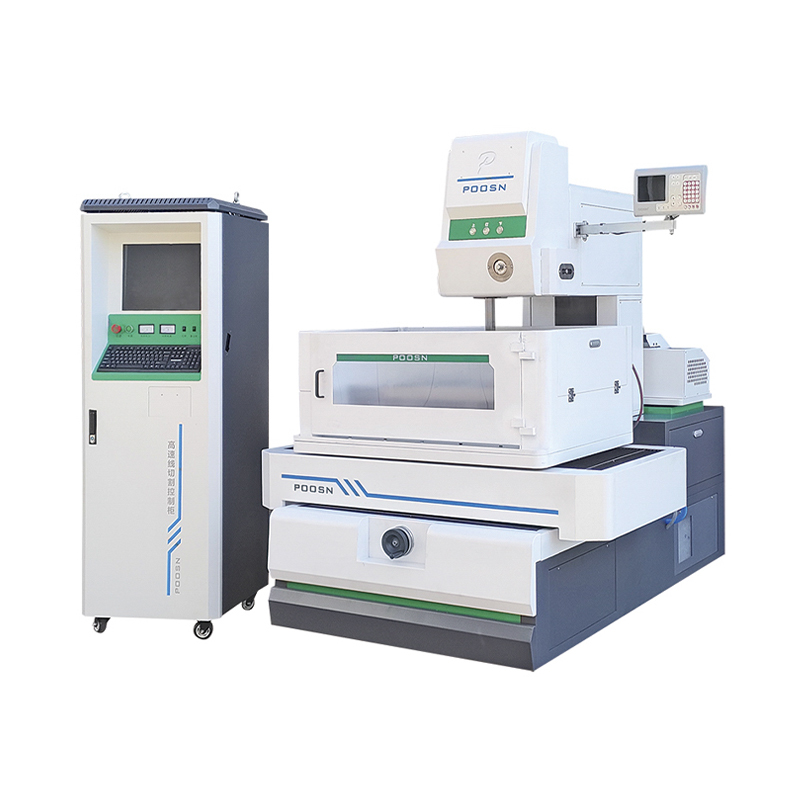 PS45C Heavy-Duty CNC Medium Speed Wire Cut EDM MachineBuilt for medium-to-large workpieces with a 400kg workload, the PS45C delivers stable multi-cut precision on heavy die components, letting finished parts go straight to assembly without hand polishing.View Product →
Finer surface finishes with less bench work
Multi-cut finishing passes progressively reduce the roughness left by the first cut, and the resulting surface is isotropic rather than directional, which helps sealing and sliding behavior in die work. Many die details produced this way go from the machine straight to assembly without hand polishing. That matters more than it sounds: manual polishing changes profiles, rounds edges that were meant to stay sharp, and consumes skilled hours that are increasingly difficult to hire. A wire EDM surface also carries no burr, so deburring stations disappear from the process chain.
Tapers and complex contours are programmed, not refixtured
On machines equipped with UV axes, the wire is tilted while the main axes follow the profile, so a 6 degree relief on a cutting die or a steep draft on a punching die is a line in the program. The DKD series extends this into large taper cutting capability for die work that conventional EDM would need specially shaped and dressed electrodes to attempt. Internal corner radii are limited only by the wire radius plus the spark gap, and the kerf is narrow enough that expensive carbide can be nested tightly instead of being removed by a wide slot.
Non-contact cutting protects thin walls and fragile features
The wire exerts no measurable mechanical force on the workpiece, so thin walls, deep narrow slots, stacked shims, and fragile carbide geometries are cut without the deflection, chatter, or chipping that a milling or grinding approach would risk. Clamping can also be lighter, which shortens setup and protects finished surfaces. In repair work, the same characteristic allows damaged components to be salvaged by cutting around the defect instead of stressing the part further.
Long unattended runs and predictable consumable cost
A spool of wire feeds hours of cutting, and on reciprocating high-speed machines a single molybdenum wire can serve many jobs before replacement, which keeps running cost low. On precision servo machines, wire is consumed rather than reused, but the machine compensates by running lights-out with dependable restart behavior. Either way, the operator skill profile changes: the shop needs a competent CAM programmer more than it needs an electrode maker, and one operator can supervise several machines at once.
For through-profile work, wire EDM removes the electrode variable entirely and replaces tooling cost with programming cost.
Capability Scores: Wire EDM Compared with Conventional EDM
Comparisons read more clearly when both processes are placed on the same scale. The chart below scores wire EDM and conventional sinker EDM on six criteria that buyers raise most often during machine selection. Each score runs from 0 to 100 and reflects typical results on current-generation production machines rather than laboratory best cases. Dark blue bars represent wire EDM, and light blue bars represent conventional EDM. One criterion is deliberately included where sinker EDM wins, because an honest comparison should show the limits of wire EDM as clearly as its strengths.
Wire EDM Conventional EDM
| Capability criterion | Relative capability score (0 to 100) |
|---|---|
| Tolerance on through-cut profiles | |
| Setup simplicity (no electrode work) | |
| Complex contours and taper cutting | |
| Thin walls and fragile features | |
| Blind cavities and 3D pockets | |
| Unattended running time |
The widest gap appears in the setup row, and the reason is structural rather than a matter of machine quality. A sinker job cannot start until an electrode has been designed, milled or turned, inspected, and duplicated for wear, which adds days of lead time and a cost that repeats with every new part number. Wire EDM starts from a program, a spool of wire, and a calibrated offset, so preparation cost stays nearly independent of profile complexity. The tolerance row reflects the fact that a wire EDM machine presents fresh wire at every point of the cut, which prevents the wear-driven drift that a plunging electrode accumulates. Taper cutting is almost a program parameter on a machine with UV axes, while a sinker would need a separately manufactured and dressed electrode for every taper geometry.
Thin-wall and fragile-part handling follows directly from non-contact erosion, because the wire exerts no measurable cutting force on the workpiece. The blind-cavity row reverses the picture completely: a wire cannot enter, turn, and exit inside a pocket, so three-dimensional cavities with no through-path remain the natural territory of conventional EDM. Unattended running favors wire EDM because one spool feeds hours of cutting, and on reciprocating high-speed machines a single molybdenum wire can serve many jobs before it is replaced. Scores of this kind also shift with machine class, and a medium-speed multi-cut machine narrows the surface-finish gap further than a single-pass high-speed machine can. For that reason, treat the two processes as complements rather than substitutes. If most of your features are through-profiles, wire EDM will carry the majority of the load and the sinker will sit idle more often than not. If blind mold cavities dominate your order book, the ratio reverses. Most tool and die shops handling a mixed range of work eventually run both, with wire EDM covering precision through-features and the sinker reserved for cavity forming. The chart should therefore be read as a planning tool for the equipment mix, not as a verdict that one process is universally better.
Wire EDM leads on every criterion that a wire can physically reach; conventional EDM keeps one criterion, the blind cavity, completely to itself.
Where Conventional EDM Still Holds the Edge
A fair comparison has to state clearly what wire EDM cannot do. A wire is a straight, continuously moving line, and it can only cut where it can pass through. Blind cavities, closed pockets, deep three-dimensional recesses, and sculptured mold surfaces therefore remain the natural territory of sinker EDM, where a shaped electrode forms geometry a wire could never reach. Sinker EDM also retains advantages in high-volume cavity roughing: once a standard electrode exists, high spark energy removes large cavity volumes quickly, and oil as a dielectric supports particular deep-recess work.
The table below turns this into a practical selection guide for the requirements we hear most often from die shops and mold shops.
| Your requirement | Better fit | Why |
|---|---|---|
| Blind pocket or sculptured cavity in a mold core | Conventional EDM | A wire cannot cut a shape it cannot pass through; a shaped electrode forms the cavity directly. |
| Through-profile punch or die insert after hardening | Wire EDM | Fresh wire holds the geometry from first cut to last, with no electrode to fabricate or wear. |
| Tapered relief from 6 to 30 degrees on a cutting die | Wire EDM (taper-capable model) | UV axes program the taper angle; no special electrode or fixture is required. |
| Deep narrow slot with parallel walls | Wire EDM | Constant wire width produces uniform slots, while electrode wear would taper the walls. |
| High-volume roughing of a large cavity where a standard electrode already exists | Conventional EDM | High spark energy removes cavity volume quickly, without wire consumption cost. |
| Thin-wall stack or fragile carbide part | Wire EDM | Non-contact erosion means no cutting force, no distortion, and no chipping. |
Most tool and die shops that serve a mixed order book eventually run both processes. The real decision is the ratio between them, and the ratio should follow the geometry of the parts, not habit or the equipment that happens to be on the floor.
Wire EDM wins every contest a wire can physically enter; sinker EDM keeps the geometries a wire cannot reach.
Wire EDM Machine Types in the POOSN Line
Within the wire EDM family, machines are classified by wire travel strategy and cutting capability, and those differences translate directly into the tolerance, finish, and taper numbers a shop can promise its customers. POOSN, the wire EDM brand of Taizhou Xinchengyang Machinery Manufacturing, has built wire cut EDM machines since 1999 and organizes its line into four series so buyers can match machine class to part mix quickly.
- DK77 High-Speed Series
Reciprocating high-speed wire EDM with reusable molybdenum wire and water-based emulsion; an economical choice for roughing, salvage, and standard die work. Models: DK7725, DK7735, DK7745, DK7745F.
- PS-C Medium-Speed Series
Multi-cut medium-speed machines for tighter tolerance and finer finish on precision die details. Models: PS35C, PS45C, PS50C, PS60C.
- DK-BC High-Medium-Speed Series
A transition class that balances the throughput of high-speed machines with improved accuracy for mixed production. Models: DK35BC, DK45BC, DK50BC, DK60BC.
- DKD Large-Taper Series
Dedicated large taper cutting for die relief and steep draft work across larger table sizes. Models: DK45D, DK55D, DK63D, DK80D.
Within each series, the model number indicates the table size or working range, so a shop can step from small punches to large die blocks without changing supplier. Selection usually comes down to three questions: the largest workpiece envelope you need, the taper angle your dies require, and the tolerance class your customers accept. Shops focused on salvage and rough cutting start with the high-speed series, while shops selling precision die components to demanding industries usually specify the medium-speed series with multi-cut capability.
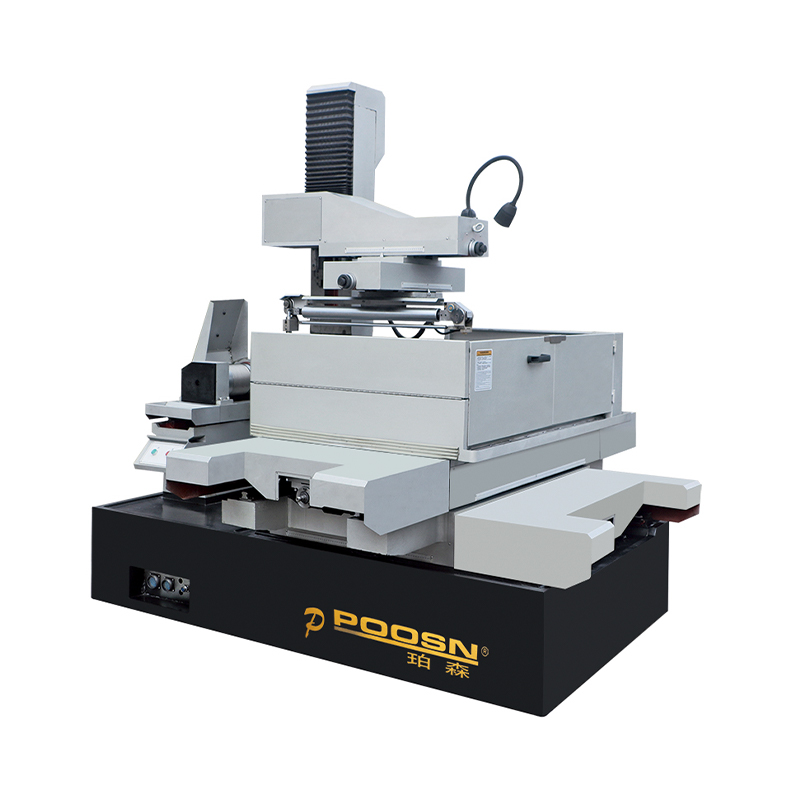
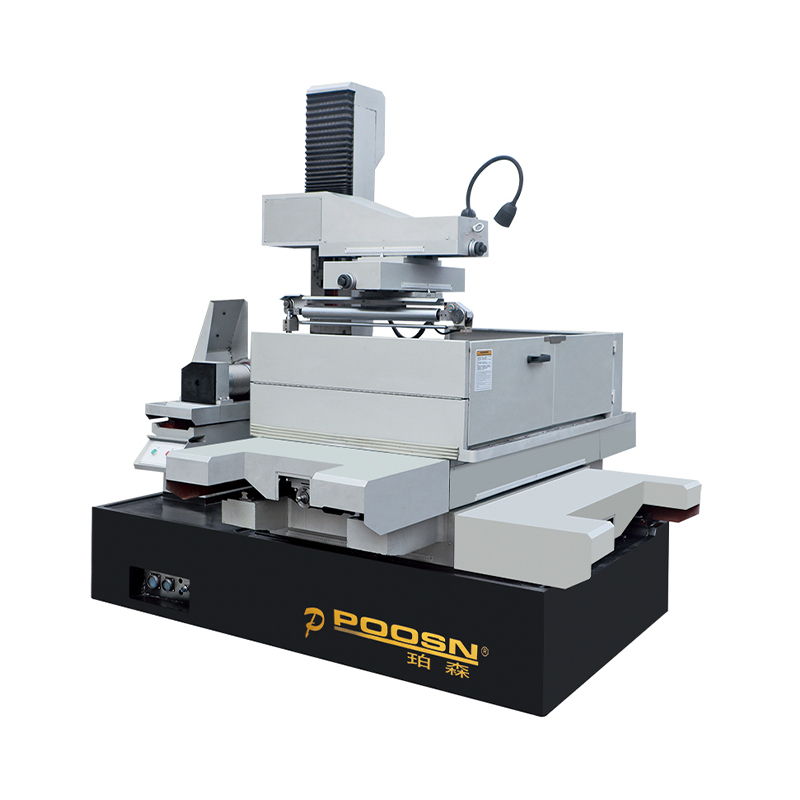 DK45D CNC Large Taper Wire Cut EDM Machine for Precision Mold MachiningWith ±30°/40mm taper cutting and 0.08mm accuracy, the DK45D handles demanding die work; shops specifying the medium-speed series for precision mold components will find its multi-cut capability relevant.View Product →
Match the series to the part mix first; the model size inside a series is a capacity question, not a capability question.
Applications and Selection Points for Wire EDM
The advantages described earlier pay off most in industries where hardened conductive materials and complex profiles dominate the workload. The table below maps the five verticals we serve most often to the workpieces and the machine selection points that matter in each.
| Industry | Typical wire EDM work | Selection points |
|---|---|---|
| Mold manufacturing | Punches, die inserts, stripper plates, gate inserts, ejector details, and tapered relief cuts | Multi-cut medium-speed machines for tolerance and finish; taper-capable models for relief angles |
| Aerospace | Slots and profiles in hardened and difficult alloys, form tooling, thin-wall brackets | Non-contact cutting for delicate geometry; stable machines for long, complex programs |
| Metallurgy | Hardened roll grooves, guide profiles, wear plates | Larger table sizes and robust high-speed or high-medium-speed machines |
| Special materials | Carbide, tool steel above HRC 60, conductive exotic alloys | Wire choice and power settings tuned per material; test cuts recommended before production |
| Maintenance and repair | Stripped keyways, damaged gear teeth, salvage cutting around broken tooling | High-speed series for fast turnaround and low running cost |
Across all five industries the same logic applies: the more a shop values repeatability across a batch, the more the wire EDM advantage matters, because the machine carries no electrode wear from one part to the next. For high-volume blanking and repair work where budget discipline dominates, the high-speed series remains the practical entry point.
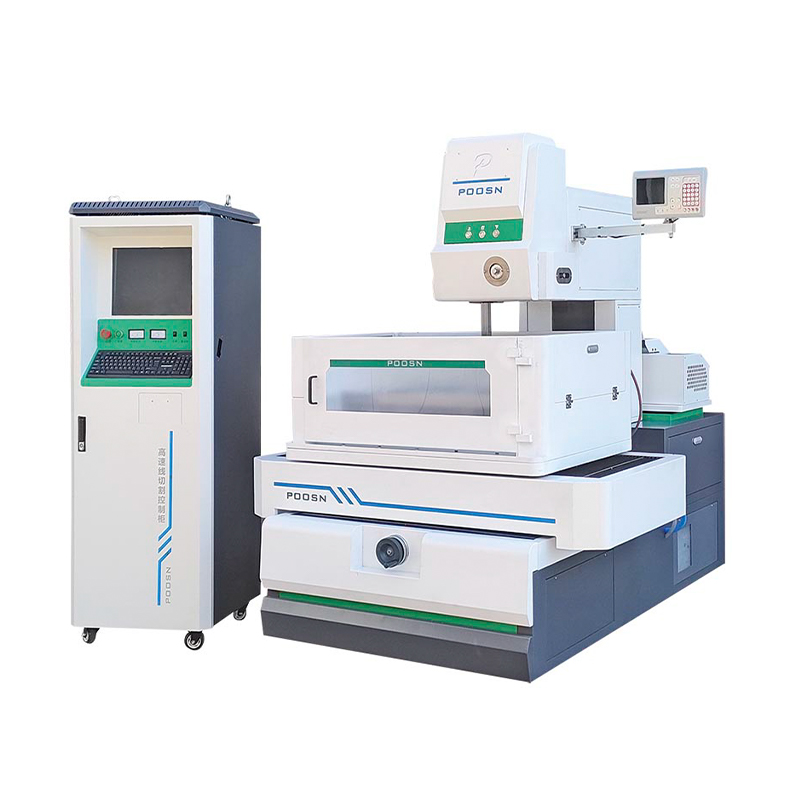
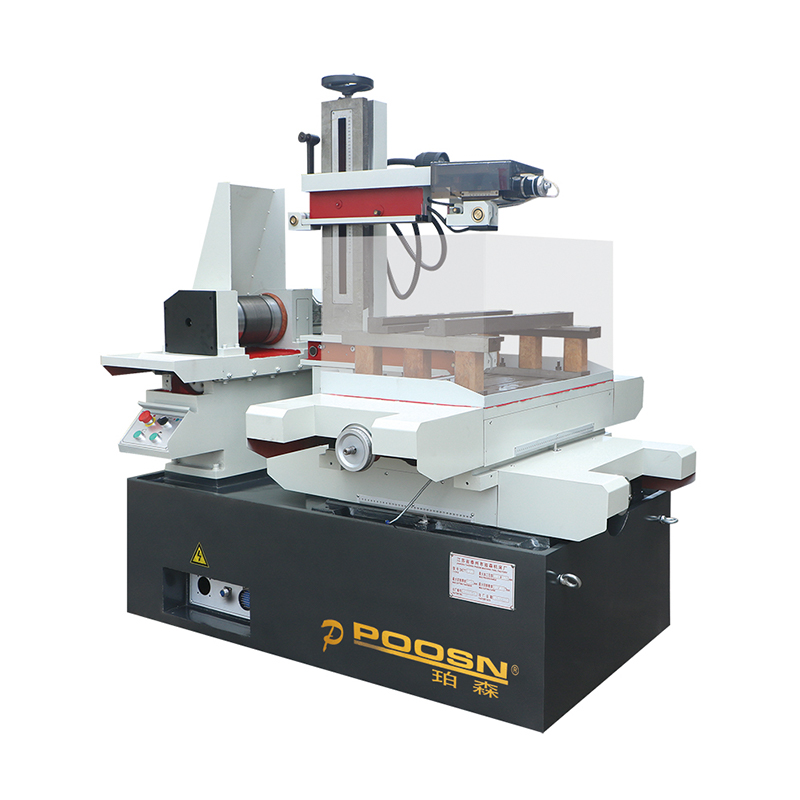 DK-7735 CNC High-Speed Wire EDM Machine (4-Axis, 300kg Load)A high-speed series machine with 300kg load capacity and four-axis control, the DK-7732's sibling suits budget-conscious blanking and salvage work, offering a practical entry point before stepping up to multi-cut models.View Product →
Before committing to a model, run your part drawings through this short checklist.
- Confirm the workpiece is electrically conductive; non-conductors are outside EDM entirely.
- Check workpiece thickness against the required taper angle, because the effective taper decreases as thickness increases.
- Match the tolerance class to the machine class, and let multi-cut capability handle the tightest features.
- Choose the wire type deliberately: molybdenum for economy on reciprocating machines, coated wire for speed where the machine supports it.
- Size the table for your largest routine workpiece, not for your largest historical exception.
Select by geometry and batch repeatability first; the machine class and wire type follow from those two answers.
Maintenance and Operating Guidance for Wire EDM
Wire EDM upkeep is simpler than sinker EDM maintenance because there are no electrodes to design, store, and redress, but daily discipline decides whether the accuracy advantages survive in production. The items below are the ones that separate shops with stable dimensional results from shops that chase drift.
- Check dielectric condition every shift: concentration and cleanliness of the emulsion on high-speed machines, and controlled conductivity on precision machines.
- Verify wire tension and spool tracking; unstable tension or spool vibration shows up immediately as visible striations on the cut surface.
- Inspect wire guides and power feed contacts for wear at the start of every shift, because worn contact points corrupt the spark before anything else fails.
- Keep the worktable and clamping area clean, since debris under references quietly distorts every dimension cut that day.
- Replace filters and service the flushing system on a fixed schedule rather than on demand.
- Lubricate and inspect axis components according to the machine manual, and log the checks.
- Recalibrate taper cutting after any guide replacement, or whenever taper cuts start drifting from the programmed angle.
- Back up programs, offsets, and machine parameters, because recovery after a crash is far cheaper when settings are documented.
Wire selection also belongs in the maintenance conversation, because the EDM wire electrode is both a consumable and a quality determinant.
| Wire type | Typical use | Practical notes |
|---|---|---|
| Molybdenum wire | High-speed reciprocating machines | Very high tensile strength and long service life; one wire serves many jobs, keeping running cost low. |
| Brass wire | Precision servo machines | Stable sparking and dependable finish; the reference standard for single-pass and multi-cut work. |
| Zinc-coated wire | Speed-critical servo cutting | The coating improves discharge stability and flushing, raising cutting speed on thick sections. |
| Steel-core wire | Very thick or demanding profiles | The core improves straightness and resistance to breakage at high tension. |
Finally, document proven cutting recipes for each material and thickness. A recipe library turns individual operator experience into a shop asset, and it makes the tolerance performance of the machine repeatable across shifts.
Most wire EDM quality complaints trace back to dielectric condition, wire tension, or guide wear, and all three are inspection items rather than repair items.
Choosing a Wire EDM Manufacturer and Supplier
The process advantages in this article are only realized on a machine that is rigid, accurate, and supported, so supplier selection deserves the same rigor as process selection. Buying from a direct wire EDM manufacturer rather than a trading company shortens the feedback loop on specifications, spare parts, and customization. Asking how each machine is tested tells you whether the accuracy figures in a quotation are measured on the specific machine or simply inherited from a catalog.
For overseas buyers, including wholesalers and dealers as well as end users, we suggest a short checklist. Confirm that the manufacturer assembles its own machines and controls its critical components. Ask for the positioning accuracy test record of the specific machine you are buying. Check whether a quality management system certification backs the production process. Confirm customization capability, because table size, taper capability, and machine configurations are frequently adjusted to the customer's parts. Response speed and stable supply matter just as much once the machine is in production, so ask both questions directly before comparing prices.
POOSN answers those questions in a specific way. We are the factory behind the brand, working in the wire EDM field since 1999, with machines delivered across China and exported to Southeast Asia, West Asia, Europe, and the Americas. Every machine is tested for positioning accuracy before delivery, customized configurations are part of our standard service, and our customer service and stable supply commitments are published rather than improvised.
Buy the manufacturer, not only the machine; accuracy records, customization depth, and spare part stability decide the ten-year cost.
Frequently Asked Questions
The questions below come up repeatedly in inquiries from toolrooms evaluating their first wire cut EDM machine as well as shops expanding an existing EDM department.
What are the main advantages of wire EDM over conventional EDM?The main advantages are the elimination of custom electrodes, tighter and more repeatable tolerances on through-features, finer surface finishes with less bench work, programmed taper cutting, non-contact cutting for thin and fragile parts, and long unattended runs. Conventional EDM keeps one decisive advantage: it forms blind, three-dimensional cavities that a wire cannot reach. |
What tolerance and surface finish can a wire EDM machine hold?Precision wire EDM commonly works in the plus or minus 0.003 to 0.005 mm range, and multi-cut medium-speed machines stabilize dimensions across a batch by retracing the profile with finishing passes. Surfaces after skimming passes are smooth enough that many die details skip manual polishing entirely. |
Can wire EDM completely replace conventional EDM?No. Any cavity without a through-path needs a shaped electrode. Most mold shops therefore run both processes and route each job by geometry: through-profiles go to wire EDM, and blind cavities go to the sinker. |
Which materials can a wire cut EDM machine process?Any electrically conductive material, including hardened tool steel, carbide, copper, aluminum, and difficult alloys such as titanium grades. Hardness is essentially irrelevant to the process, which is why wire EDM cuts most freely after heat treatment, exactly where conventional machining struggles. |
How high is the running cost, and how does wire choice affect it?Wire is the main consumable. High-speed reciprocating machines reuse a single molybdenum wire for many jobs, keeping consumption low; precision machines consume brass or coated wire but recover the cost through unattended hours and first-pass accuracy. Coated wire cuts faster and suits thick sections, while molybdenum suits economy and long service life. |
Is POOSN a direct manufacturer, and can machines be customized?Yes. POOSN is the brand of Taizhou Xinchengyang Machinery Manufacturing, a direct manufacturer of wire EDM machines since 1999. Table sizes, taper capability, and machine configurations can be customized to customer requirements, every machine is positioning-accuracy tested before delivery, and our supply and service commitments are published for buyers. |
The advantages of wire EDM over conventional EDM are structural, so they hold across brands, materials, and shift patterns, provided the machine is accurate and maintained.
Related Resources and Final Recommendation
For readers who want to continue from here, two resources on our site extend the comparison in this article into machine selection and industry application.
- High-speed wire EDM vs. medium-speed wire EDM: which one fits your shop
- Wire EDM solutions for the mold manufacturing industry
When you are ready to act on the comparison, a three-step framework keeps the decision grounded in facts.
- Sort your last six months of jobs into through-profiles and blind cavities, and let the ratio choose the machine mix.
- Match the machine series to the tolerance class and taper angles your customers accept.
- Verify the supplier with positioning accuracy records and customization capability before comparing prices.
Handled this way, the choice stops being a debate between two technologies and becomes a routing rule that quietly lowers cost per part for years. If you would like that routing rule applied to your own drawings, our engineering team can review sample parts and recommend a machine class and configuration from the POOSN line.
Route work by geometry, buy by accuracy records, and the wire EDM advantages described here compound over the entire life of the machine.


-
Phone
+86-0523-86268788 +86-13815960366 +86-13912191163Email
[email protected]Address
No. 366, Yusheng Road Jiulong Town, Hailing District Taizhou City, China
Copyright © Taizhou Xinchengyang Machinery Manufacturing Co., Ltd. All Rights Reserved.
Custom edm machine for sale
wholesale edm machine manufacturers
