

 English
 русский
 عربى
عربى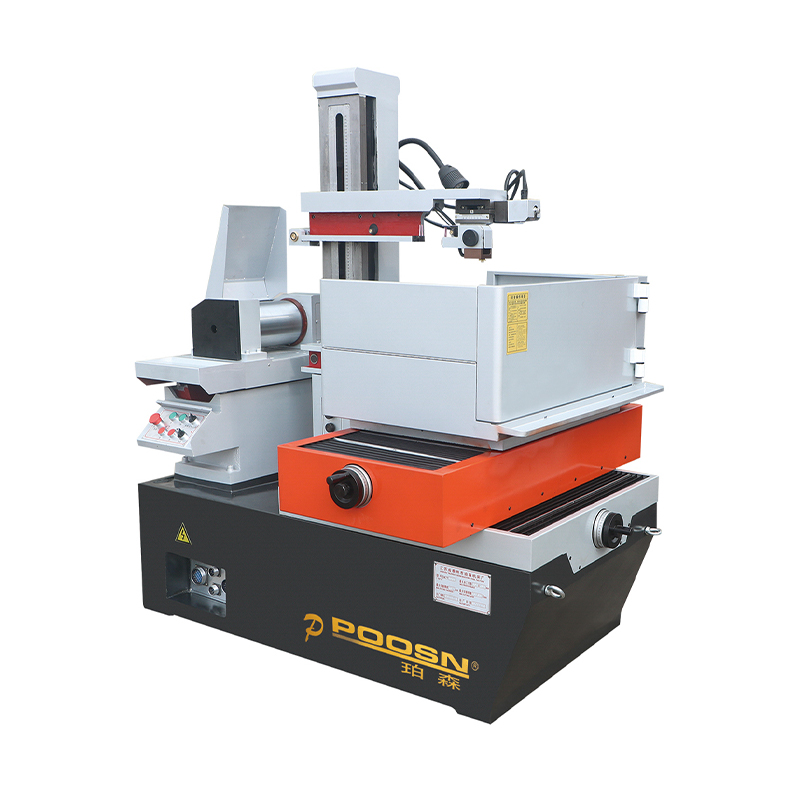
1. Product Overview(DK-BC High-Medium-speed WEDM)
The DK-BC series represents a line of high-medium ...


DK-BC High-Medium-speed WEDM Manufacturers
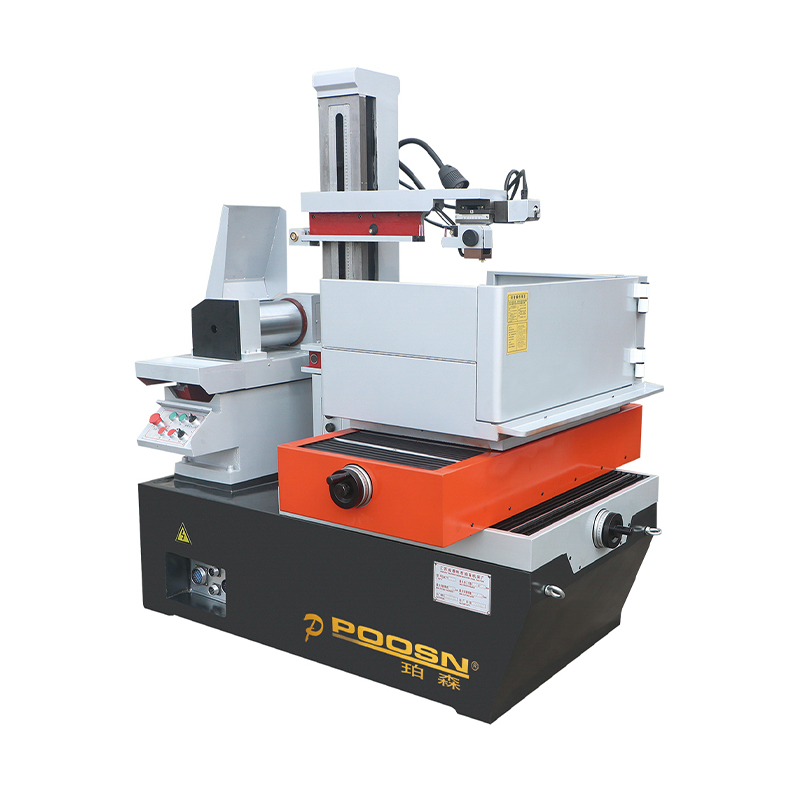
DK-BC Series High-Performance Medium-Speed Wire EDM: Utilizing advanced high-speed wire EDM technology, this series is specifically engineered for precision component machining. Compared to traditional models, the DK-BC series features an optimized design incorporating a linear guide system, ensuring superior cutting accuracy and enhanced stability. It delivers both high-speed cutting and exceptional precision, making it widely applicable in mold manufacturing, precision machinery, and automotive part production.
Key Features:
High-Precision Cutting: Provides a linear machining accuracy of 0.003mm, ensuring every part meets the most demanding specifications.
High Efficiency: The optimized cutting system boosts productivity, making it perfectly suited for medium-scale batch production.
Strong Stability: Its robust design minimizes downtime and ensures the long-term operational stability of the equipment.
Application Areas
Mold Manufacturing
Precision Machinery
Automotive Parts
ABOUT US
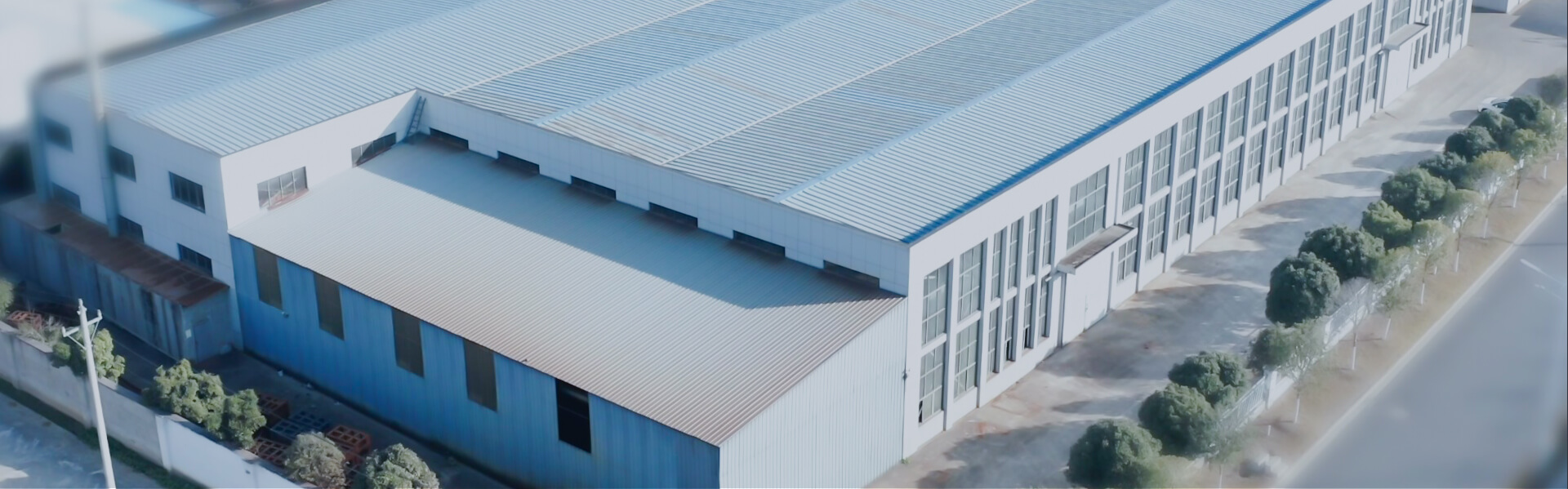
Taizhou Xinchengyang Machinery Manufacturing Co., Ltd.
As China OEM High-speed Wire EDM (HS-WEDM) Manufacturers and ODM Medium-speed Wire EDM (MS-WEDM) Factory, Our company is a specialized manufacturer with years of experience in the research, development, and production of electrical discharge machining (EDM), special processing technologies, and equipment. We possess strong technical capabilities, advanced processing equipment, comprehensive testing methods, and rational product design. All products are strictly manufactured in accordance with national standards, with each machine tool undergoing positioning accuracy testing to ensure high-quality output.
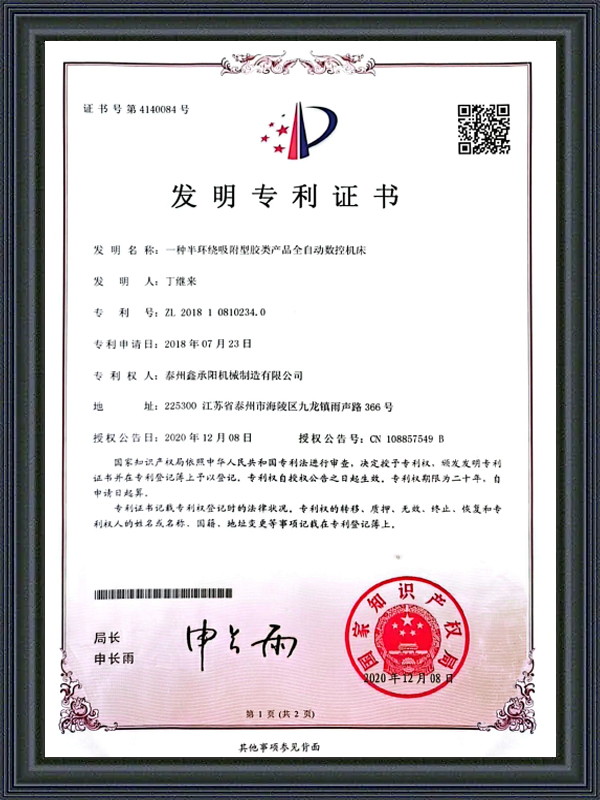
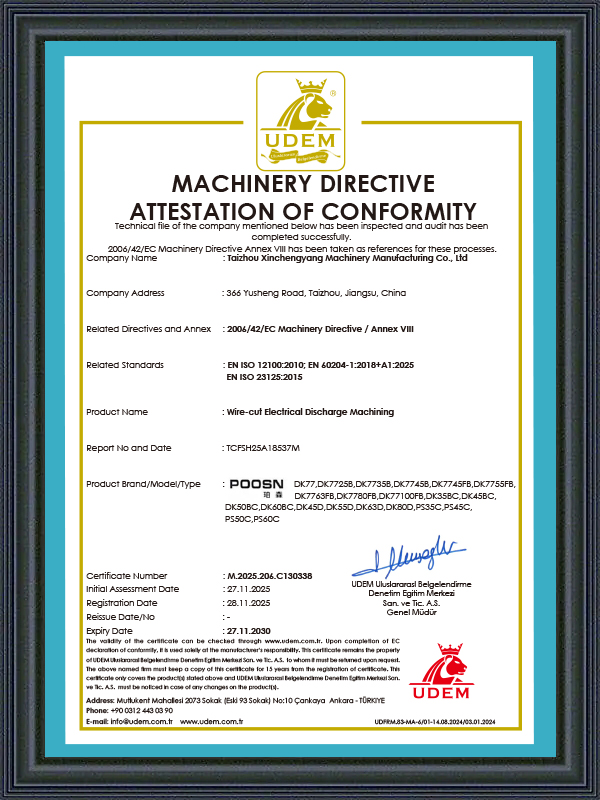
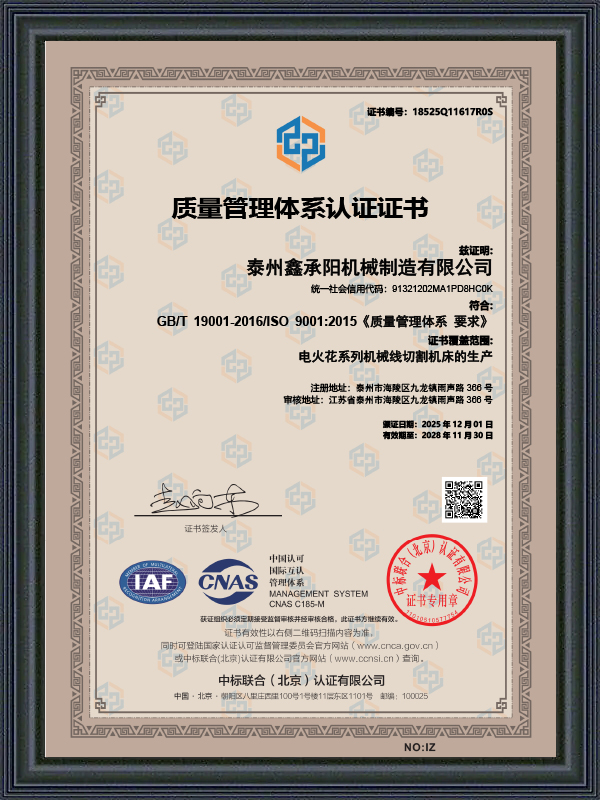
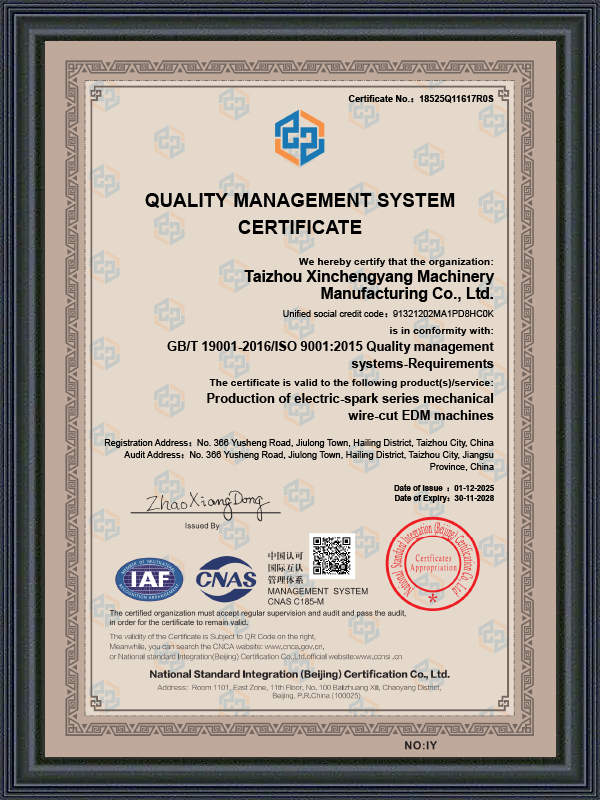
HONORARY CERTIFICATION
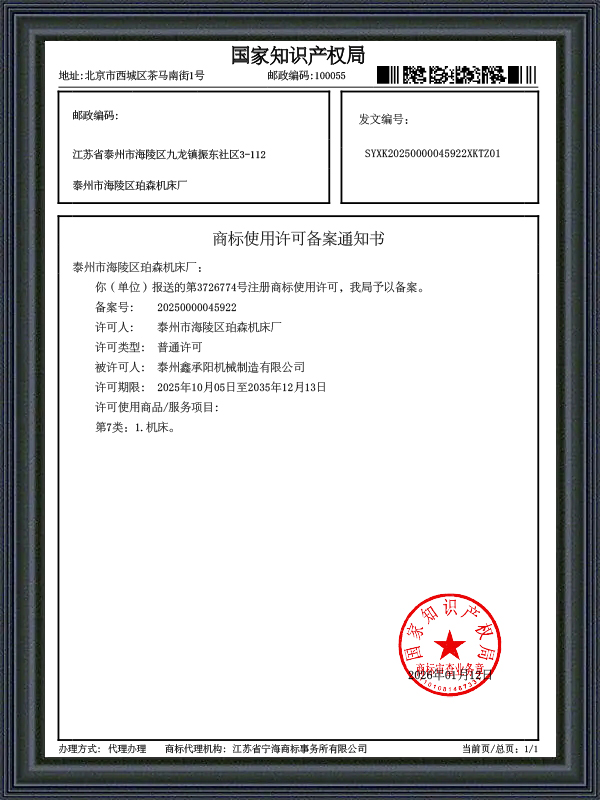
CERTIFICATE
LATEST UPDATES
WHAT'S NEWS
-
DK-BC High-Medium-speed Wire EDM (WEDM) Knowledge Guide
-
Knowledge Guide For DKD Large Cutting Taper WEDM (Wire EDM) Machines1. Product Overview The DKD Large Cutting Taper WEDM is a high-precision CNC machine designed for cu...
-
A Comprehensive Knowledge Of The PS-C Medium-speed Wire-cut EDM Machine1. Product Overview The PS-C Medium-speed Wire-cut EDM Machine is a CNC (Computer Numerical Control)...
-
How to Select the Configuration for a Wire-Cut EDM MachineSince the year 2000, manufacturers have invested significant resources in enhancing the processing s...
-
Wire-Cut EDM Machine Operation Process and Fundamental KnowledgeWire-Cut EDM Machine Operation Process and Fundamental Knowledge When selecting a wire cutting machi...
INDUSTRY KNOWLEDGE
As a core process in the fields of precision mold manufacturing and metalworking, Wire Electrical Discharge Machining (WEDM) has evolved to witness the industrial manufacturing sector's transition from a pursuit of sheer efficiency to a pursuit of ultimate precision. Positioned at the forefront of this technological landscape, Taizhou Xinchengyang Machinery Manufacturing Co., Ltd. has established a comprehensive equipment matrix—catering to a diverse range of processing requirements—through the deep integration of medium-speed and high-speed wire-cutting technologies within its DK-BC series.
I. Technical Logic and Classification of Wire-Cutting Processing Technologies
Fundamentally, wire-cutting processing involves shaping metal materials by utilizing the erosive effect of pulsed electrical discharges generated between a continuously moving electrode wire and the workpiece. In practical production applications, Taizhou Xinchengyang categorizes these systems into distinct tiers based on their energy levels and precision capabilities.
High-speed wire EDM technology is characterized by its exceptionally high electrode wire velocity; its primary objective is to strike an optimal balance between "efficiency" and "rough machining" requirements.
Operating Mechanism: The electrode wire (typically a molybdenum wire) undergoes high-speed reciprocating motion, driven by a wire storage drum.
Process Advantages: Thanks to the high wire velocity, discharge byproducts are rapidly flushed away, thereby ensuring stability—even when cutting through workpieces of significant thickness.
Core Applications: Predominantly utilized for machining basic components or performing roughing operations on molds where surface finish requirements are not stringent, yet turnaround times are extremely critical.
Medium-speed wire EDM is not merely a simple compromise in speed; rather, it represents a significant technological upgrade built upon the foundation of "Repeated Cutting" processes.
Technological Evolution: It draws inspiration from the processing philosophy of low-speed (slow-wire) EDM. While retaining the structural framework of high-speed systems, it employs variable-frequency drive technology to precisely control the wire speed, thereby enabling distinct stages of rough cutting and fine cutting.
Performance Breakthrough: Its core strength lies in the precise control of the pulse power supply and the effective mitigation of surface striations caused by the reciprocating wire motion—resulting in a workpiece surface quality that closely rivals that achieved by low-speed wire EDM systems.
Market Positioning: As a flagship product for Taizhou Xinchengyang, medium-speed wire EDM is widely deployed in sectors demanding high levels of precision and surface finish—such as the manufacturing of precision plastic molds and metal stamping dies.
3. DK-BC High-to-Medium Speed WEDM (DK-BC Series High-Performance Wire-Cut EDM)
The DK-BC series represents the deep integration of digital control and mechanical structure optimization achieved by Taizhou Xinchengyang; it stands as a highly integrated embodiment of both fast-wire and medium-wire EDM technologies.
CNC Integration: This series features enhanced trajectory compensation capabilities and improved feedback sensitivity within its servo systems.
Structural Rigidity: To address vibrations generated by high-speed reciprocating motion, the DK-BC series incorporates structural reinforcements in both its machine bed castings and guide rail designs, aiming to suppress the impact of mechanical resonance on the machining trajectory.
II. Comparison of Core Technical Parameters and Process Characteristics
To provide a more intuitive understanding of the technical hierarchy within Taizhou Xinchengyang's product lineup, the table below outlines the technical performance characteristics across various processing modes:
| Technical Dimension | High-speed Wire EDM (HS-WEDM) | Medium-speed Wire EDM (MS-WEDM) | DK-BC Series Integrated |
| Wire Running Mode | Single high-speed reciprocating motion | Frequency-controlled multi-cutting cycles | Intelligent closed-loop control with flexible wire tensioning |
| Surface Consistency | Robust material removal; standard textured finish | Superior finish with precision skimming capabilities | Ultra-high consistency; adapts to complex micro-curvatures |
| Operational Environment | Standard industrial flooring and ambient conditions | Optimized for temperature-controlled or cleanroom settings | Versatile adaptation for high-precision smart factories |
| Maintenance Profile | Highly accessible with a simplified mechanical structure | Moderate; requires precise dielectric fluid filtration | High automation with extended service intervals |
| Application Scope | Preliminary roughing and basic template fabrication | Finished precision parts and high-end stamping dies | High-complexity molds and aerospace-grade components |
III. Taizhou Xinchengyang's Strategic Depth in the WEDM Sector
As an enterprise deeply rooted in mechanical manufacturing, Taizhou Xinchengyang Machinery Manufacturing Co., Ltd. has precisely aligned equipment—such as its DK-BC series—with market demands throughout its product R&D and global market deployment efforts.
Global Market Presence: The company's equipment not only commands a significant share of the domestic market but has also established a strong technical reputation in international markets—including Southeast Asia, Europe, and the Americas—thanks to its consistent machining precision and adaptability to diverse environments.
Technical Iteration Capabilities: To address the varying characteristics of metal materials across different regions (such as high-hardness alloys and specialty steels), Taizhou Xinchengyang has optimized its electrical parameter models. This ensures that its equipment maintains an ideal electrical erosion rate even when processing difficult-to-machine materials.
System Stability: For long-duration, continuous machining tasks, the company has invested heavily in engineering optimizations—specifically regarding circuit system protection, wire-break protection, and fluid temperature control—to guarantee the equipment's reliability under high-load operating conditions.
IV. FAQ: Common Technical Questions Regarding Wire-Cut EDM
Q1: What is the fundamental difference in machining logic between "Medium-speed" and "High-speed" Wire-Cut EDM?
A: High-speed EDM typically aims to cut through the workpiece in a single pass, whereas Medium-speed EDM introduces a "multi-cut" logic. The initial cutting pass utilizes high energy to maximize speed, while subsequent trimming passes reduce both energy levels and wire speed. This approach leverages the synergistic effects of electrochemical and physical discharge processes to eliminate the surface-altered layer.
Q2: How does the DK-BC series ensure precision when machining complex geometric shapes?
A: This series employs high-resolution control algorithms capable of compensating for the inherent lag within the wire-feeding system. By achieving microsecond-level responsiveness in the X-Y axis linkage, the system effectively mitigates the "corner collapse" phenomenon—a distortion caused by the flexible deformation of the electrode wire—that typically occurs at sharp corners.
Q3: Why are Taizhou Xinchengyang's products able to maintain stable performance in regions with vastly different climates, such as Southeast Asia, Europe, and the Americas?
A: This stability is primarily attributed to the mechanical structure, which utilizes high-stability castings treated with an aging process. Additionally, the electrical control cabinets feature industrial-grade protective designs against varying temperatures and humidity levels, ensuring that both electronic components and mechanical transmission parts maintain consistent physical performance across diverse geographical and climatic environments.
Q4: What are the primary factors that influence the surface finish quality in Wire-Cut EDM?
A: In addition to the inherent rigidity of the machine tool itself, other critical factors include the peak current and pulse duration of the pulse power supply, as well as the dielectric strength and electrical conductivity of the working fluid. Through precise inductive control, mid-speed wire-cut EDM equipment is capable of effectively refining the discharge craters.
Q5: How does one evaluate whether a specific WEDM machine is suitable for processing a particular mold?
A: A comprehensive assessment should be conducted based on the machine's positioning accuracy, repeatability, and minimum machining radius. All equipment manufactured by Taizhou Xinchengyang undergoes rigorous geometric accuracy testing prior to leaving the factory, ensuring its capability to handle machining tasks at the micron level.
-
Phone
+86-0523-86268788 +86-13815960366 +86-13912191163Email
[email protected]Address
No. 366, Yusheng Road Jiulong Town, Hailing District Taizhou City, China
Copyright © Taizhou Xinchengyang Machinery Manufacturing Co., Ltd. All Rights Reserved.
Wholesale High-speed Wire EDM Manufacturers
Custom Medium-speed Wire EDM Factory
