

 English
 русский
 عربى


Industry News
Home / News / Industry News / Wire EDM for Inconel: Cutting Parameters, Machine Selection, and Tooling Tips
Wire EDM for Inconel: Cutting Parameters, Machine Selection, and Tooling Tips
2026-10-12
A toolroom quotes a batch of Inconel 718 extrusion dies and the milling department is already struggling: four carbide end mills consumed, a 0.15 mm bow released from residual stress, and corner radii that still need hand finishing. That is usually the point where a shop stops re-planning its milling strategy and moves the job onto a wire EDM machine, and it is also the point where the shop discovers that Inconel does not behave like the hardened tool steels it normally cuts.
Wire EDM for Inconel is not a fallback process. Because an Electrical Discharge Machining Machine removes material thermally instead of mechanically, it simply ignores the properties that make nickel superalloys so hostile to cutting tools: high hot hardness, rapid work hardening under pressure, and low thermal conductivity that traps heat at the cutting edge. On a properly configured multi-cut WEDM Machine, an aged Inconel 718 part can be finished to within 0.005 to 0.01 mm, with a final surface finish in the region of Ra 0.4 to 0.8 micrometre, and with no cutting force available to deflect a thin wall.
The trade-off is speed and process discipline. Inconel cuts at roughly one third of the rate of hardened tool steel on the same machine, the wire is more likely to break, and the recast layer left by the roughing pass has to be removed by successive trim cuts. Everything that follows explains what actually changes when the workpiece is a nickel alloy, and how the machine, the wire electrode and the cut plan should be selected for it.
Key takeaway: wire cutting Inconel does not require a different machine category, but it does require stable servo control, genuine multi-cut capability and a cut plan written for nickel alloys rather than inherited from steel.
Content
- 1 Why Inconel Is a Difficult Material, Even for EDM
- 2 How Inconel Compares With Other Alloys on the Same Machine
- 3 Why Wire EDM Is Still the Right Process for Inconel
- 4 Machine Selection: What Actually Matters for Inconel
- 5 Wire Electrode Selection for Inconel
- 6 Cutting Parameters and the Multi-Cut Strategy
- 7 Taper Cutting, Thick Sections and Oversized Parts
- 8 High-Medium Speed and Heavy Duty Options
- 9 Workholding, Starting Holes and Pre-Cut Preparation
- 10 Troubleshooting: Common Problems When Cutting Inconel
- 11 Daily Maintenance When Nickel Alloys Dominate the Schedule
- 12 Buying Checklist: Questions to Ask a Wire EDM Manufacturer
- 13 Where Inconel Parts Are Cut in Practice
- 14 Frequently Asked Questions About Wire EDM for Inconel
- 14.1 Can a standard wire EDM machine cut Inconel 718?
- 14.2 How much slower is wire EDM for Inconel compared with steel?
- 14.3 How many trim cuts are needed on Inconel 718?
- 14.4 Which wire electrode works best on nickel alloys?
- 14.5 Does wire EDM leave a heat-affected zone in Inconel?
- 14.6 Is a high speed WEDM machine economic for Inconel?
- 14.7 What tolerance can be expected on an Inconel part?
- 14.8 Can a machine be ordered already configured for nickel alloy production?
- 15 Next Step
Why Inconel Is a Difficult Material, Even for EDM
Inconel 718 is a nickel-chromium-iron superalloy strengthened by niobium, molybdenum, titanium and aluminium additions. In the aged condition it sits around 36 to 44 HRC, keeps a useful fraction of its strength up to roughly 700 degrees Celsius, and conducts heat at only about 11 W/m·K, roughly a quarter of what carbon steel manages. Its work hardening rate is high, and the alloy contains hard carbide and nitride particles that abrade anything that rubs against it.
Most of that list matters to milling and turning. Four properties matter to wire EDM, and they are worth separating because each one points at a different countermeasure.
- Energy demand per unit volume. Nickel alloys have a high melting point and high specific heat capacity, so more discharge energy is needed to remove the same volume of material. Roughing an Inconel block is simply slower than roughing the same block in D2 or H13.
- Low thermal conductivity. Heat cannot escape into the bulk, so the discharge crater stays hot longer, the molten pool is larger, and the recast layer grows. On an aggressive rough pass the white layer on Inconel can reach 5 to 15 micrometre depth, compared with roughly 3 to 8 micrometre on tool steel, and the micro-crack risk rises with it.
- Debris behaviour and flushing. Nickel alloy debris is fine, tenacious and difficult to flush out of a 0.3 mm kerf. When it collects, dielectric flow across the gap drops, discharge conditions become unstable, and wire breakage follows.
- Residual stress and movement. Inconel parts are frequently thin-walled, near-net forgings or castings. Once the cut releases the internal stress, the part moves, and dimensional drift appears between the roughing pass and the finishing passes.
None of these problems needs an exotic solution. They need lower discharge energy per pulse, a higher number of trim passes, better flushing at the cut zone, and tighter control of the thermal environment around the workpiece. That is a machine configuration and cut-plan question, not a material question.
Key takeaway: the real limit on Inconel productivity is the recast layer and the flushing conditions, not the hardness of the alloy.
How Inconel Compares With Other Alloys on the Same Machine
The practical question inside a toolroom is rarely whether Inconel can be cut; it is how much slower it is than the materials already on the schedule. Published cut-rate figures for superalloys vary widely with machine, generator and flushing conditions, so absolute numbers are less useful than a relative comparison made on one machine with one wire. The chart below normalises a set of typical medium-speed WEDM results for straight cuts through 20 to 30 mm plate, using the same wire diameter and the same generator family, with aluminium 6061 set at an index of 100. All values describe the roughing pass only; the trim passes scale in roughly the same proportion, so the absolute time gap widens as the part gets taller. Treat the numbers as a planning index rather than a specification, and expect deviations of plus or minus 15 percent between machines and between operators.
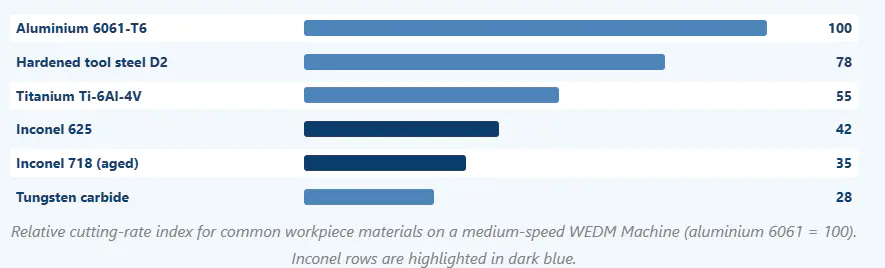
The first observation is that the gap between Inconel and tool steel is large enough to change a delivery date. Aged Inconel 718 runs at roughly 35 against 78 for D2, which means a job that takes ten hours in D2 will take about twenty-two hours in Inconel on the same machine, before any allowance for extra trim passes. Quoting such work with steel-based cycle times is the single most common estimating error in shops that only occasionally see nickel alloys.
The second observation is that Inconel 625 and Inconel 718 sit close together but are not interchangeable. The aged 718 is slower and, more importantly, it is the grade most likely to move after the cut because of the precipitation-hardening heat treatment. A 625 job that behaves well does not guarantee that the 718 version of the same geometry will behave the same way.
The third observation concerns titanium. Ti-6Al-4V at 55 is far closer to tool steel than to Inconel, so a shop that has learned to wire cut titanium should not assume the same settings will serve for a nickel alloy. The generator settings, the flushing pressure and the number of trim passes all need to move.
The fourth observation is about tungsten carbide at 28, the slowest material on the chart. Carbide is slow because of its hardness and its thermal shock sensitivity, while Inconel is slow because of its thermal properties and its recast layer. The two materials are slow for different reasons, so the strategies diverge: carbide work calls for gentle, low-energy pulses and careful edge support, whereas Inconel work calls for as much roughing energy as the wire can survive, followed by aggressive trimming.
The fifth point is that the index is linear, so a difference of ten points is a real difference. Moving from a poorly flushed setup to a properly flushed one can recover five to eight points on the Inconel rows without changing a single generator parameter. On a 30 mm Inconel plate, that is often two hours on a shift.
The sixth point concerns machine choice. A High Speed Wire EDM with a molybdenum wire can rough Inconel, but the achievable index is lower and the surface quality after roughing is rougher, which means more work for the trim passes or a longer hand-finishing operation. A Medium Speed Wire EDM Machine with a multi-cut generator changes the economics of the whole job because it can hold the rough rate and still deliver a finished surface in the same setup.
The seventh point is about thickness. The values above assume 20 to 30 mm plate. As the part gets thicker, the Inconel column degrades faster than the steel column, because flushing becomes the bottleneck rather than the generator. A 100 mm Inconel section can easily run at half of the index shown here, and no parameter change fully recovers it.
The eighth point is that the chart says nothing about accuracy, only about removal rate. Inconel parts are usually bought for accuracy, so the removal rate should be treated as one input among several when a job is quoted, not as the deciding factor.
Key takeaway: plan Inconel cycle times at roughly 35 percent of the aluminium reference rate, and accept that a further loss of 30 to 50 percent is normal once the part is thicker than about 80 mm.
Why Wire EDM Is Still the Right Process for Inconel
The most useful way to see the process is as a comparison with milling, because that is the decision most shops actually face when a nickel alloy part arrives.
| Consideration | CNC milling | Wire EDM for Inconel |
|---|---|---|
| Cutting force | High radial force, deflects thin walls | None; the wire never touches the part |
| Hardness sensitivity | Severe; 44 HRC aged stock wears tools fast | None; hardness does not change the cut |
| Work hardening | Surface layer hardens and damages the next pass | Not produced by pressure; material is melted and re-solidified instead |
| Internal corners | Limited by tool radius | Limited only by wire radius, typically 0.16 to 0.17 mm for 0.25 mm wire |
| Heat input | Heat goes into the chip and the tool | Heat is localised at the discharge, then removed by trim passes |
| Best use | Bulk removal, simple prismatic features | Finishing, complex profiles, thin walls, tapered walls |
Four consequences follow from that table. First, thin-walled Inconel parts that chatter under a milling cutter can often be finished in a single wire EDM setup with no support structure. Second, the fact that the material is already heat treated is irrelevant to the process, so a shop can buy aged bar stock and cut it directly instead of roughing in the annealed state and sending the part out for re-hardening. Third, the geometry is freed from tool radius limits, which matters in seal grooves, cooling channels and the sharp internal corners common in aerospace hardware. Fourth, the surface produced by the final trim pass is not a work-hardened surface, which several aerospace specifications prefer for fatigue-critical edges.
The process is not universal, and pretending otherwise wastes money. If the part is a simple prismatic block with a large volume of material to remove, milling is faster and cheaper, and a Wire Cut EDM Machine should be used only for the finishing operation. If the part is taller than the machine's Z axis, it cannot be cut at all. If the feature is a fine internal slot in a 200 mm tall block, flushing limits will make the job painful regardless of the machine.
The sensible division of labour is to rough with a milling cutter where the geometry allows it, leave 0.3 to 0.5 mm of stock, stress relieve if the specification permits, and then finish on a CNC Wire EDM Machine. That combination gives the lowest total cost per part for most Inconel work.
Key takeaway: use wire EDM for the finishing of Inconel, not for bulk removal, and route the roughing operation to whichever process can remove volume fastest.
Machine Selection: What Actually Matters for Inconel
A machine that cuts steel well will cut Inconel, but it will cut it badly if a few specific features are missing. The table below lists what to check on the specification sheet rather than on the brochure.
| Feature | Why it matters for Inconel |
|---|---|
| Genuine multi-cut generator | Three or four trims are needed to remove the recast layer; a machine that only claims multi-cut on paper cannot hold Ra 0.4 on nickel alloys |
| Servo control quality | Unstable servo response causes arcing, which leaves pits on Inconel that no trim pass fully removes |
| Wire tension and speed stability | Nickel debris increases friction in the kerf; fluctuating tension is the leading cause of breakage |
| Flushing design and pressure range | Adjustable nozzles and higher pressure are needed to clear sticky nickel debris from a narrow kerf |
| Dielectric temperature control | Thermal stability keeps the gap constant on long Inconel cuts and reduces taper error |
| Automatic wire threading | Breakage is more frequent on Inconel, so threading time becomes a real cost |
| Corner control in the CNC | Compensates for wire lag, which is more pronounced at the reduced feed rates used on nickel alloys |
| Taper capability | Many Inconel parts are die and aerospace components with drafted walls |
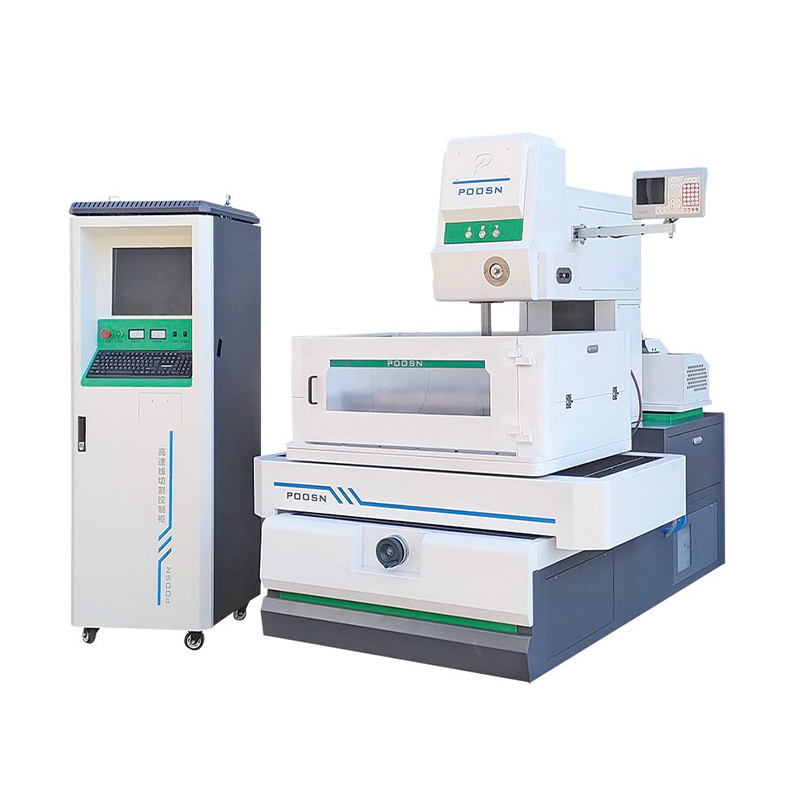
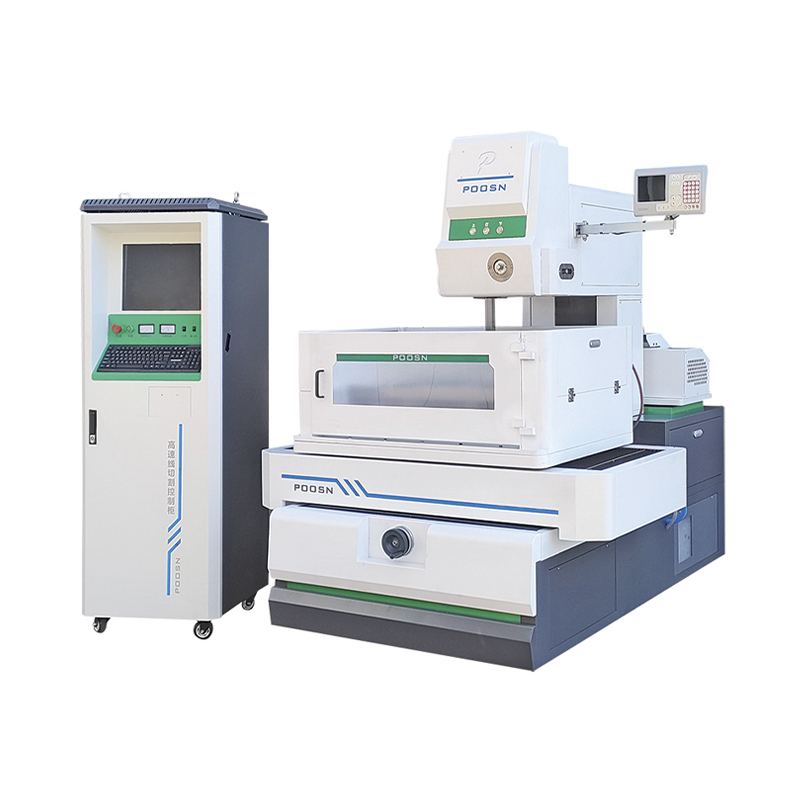
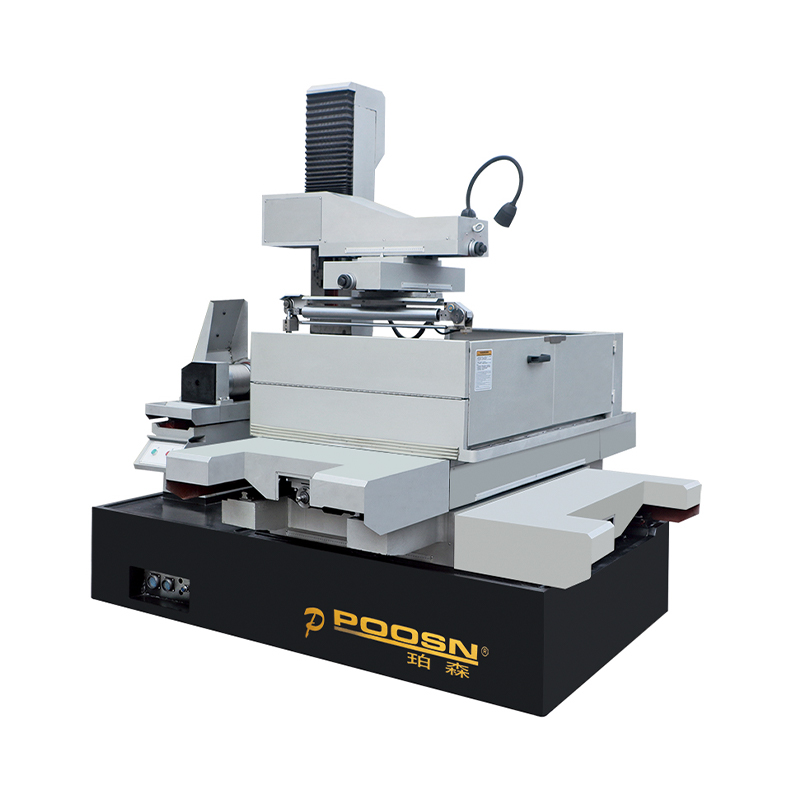
In practice, the four PS-C models are a reasonable reference point for this kind of work. The PS35C, PS45C, PS50C and PS60C span a range of table sizes on the same medium-speed platform, so a shop that starts with the PS35C on small aerospace details can move up to the PS50C or PS60C as the work gets bigger without relearning the control. On nickel alloys, the value of a medium-speed platform is that it can rough at a useful rate and then trim to a fine finish in the same setup, which is exactly the sequence Inconel needs.
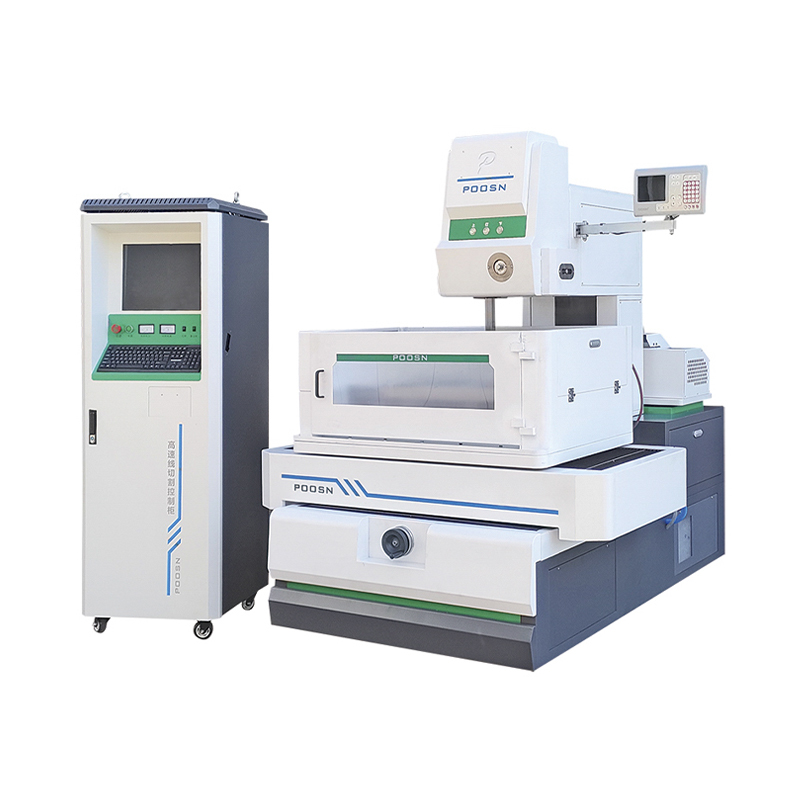 PS45C Heavy-Duty CNC Medium Speed Wire Cut EDM MachinePS45C Series Medium-Speed Wire EDM: Designed for the precision machining of larger workpieces, this series offers enhanced processing capabilities and higher workloads...View Product →
Two other specification points are easy to overlook. The first is table and tank size: Inconel parts are often long and thin, and a machine that fits the part but not the clamping fixture is useless. The second is the wire guide system. Cutting abrasive nickel alloys for long periods wears guide surfaces, so a design with replaceable diamond or carbide guides and a documented replacement interval saves both money and scrap.
If the shop also runs hardened steel, carbide or titanium, the same machine can serve all of them, but the parameter sets should be stored separately. Reusing a steel parameter set on Inconel is the fastest way to break wire on the first pass.
Key takeaway: for Inconel, prioritise a stable servo, real multi-cut capability and controllable flushing over raw axis speed.
Wire Electrode Selection for Inconel
Wire choice does more for Inconel productivity than most operators expect, because it sets both the maximum practical roughing current and the achievable surface on the trim passes.
| Wire type | Typical diameter | Behaviour on Inconel | Notes |
|---|---|---|---|
| Plain brass | 0.25 mm | Adequate roughing rate, moderate breakage risk in tall cuts | Lowest cost; best where flushing is strong and parts are short |
| Zinc-coated brass | 0.25 to 0.30 mm | Higher roughing rate, better debris evacuation | Good default for Inconel; slightly higher consumable cost |
| High-tensile coated wire | 0.20 to 0.25 mm | Excellent for finishing passes, tighter corner accuracy | Use on the trim passes where surface finish is specified |
| Molybdenum | 0.18 mm | High tensile strength, suits reciprocating high speed WEDM | Common on DK77 class machines; limited multi-cut finishing |
| Tungsten | 0.03 to 0.10 mm | Used for micro work rather than production Inconel cutting | Special applications only |
The rule that governs wire diameter is geometric. A 0.25 mm wire produces an internal corner radius of roughly 0.16 to 0.17 mm after the offset is applied, so a drawing that calls for a 0.1 mm internal radius cannot be produced with that wire no matter how the parameters are set. For Inconel parts with very fine internal geometry, going down to a 0.20 mm coated wire is often the only option, at the cost of a lower roughing current and a longer cycle.
For the roughing pass on thick Inconel sections, a slightly larger zinc-coated wire at 0.30 mm gives better mechanical strength and a wider kerf for flushing. The trade-off is a larger corner radius and more material to remove on the trim passes, so it is a decision that should be made per job rather than as a shop standard.
Wire consumption on Inconel runs higher than on steel for two reasons: the cutting length is longer because the cycle is longer, and breakage losses are more frequent. Budgeting wire as a cost per part rather than a cost per metre is the more honest approach when quoting nickel alloy work.
Key takeaway: use zinc-coated brass for roughing Inconel and a high-tensile coated wire for the trim passes, and choose the diameter from the smallest internal radius the drawing allows.
Cutting Parameters and the Multi-Cut Strategy
Parameter values are machine-specific, but the shape of the strategy is not. The table below shows the structure of a four-cut sequence for aged Inconel 718 in 30 mm plate, which is a reasonable starting point for a Servo Wire EDM Machine with a modern generator.
| Pass | Offset from final size | Discharge energy | Typical surface | Purpose |
|---|---|---|---|---|
| Rough | 0.05 to 0.07 mm | High | Ra 2.5 to 3.5 micrometre | Remove volume; recast layer forms here |
| Trim 1 | 0.02 to 0.03 mm | Medium | Ra 1.2 to 1.8 micrometre | Remove the bulk of the recast layer |
| Trim 2 | 0.008 to 0.012 mm | Low | Ra 0.8 to 1.0 micrometre | Refine size and reduce the heat-affected depth |
| Trim 3 and 4 | 0.003 to 0.005 mm | Very low | Ra 0.4 to 0.6 micrometre | Final finish and dimensional control |
Several points about this sequence are worth stating explicitly. The offsets matter more on Inconel than on steel, because insufficient offset on the rough pass leaves a recast layer that the trims cannot fully remove, and excessive offset wastes time. As a rule of thumb, the rough offset should be at least three times the depth of the recast layer produced by that pass.
Wire tension should be set at the high end of the wire manufacturer's range. Higher tension reduces vibration, narrows the kerf variation and improves flushing, and the penalty in breakage risk is smaller than the gain on a material that tends to arc.
Flushing pressure and nozzle position deserve more attention on nickel alloys than on steel. Nickel debris is finer and stickier, and once it collects in the kerf the discharge becomes unstable. Increasing the upper and lower flushing pressure and reducing the nozzle gap to 0.1 to 0.2 mm often recovers several percentage points of cutting rate on its own.
Dielectric conductivity should be held in a narrow band, typically between 8 and 12 microsiemens per centimetre on most machines, and checked more frequently when nickel work dominates the schedule because the debris load rises.
Finally, the number of trims should be treated as a quality decision, not a fixed habit. If the drawing calls for Ra 1.6 and no fatigue requirement, a three-cut sequence is usually sufficient. If the part is a fatigue-critical aerospace component, four cuts plus a documented recast-layer check is the conservative route.
Key takeaway: on Inconel, the rough pass decides the cycle time and the trim passes decide whether the part is accepted, so never trade trim passes for speed.
Taper Cutting, Thick Sections and Oversized Parts
Nickel alloy work often arrives as a die insert with drafted walls, a turbine component with angled cooling features, or a large frame with an external taper. A Taper Wire EDM Machine removes these features in one setup, but the taper reduces the effective flushing at the cut zone and, at large angles, tilts the wire in the guides in a way that changes the discharge gap along the height of the part.
Two practical thresholds are worth remembering. Up to about 15 degrees of taper, most machines behave predictably and the parameter changes are modest. Beyond 30 degrees, and certainly at 60 degrees, the lower nozzle has to be retracted or removed, flushing degrades sharply and special guide systems are required. On Inconel, where flushing is already the limiting factor, that degradation is more painful than it is on steel.
The DKD large-taper line covers the upper end of that range. Models such as the DK45D, DK55D, DK63D and DK80D are built for large-angle work, with the DK45D often being the entry point for shops that cut tapered Inconel details in the 300 to 500 mm range. On these machines the combination of a wide taper range and a stable servo is what allows a single setup to produce both the draft angle and the finished surface.
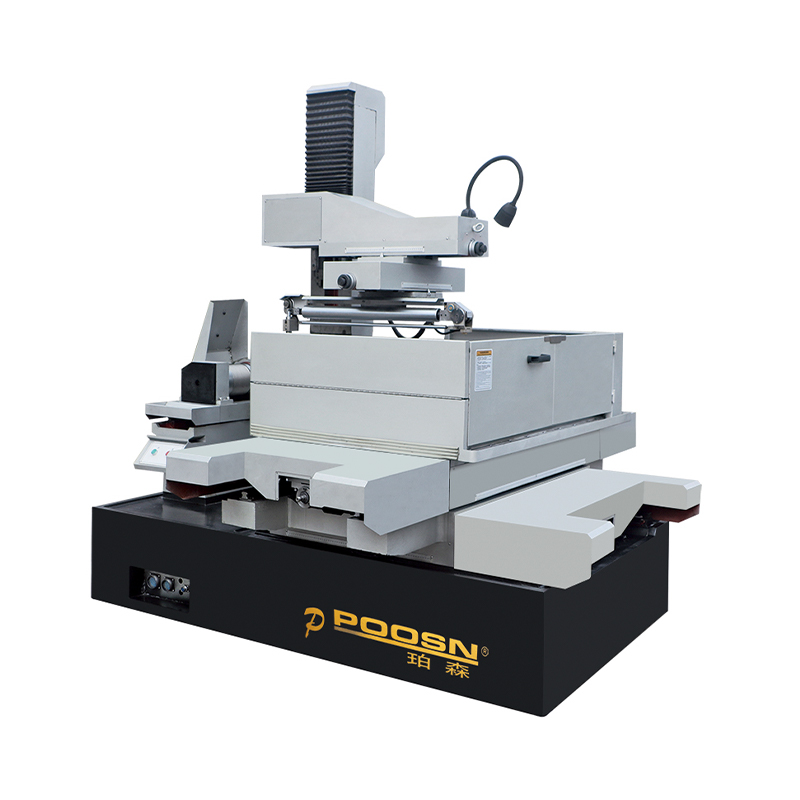 DK45D CNC Large Taper Wire Cut EDM Machine for Precision Mold MachiningDK45D Series Large-Taper Wire EDM: Specifically designed for high-precision, large-taper cutting tasks, this series is ideal for precision machining requiring signific...View Product →
Oversized parts introduce a second problem: thermal drift. A long Inconel cut generates heat in the workpiece, the fixture and the machine structure, and the part dimension follows the temperature. The usual controls are to let the machine and dielectric stabilise before the finishing passes, to avoid running long nickel jobs first thing in the morning, and to measure the part at the same temperature at which it was cut.
Thick sections also change the economics. A 150 mm Inconel cut may run at half the rate of a 30 mm cut because flushing reaches the middle of the kerf poorly. Where the geometry allows, cutting the same part in two thinner sections and stacking them after the cut is often faster overall than one thick cut, even allowing for a second setup.
Key takeaway: treat any taper above 30 degrees on Inconel as a flushing problem first and a parameter problem second.
High-Medium Speed and Heavy Duty Options
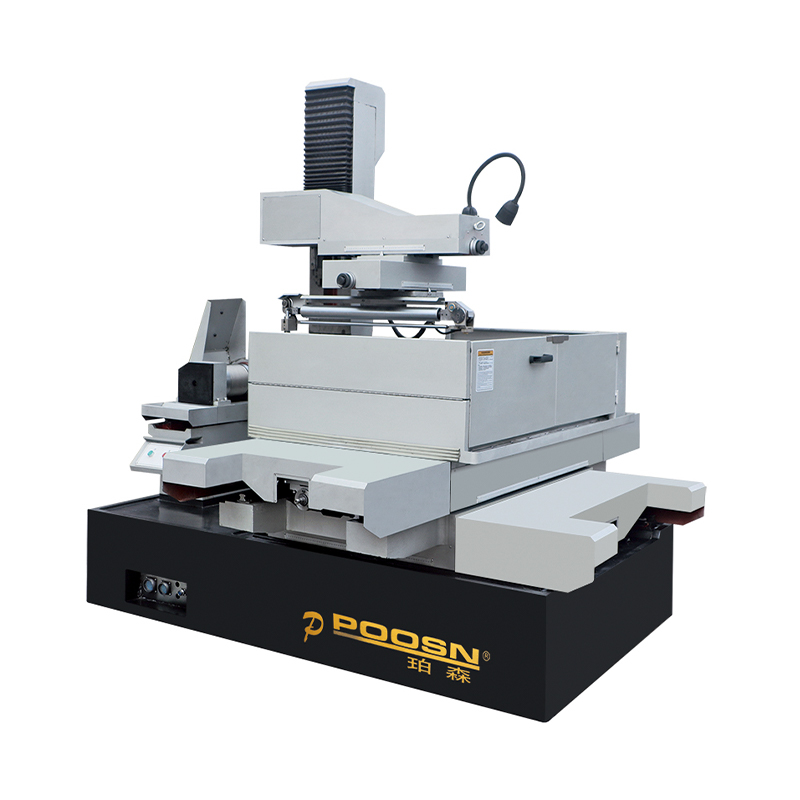
Not every shop can justify a dedicated medium-speed machine for nickel alloys alone. Many run a mixed schedule of hardened steel, stainless, titanium and the occasional Inconel job, and in that situation the DK-BC high-medium speed line is a sensible middle ground: more removal capacity than a pure high speed WEDM, and better accuracy than a reciprocating molybdenum machine, without the cost of a full high-end platform.
High speed WEDM with molybdenum wireReciprocating wire, economical consumables, high removal rate on simple shapes. Suitable for roughing Inconel where dimensional tolerance is loose and the surface will be finished by another operation. Limited multi-cut capability and lower corner accuracy. |
Medium speed and high-medium speed WEDMSingle-pass wire with a multi-cut generator, better servo control and cleaner flushing. Suitable for finishing Inconel in one setup to tolerances in the 0.01 mm band. Higher machine cost and slightly higher consumable cost per metre. |
Whichever class is chosen, a Heavy Duty Wire EDM Machine configuration is worth considering if the shop regularly sees oversize or thick nickel work, because the additional structural rigidity and larger tank pay for themselves in reduced vibration on long cuts.
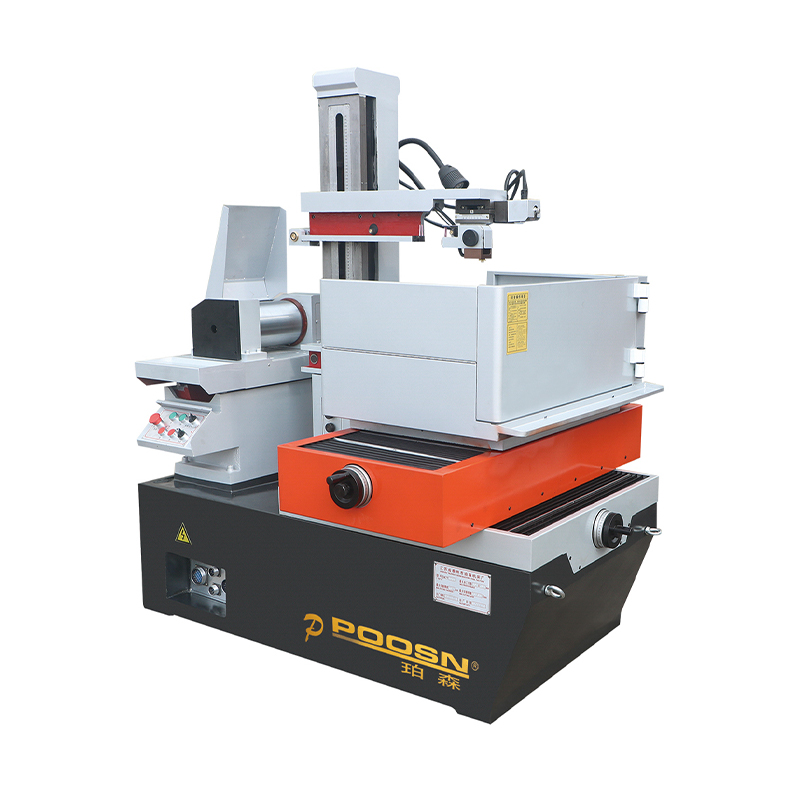 DK45BC CNC Medium-Speed Wire EDM Machine (400kg Load)DK45BC Series High-Performance Medium-Speed Wire EDM: Features a larger worktable and higher load capacity, specifically designed for the precision machining of larger...View Product →
It is also worth remembering that the class of machine does not change the metallurgy. A high speed machine and a medium speed machine face exactly the same recast layer on Inconel; they simply have different tools for dealing with it. A high speed machine deals with it by leaving stock for a subsequent operation, and a medium speed machine deals with it by trimming in place.
Key takeaway: choose the machine class from the tolerance and surface the Inconel drawing demands, not from the maximum cutting rate quoted in a brochure.
Workholding, Starting Holes and Pre-Cut Preparation
Most Inconel scrap is created before the wire is threaded. The preparation steps below have a larger effect on the outcome than any single parameter change.
- Stress relief before cutting. If the specification allows, relieving the workpiece before the EDM operation reduces movement between the rough and the trim passes. Where relief is not permitted, leave more stock and expect to re-datum between passes.
- Starting hole position. The starting hole must be drilled, EDM drilled or laser cut with the same datum the EDM program uses. A hole that is 0.1 mm off is usually tolerable; a hole that is 0.5 mm off forces an offset that ruins the flushing geometry at the entry.
- Hole diameter for the wire. The hole should be at least 0.1 mm larger than the wire diameter, cleaned of burrs and deburred on both faces. Nickel burrs are tough and can strip a wire on entry.
- Clamping without distortion. Thin Inconel walls deform under normal clamps, and the part relaxes once the clamps are released. Use low-force clamps, support the part along its length, and avoid clamping directly over the cut path.
- Cleanliness. Nickel debris carried into the fixture can cause short circuits. Clean the tank and the workpiece before the finishing passes.
- Stock allowance. Where milling precedes EDM, leave 0.3 to 0.5 mm of stock and remove the milling cutter's work-hardened surface during the rough EDM pass.
One additional precaution applies to precipitation-hardened grades. Aged Inconel 718 is normally cut in the hardened condition because the process does not care about hardness. Where the geometry is very thin, however, some shops prefer to rough in the solution-treated state, then age and finish. The trade-off is a second heat treatment against a reduced risk of movement, and it should be decided at the process planning stage rather than after the first part has been scrapped.
Key takeaway: control the starting hole datum and the clamping force first; parameters cannot compensate for a part that has already been stressed into the wrong shape.
Troubleshooting: Common Problems When Cutting Inconel
The failure modes below account for most of the scrap and lost time reported when a shop begins cutting nickel alloys on wire cutting machines.
| Symptom | Likely cause | Countermeasure |
|---|---|---|
| Frequent wire breaks on the rough pass | Debris accumulation in the kerf, insufficient flushing, low wire tension | Increase flushing pressure, reduce nozzle gap, raise wire tension, reduce peak current slightly |
| Wire breaks mainly on tall parts | Wire diameter too small for the kerf length, or thermal overload | Move to 0.30 mm zinc-coated wire and reduce energy per pulse |
| Surface pits that survive the trim passes | Arcing during roughing caused by unstable servo or contaminated dielectric | Service the servo, check conductivity and filter condition, reduce roughing energy |
| Dimensional drift between rough and finish | Stress release in the workpiece | Re-datum between passes, or relieve the workpiece before cutting |
| Taper error exceeding specification | Wire lag at reduced feed rates, thermal growth of the part | Enable corner control, allow the machine to stabilise, measure at cutting temperature |
| Recast layer visible on the finished face | Insufficient trim offsets or too few passes | Add a pass, increase the rough offset, verify with a metallographic check |
| Poor corner accuracy on small internal radii | Wire radius plus spark gap exceeds the drawing radius | Switch to a smaller wire diameter or revise the part design with the customer |
| Threading failures after a break | Debris and slag in the kerf | Flush the kerf, reduce the threading water pressure, cut back to a clean section before re-threading |
Two of these failures are far more common than the rest. Wire breakage caused by poor flushing accounts for the majority of lost time, and dimensional drift caused by stress release accounts for most of the scrap. Both are preventable with planning rather than with parameter tuning, which is why experienced operators spend their attention on nozzles and fixtures before they touch the generator screens.
Key takeaway: if Inconel cutting is going badly, check flushing and clamping before changing a single electrical parameter.
Daily Maintenance When Nickel Alloys Dominate the Schedule
Nickel alloy work loads the machine differently from steel work, and the maintenance routine should reflect that.
- Check dielectric conductivity at the start of every shift, and again after a long Inconel cut, because the debris load raises it quickly.
- Inspect and clean the flushing nozzles daily; nickel debris builds up in the orifice and quietly reduces pressure.
- Replace filter elements on a shorter interval than the manufacturer's steel-based recommendation when nickel work exceeds about a third of machine hours.
- Check wire tension calibration monthly, since the feed rollers wear faster with abrasive debris present.
- Inspect the wire guides and power contacts; replace them on a fixed schedule rather than waiting for surface defects to appear.
- Keep the tank clean. Sludge from nickel work settles and can short the workpiece to the table.
- Log the cutting parameters and outcomes for each new Inconel job. Nickel parameters are usually developed by iteration, and the second job should not repeat the work of the first.
The return on this routine is measured in wire breaks avoided, which is a direct cost with nickel alloys because every break costs a threading cycle, a length of wire and, frequently, a small dimensional error at the break point.
Key takeaway: on a nickel-heavy schedule, shorten the filter and guide replacement intervals rather than extending them to match the maintenance manual written for steel.
Buying Checklist: Questions to Ask a Wire EDM Manufacturer
When a shop buys a machine mainly for nickel alloy work, the specification conversation should move past axis travel and maximum taper. The questions below are the ones that separate a machine that will run Inconel comfortably from one that will fight it.
| Question | Why it matters | A good answer looks like |
|---|---|---|
| How many trim passes can the generator actually deliver? | Determines whether the recast layer can be removed in place | Named, tested cut sequences for nickel alloys, not just a claim of multi-cut |
| What is the adjustable flushing pressure range? | Nickel debris is the main cause of breaks | A range that includes higher pressures with fine adjustment, not a two-position switch |
| Can parameter sets be stored per material? | Nickel parameters must not be overwritten by steel jobs | Material libraries with operator-editable entries |
| How is the servo response tuned? | Arcing damage on Inconel is permanent | Documented servo tuning procedure and diagnostic display |
| What is the guide and contact replacement interval? | Abrasive nickel wear shortens component life | Published intervals and readily available spare parts |
| Can the machine be delivered configured for a specific material mix? | Many buyers need a machine matched to their own parts | A manufacturer that offers OEM Wire EDM Machine and Custom Wire EDM Machine configurations |
Price questions deserve a similar level of specificity. Wire EDM Machine Price comparisons between suppliers are only meaningful when the comparison covers the same generator, the same number of trims, the same guide system and the same after-sales terms. A cheaper machine that cannot hold Ra 0.8 on Inconel is not cheaper; it simply moves the finishing cost to the polishing bench.
For buyers sourcing from overseas, working with a Wire EDM Manufacturer rather than a trading intermediary shortens the path when a parameter set has to be developed for a new nickel part. Taizhou Xinchengyang Machinery Manufacturing Co., Ltd, the company behind the POOSN brand, has been building wire cut EDM equipment since 1999 and operates as a direct China Wire EDM Manufacturer rather than a reseller, with models exported to Southeast Asia, West Asia, Europe and the Americas. That direct relationship matters when a nickel alloy process has to be tuned on the customer's own samples.
Buyers who need volume, private labelling or a mixed container should also ask about wholesale terms, since a factory that supplies both single machines and Wholesale Wire Cutting Machine orders can usually accommodate staged delivery as a shop grows.
Key takeaway: buy the generator, the flushing system and the support, and treat table size and maximum taper as secondary considerations.
Where Inconel Parts Are Cut in Practice
Nickel alloys appear in industries where heat resistance, corrosion resistance or high-temperature strength is the deciding factor, and the features that bring them to a wire EDM machine are usually the same: thin walls, sharp internal corners, tight tolerances or a hardened condition.
- Aerospace. Seal rings, turbine hardware, combustor components and brackets in Inconel 718 or 625, where the tolerance band is tight and thin sections must be finished without distortion.
- Medical. Instruments and implant-related components in nickel alloys, where edge quality and surface integrity are inspected closely.
- Oil, gas and energy. Valve bodies, downhole tool parts and heat exchanger components, often in thick sections where taper cutting and large table capacity are needed.
- Die and mould. Inserts and hot-work tooling where Inconel is used for wear resistance, and where drafted walls are cut in a single setup on a taper machine.
- Special material processing. Mixed jobs involving Inconel, titanium, carbide and hardened steel, where the machine has to move between material families without losing accuracy.
These are the cases where a process matched to the material pays for itself. Shops that handle this kind of mixed, difficult work generally benefit from a supplier who can advise on special material processing solutions rather than simply selling a standard machine and leaving the process development to the buyer.
Key takeaway: the industries that buy Inconel parts are the same ones that will audit the recast layer, so process documentation is part of the product.
Frequently Asked Questions About Wire EDM for Inconel
Can a standard wire EDM machine cut Inconel 718?Yes, provided it has a stable servo and at least three trim passes. Aged Inconel does not require special hardware, but it does require a cut plan written for nickel alloys. Machines that only offer a single rough pass will cut the material but will leave a recast layer that is difficult to remove afterwards. |
How much slower is wire EDM for Inconel compared with steel?As a planning figure, expect roughly one third of the cutting rate of hardened tool steel on the same machine. Aged Inconel 718 typically indexes around 35 against 78 for D2 on a normalised scale. Thick sections lose further rate because flushing becomes the limiting factor. |
How many trim cuts are needed on Inconel 718?Three trims are normally enough for general engineering tolerances and a finish around Ra 1.6. Four trims are the conservative choice for aerospace fatigue-critical parts, or where a metallographic check of the recast layer is required. |
Which wire electrode works best on nickel alloys?Zinc-coated brass at 0.25 mm is the usual starting point for roughing, because it evacuates debris well. High-tensile coated wire at 0.20 to 0.25 mm is preferred for the finishing passes. Molybdenum wire is common on high speed machines but gives limited multi-cut performance. |
Does wire EDM leave a heat-affected zone in Inconel?It leaves a recast layer after the rough pass, typically 5 to 15 micrometre deep on nickel alloys, which is thicker than on tool steel because of the low thermal conductivity. Successive trim passes reduce it to a level that meets most engineering and aerospace specifications, and the final depth should be verified on a sample. |
Is a high speed WEDM machine economic for Inconel?Economically it can be, but only for roughing or for parts with loose tolerances. A high speed machine using molybdenum wire removes material at an acceptable rate, yet the accuracy and surface after a single pass will usually need a second operation. |
What tolerance can be expected on an Inconel part?With a four-cut sequence and a thermally stable setup, a tolerance band of 0.005 to 0.01 mm is realistic on small and medium parts. Thick parts and long cuts should be quoted more conservatively because of thermal drift in the workpiece. |
Can a machine be ordered already configured for nickel alloy production?Yes. A manufacturer that builds its own machines can supply the platform with the generator, guide system and flushing configuration matched to the buyer's material mix, and can provide starting parameter sets for Inconel, titanium and hardened steel. This is one of the practical advantages of buying from a Wire EDM Factory that also offers OEM and custom configurations rather than from a general-purpose reseller. |
Next Step
If a shop cuts Inconel once a month, the priority is a stored parameter set and a disciplined flushing routine. If it cuts nickel alloys every week, the priority shifts to machine configuration: a medium-speed platform with a genuine multi-cut generator, stable servo control and a guide system that can be serviced on a predictable interval. Either way, the material should be discussed with the machine supplier before the purchase, not after the first broken wire.
Send the drawings, the material grade and the tolerance band, and a process recommendation can be prepared for the specific geometry. That conversation costs nothing and usually saves the first scrap part.
Contact the engineering team to discuss an Inconel cutting process or to request a machine configuration for a mixed material schedule.
Key takeaway: match the machine, the wire and the cut plan to the material before the job is quoted, and Inconel becomes a predictable process rather than a recurring emergency.

-
Phone
+86-0523-86268788 +86-13815960366 +86-13912191163Email
[email protected]Address
No. 366, Yusheng Road Jiulong Town, Hailing District Taizhou City, China
Copyright © Taizhou Xinchengyang Machinery Manufacturing Co., Ltd. All Rights Reserved.
Custom edm machine for sale
wholesale edm machine manufacturers
